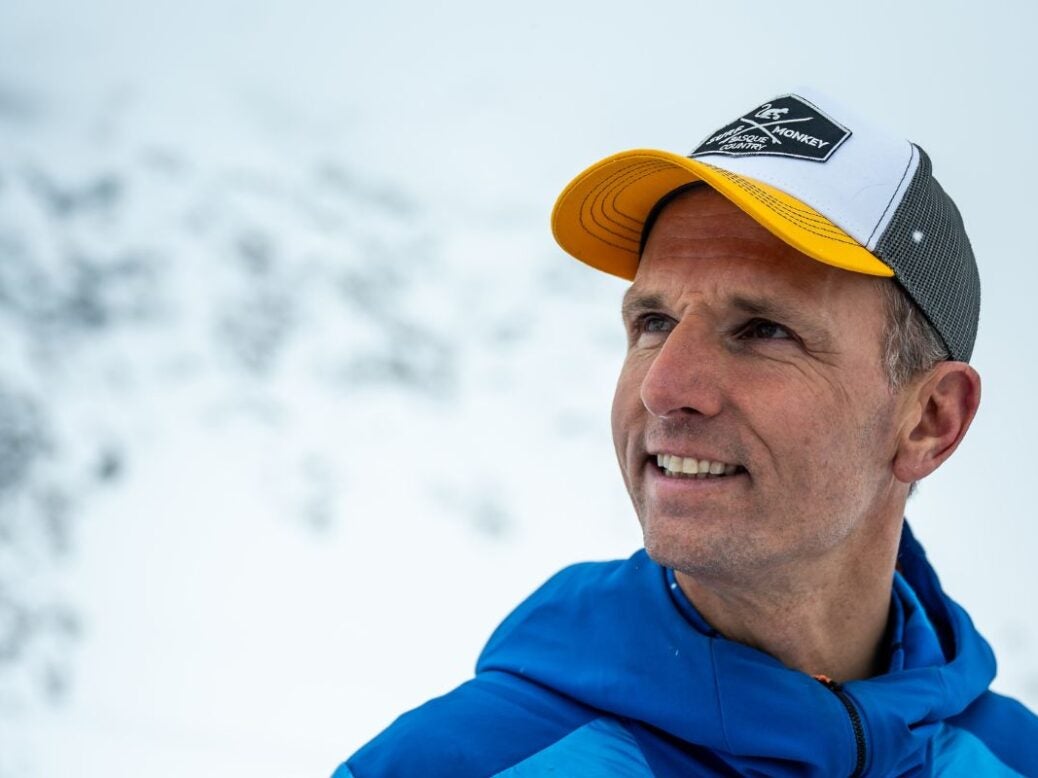
‘I like risk,’ says the serial entrepreneur David von Rosen. ‘It gives me the feeling that I’m alive.’ We are sitting at a table outside a mountain hut in Verbier, which is bathed in sunshine even as much of the valley below is obscured by wisps of cloud. During our discussion about the business that made him a billionaire and punchy plans for the evolution of his family office, it becomes apparent that the sentiment applies to other parts of his life too.
The previous evening, over dinner in the village, von Rosen had obliged my request to tell an abridged version of his life story. He’s been interviewed before, but not often. Until now, he has been one of the Western world’s lesser-known billionaires.
We discussed his upbringing in the west of Germany, and his parents. His father had a small B2B business selling watch straps, but ‘didn’t like it. He wasn’t a business person.’ His mother, on the other hand, ‘was always very driven’ and took over her family’s business – a leather factory with an all-male workforce of 30 – when she was just 29.

[See also: Heading for the hills: Is Andermatt the new St Moritz?]
Related



Von Rosen went to a conservative, religious school where he was taught by monks. Latin was compulsory, and he remembers being the only student who had not been baptised.
In his teens he traveled to the US and studied for a year in the small town of Walla Walla in Washington state. ‘This was the 1990s; America was so cool,’ he said. He returned to the States for college, having won a place at Northwestern, but dropped out, feeling that American 19-year-olds were less mature than his German contemporaries. He admits that having a girlfriend back home might have played a part, too, although the relationship didn’t last. (He is married to Julia, with whom he has three children.)
After the abortive spell at Northwestern, von Rosen secured a place at EBS, the European Business School, a private university in his native Germany. His parents weren’t rich. ‘They could hardly afford the tuition,’ he recalls. ‘But I remember my dad saying: “When it comes to your education, I would sell the shirt off my back.”’
[See also: Cresset co-founder Eric Becker on his 100-year mission to perfect the art of succession]
Content from our partners



A good friend who also won a place to study at EBS didn’t have the same support, and so couldn’t go. What felt then like a cruel twist of fate for his friend would become the germ of an idea that would grow into von Rosen’s first business.

Before that, he spent the five years of his undergraduate degree living a life that must be close to most 20-year-olds’ idea of ‘the dream’. There were semesters abroad in Buenos Aires, San Francisco (‘I just had an amazing time, because no one would really look at your grades’) and Sydney, where he interned at Deutsche Bank.
There was another internship at Salomon Smith Barney in London, after which he knew he ‘never, ever wanted to work in banking’. He worked long hours, and although the pay was ‘amazing’ for someone so young, he ‘just felt like a cow being milked. I remember one of my superiors screaming at me and not treating me like I felt I should be treated: with a little bit of respect.’
While the vast majority of his EBS intake graduated into banking or consulting roles, von Rosen chose a different path and took up an offer to go to Pennsylvania and head up the US division of HSM, a German business that manufactured paper shredders. It didn’t work out, so he returned to Germany and set about developing his first business.
Von Rosen had a thesis (both figuratively and literally; it eventually became the basis of a PhD from Prague University of Economics and Business) that university students should have the option to fund their studies not only through their parents’ wealth or by taking on debt, as was the norm, but also through equity. Before him, he notes, Nobel Prize winners Milton Friedman and Richard Shiller had written about similar ideas.
CareerConcept, founded in 2002, put these ideas into practice by allowing students to pledge a percentage of their future income (for a limited period of time) in exchange for upfront funding. The startup didn’t cost much to run, but it did need investors to provide the capital for the funding.
Von Rosen bought a copy of Germany’s Manager Magazin, which published a list of the country’s wealthiest people, and started making his way through it. He and his colleagues sent out 250 physical letters, completely cold. Only one reply came back – but it was from the family office of BMW heiress Susanne Klatten. They were off to the races.
[See also: Where did the world’s richest billionaires go to school?]
Returns to investors were steady – consistently between 7 and 9 per cent, von Rosen says – but the business ‘never went through the roof’. In 2008, CareerConcept was sold (‘not for a very large price’) to My Rich Uncle, an American firm with a similar offering that ran into trouble in the wake of the financial crisis and declared bankruptcy.
Next, in 2009, and wanting to produce ‘something you could actually see and touch’, von Rosen set up a clothing brand that sold high-quality essentials direct to consumers, who had to be members of the brand’s club to place an order.
It was a slow burn until he and a colleague decided to send a jumper to Steve Jobs by simply addressing an unsolicited package to ‘Steve Jobs, Apple Inc, Cupertino’. Against the odds, the Apple boss actually wore it during his 2011 on-stage presentation of the iCloud. Orders went through the roof, but so did scrutiny.

A very different German clothing company with a somewhat similar name began legal proceedings, which von Rosen was advised he was unlikely to beat. ‘But on the other hand,’ he said, ‘as my son always says, everything happens for a reason. And without that I probably wouldn’t have done Lottoland.’
[See also: As snow becomes scarcer, billionaires turn skiing private]
By this point, we had polished off a pair of steaks and a bottle of Pinot Noir. We agreed to call it a night and meet up again the following morning to ski together, and pick up where we’d left off – with the story of the business that made him a billionaire.
‘I had never known tiredness like it’
A few centimetres of overnight snow has freshened up Verbier’s terrain, and so I find myself following von Rosen – who has a reputation for being something of a daredevil – off-piste and down ‘Le Mur de Tortin’, where chunky moguls formed since the previous proper snowfall a couple of weeks before are still very much in evidence.
About halfway down the run, I have to stop. In a previous life, I worked for a season as a ski instructor in Canada. I’m also about a decade younger than the 49-year-old ahead of me, but all I can do is try to suck in some of the thin mountain air, wait for the burning in my thighs to subside and watch as von Rosen rhythmically sashays down the mountain, absorbing the bumps with his knees.
Soon it becomes clear that what I consider a fairly intense morning of skiing is a walk in the park for my host. In preparation for a mountaineering expedition to Nepal, he had recently spent an extended period of time sleeping in a tent designed to simulate the effects of high altitude on the body.

On the chairlift, von Rosen reveals that he and a friend had planned to summit the 6,812m Ama Dablam, completing a route that usually takes a fortnight in less than a week.
There was an early warning sign, he tells me, when the required pace and rapid altitude gain proved too much for the specialist mountain guide hired to accompany them. The guide turned back and abandoned the expedition, leaving von Rosen and his companion in the care of their sherpas. There was another blow to morale when the party crossed paths with a team that had been dispatched to recover the body of a South Korean mountaineer who had died on the route.
In the end, the sherpas helped haul von Rosen, his friend and their gear to the summit. ‘Those guys are amazing,’ he says. At one point, von Rosen realised he had fallen asleep while suspended by a rope from his harness. ‘I had never known tiredness like it,’ he says. But they made it. The Instagram feed of Furtenbach Adventures declared the achievement: ‘Most likely the fastest Ama Dablam expedition ever. Six days.’
Before things get any more intense here in Verbier, I suggest that we stop and continue our interview from the safety of a stationary position. So we find a spot with a view to get a drink (coffee for me, beer for him) and a couple of almond croissants – and return to the subject of Lottoland, the business that made his fortune.
Games of risk – and licenses
When von Rosen was young, his parents had always played the lottery, and the family enjoyed fantasising about what each of them would do with their winnings.
‘A lottery makes people dream,’ he says. ‘I’m a dreamer myself.’ (His dream then was to buy lots of fast cars, which I get the sense he has now done. He also races in the Porsche Sports Cup at venues all around Europe.) At that time, German national lottery jackpots could be in the single-digit millions. But in the US, they were in the hundreds of millions and, sometimes, even in the billions. (In 2022 a ticket purchased in Altadena, California, scooped a record-breaking $2.04 billion jackpot.)
Von Rosen’s insight was that someone in Germany could effectively play the US lottery (and other national lotteries) by betting on its outcome. Rather than buying a ticket in the normal way, customers would wager that their chosen numbers would come up, and, if they were right, Lottoland would pay out the amount the player would have received if they’d been playing the lottery directly. They might even get more from von Rosen’s Gibraltar-registered entity, since US lottery wins are subject to tax.
The business got off the ground in 2013 and gathered momentum quickly, helped by many national lotteries’ naivety around Google search and AdWords. That allowed the site to hoover up traffic. The effect was supercharged in the buildup to big jackpots. ‘Once it surpasses 100 million, it’s an exponential function. Then, when it passes a billion… people go nuts!’
One of von Rosen’s tactics was to insure the company against the payouts. ‘The whole insurance system concept became our competitive advantage,’ he says. As the company grew, it covered more of its own risk directly, and the share of its margin ceded to insurance premiums fell. But there were some sizeable sums to cover. Lottoland still holds the record for the largest-ever online gambling payout: €90 million, which went to a 36-year-old German cleaning lady in 2018.
As well as a game of risk, lotteries are a game of licenses. Von Rosen notes that the Czech billionaire Karel Komárek, who holds the license for the UK lottery through his company Allwyn, is also a Verbier local; their kids even hang out together. ‘Why would the British give the crown jewels away to a Czech guy?’ he asks, mock-perplexed. Then adds: ‘He’s done very well.’
[See also: Spear’s Power List: The 100 most influential people in the world of private wealth]
As we speak, in mid-March, Lottoland is awaiting a verdict from the European Court of Justice concerning a case that argues its Maltese license was not sufficient to allow German customers to bet on the outcome of their own national lottery. Von Rosen doesn’t comment on the case directly, but notes the business has recently secured a license to provide its services in Brazil, and has one for South Africa, too. Its biggest markets are Europe, the US and Australia.

Von Rosen stepped back from the day-to-day running of the business a little while ago, but a foundation he set up remains the principal shareholder of what must be a highly profitable concern. The company used to reveal information about its revenue, but no longer. ‘That’s one of the nice things about being a private company,’ he says. ‘Not having to disclose any numbers.’
It also means you can keep a low profile, which von Rosen did until recently. ‘I was completely under the radar until a couple of years ago,’ he tells me. He still doesn’t feature on Forbes’ list of the world’s billionaires, but in 2024 was included in business magazine Bilanz’s list of the richest people in Switzerland, with a net worth of CHF1.3 billion ($1.7 billion). In general, he hints, the magazine’s valuations of private businesses seem a little conservative. ‘They just want to be on the lower side – being Swiss.’
[See also: Even rejected, Swiss wealth tax debate offers lessons for UHNW clients]
Part of the rationale for stepping back from Lottoland was to have more time and energy to channel into other projects. Now he’s taking deliberate but careful steps to establish a profile, putting his head above the parapet to boost deal flow and perceived credibility among investment targets. ‘If you are completely unknown and in the shadows, you don’t get that,’ he says. ‘It doesn’t come naturally for me, but I think it has really helped.’
One of his most eye-catching projects is 25 Degrees, a Dubai-based real estate business that specialises in standalone houses, or ‘villas’, as they tend to be known in the emirate.
He reels off some of the large developers in the region – Omniyat, Nakheel, Binghatti – but says, ‘About 99 per cent of what they do is apartments. Nobody has really brought out a brand for villas. The whole idea is to be a brand that stands for certain values, Western quality, Western design.’ The firm has collaborated with South African architect Shaun Killa, who designed Dubai’s brilliantly outlandish Museum of the Future.
[See also: Switzerland scraps ‘marriage penalty’ tax in landmark referendum]
So far 25 Degrees has sold two properties (including one on the Palm Jumeirah sold for $43.8 million. Two more are complete and ready to be put on the market, and at least 13 more are being built or redeveloped. Von Rosen started off financing the projects himself but has begun to partner with family offices and other outside investors to ‘grow faster and bigger’. Of the UAE’s property market in the wake of conflict in the Middle East, he says: ‘Let’s see, but I think it’s going to rebound.’
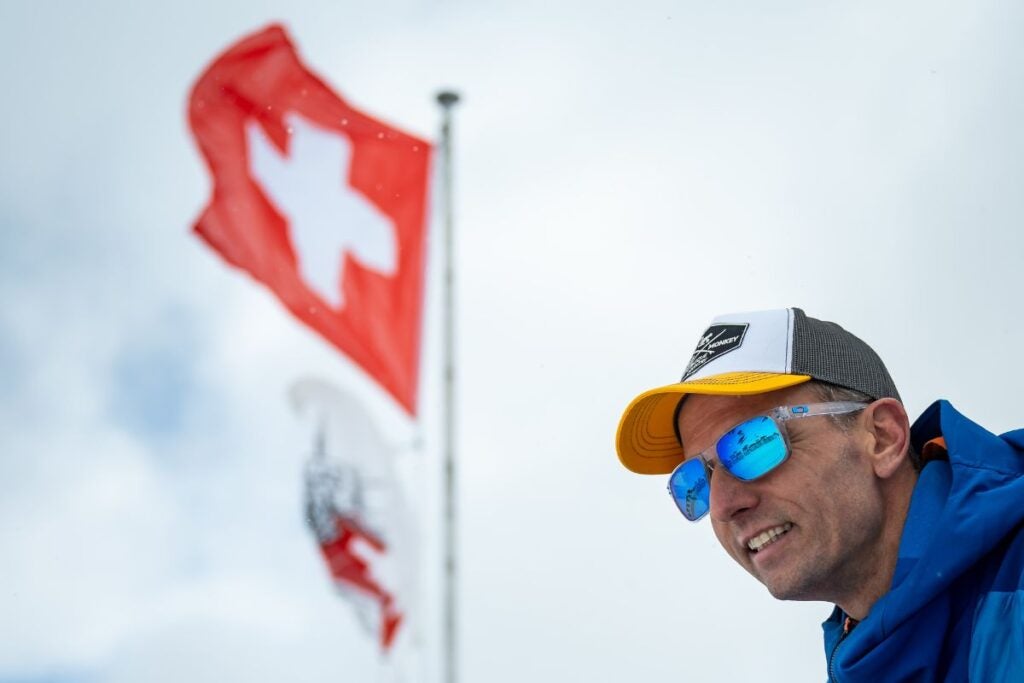
Dubai is one of several places in which he has homes, along with Switzerland and Gibraltar. He is fluent in German, English, Spanish and French. But he has only one passport – his German one.
His family office, VONROSEN, has a team of six who mostly work remotely, managing public equity investments and minority stakes in private companies (including Revolut). But the thing that gets him revved up is taking significant equity positions, big enough to ‘move the dial’, in interesting businesses. The prospect of making a positive impact also plays a role. ‘I understand gambling doesn’t make the world a better place,’ he says.
[See also: The tax trap waiting for rich expats leaving Dubai]
There are investments in defence tech, including two ‘bigger tickets’. One is German firm Quantum, which recently raised €180 million, bringing its valuation to more than €3 billion. The other is Tytan Technologies, which designs low-cost anti-drone drones used by the Ukrainian military. Von Rosen acknowledges some may doubt these investments meet the ‘making the world a better place’ test, but adds: ‘I do really, really believe we need it in Europe, now that Big Brother [the US] is gone. We can’t rely on them anymore.’
Von Rosen also has an interest in sustainable energy and is on the lookout for opportunities that have some connection to water. He mentions a German company that uses technology to find hidden reservoirs, which brings him on to what he describes as ‘a shipwreck business’.
‘It’s a small boy’s dream to go looking for gold underwater – that’s literally what [the business] is.’ AI technology makes it possible to enhance images taken underwater, aiding searches for lost treasure. ‘Obviously the prices of commodities – from copper to silver and gold – have been going through the roof. So that makes it more attractive.’
[See also: Abu Dhabi’s family office boom: why the emirate is attracting active global investors]
In at least a couple of notable ways, von Rosen defies the stereotype of a family office principal. For one thing, he says he personally reads many of the cold investment pitches that are sent through the VONROSEN website. Another is that he describes himself as ‘completely industry-agnostic’. In fact, ‘if there’s an industry which I haven’t done anything in and it interests me, I like to take it on, research, understand and learn – right? Probably it’s, financially, not the smartest decision. But on the other hand, I do like to broaden my horizons.’
Speaking of which, he says, it’s time for him to go. We were due to have a little longer together, but he needs to fly out later today; a plan to go ice-driving in Sweden has materialised. As I watch him ski off into the distance (again), I reflect that the trip is just another in a long series of von Rosen’s calculated risks – and yet another gambit that sounds like quite a lot of fun.
This article first appeared in Spear’s Magazine Issue 99. Click here to subscribe