
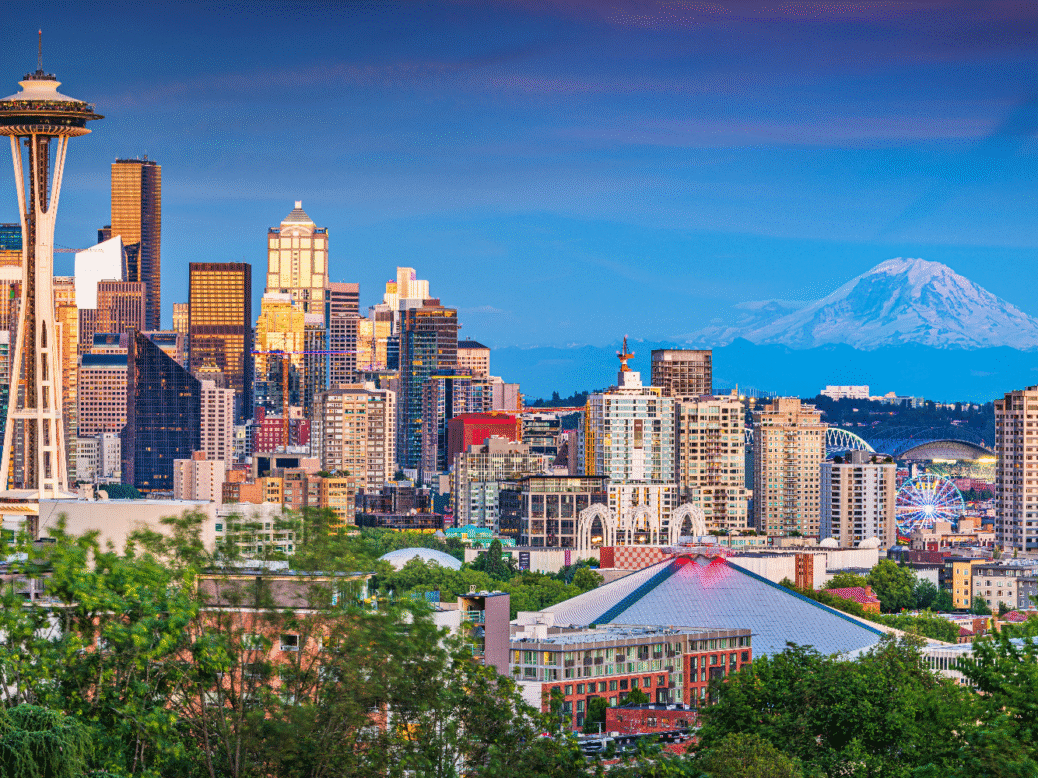
Washington state lawmakers have approved a measure that would create the state’s first tax on high earners.
The legislation imposes a 9.9 per cent levy on personal income above $1 million a year. It passed the State House by a vote of 51–46 following a marathon debate that lasted more than 24 hours.
If signed into law by governor Bob Ferguson, the tax would mark a historic shift in a state that has long avoided taxing wages. Washington has traditionally attracted entrepreneurs and high earners because it does not levy a broad-based personal income tax.

The new tax would apply only to income above the $1 million threshold, meaning a taxpayer earning $1.5 million would pay the 9.9 per cent rate only on the final $500,000.
Related
Supporters say the measure would affect roughly 20,000 households, or around 0.5 per cent of taxpayers, and could generate close to $4 billion annually. The revenue would help fund education, childcare and expanded tax credits for lower-income families.
[See also: Will California’s ‘billionaire tax’ trigger an UHNW exodus? Wealth managers weigh in]
What we know so far
Washington is one of nine US states that do not impose a broad-based personal income tax. The others are Florida, New Hampshire, Alaska, South Dakota, Wyoming, Texas, Tennessee and Nevada.
That status has long made the state attractive to entrepreneurs and wealthy residents looking to retain more of their earnings within the United States.
Content from our partners



The tax is scheduled to begin in 2028, with the first payments due in 2029.
However, legal challenges are widely expected and opponents may attempt to block the measure through a ballot initiative. Either development could delay its implementation.
Lawmakers say the tax could generate billions of dollars each year to fund education, childcare and other public services, while also expanding tax credits designed to support working families.
Will the wealthy leave Washington?
Critics argue the policy could prompt high earners to relocate to lower-tax states, potentially undermining the revenue the tax is intended to generate.
Republican lawmakers have repeatedly raised concerns about the potential impact on business investment and employment.
‘If a Starbucks or a Boeing or other people start to diminish their presence in Washington State, guess what happens?’ said Andrew Barkis, a Republican lawmaker from Thurston County. ‘Those high-paying jobs? They are going to leave. It is happening.’
Some early signs of that concern have already emerged. Howard Schultz, the former chief executive of Starbucks, recently said he was moving to Florida. His move follows that of Jeff Bezos, the founder of Amazon, who left Washington in 2023.
[See also: Even rejected, Swiss wealth tax debate offers lessons for UHNW clients]
Because the proposed tax would apply to only about 0.5 per cent of households, critics say even a relatively small number of relocations could significantly affect projected revenue.
Supporters, however, argue the measure is intended to address what they see as an unbalanced tax system. Washington relies heavily on sales taxes and other flat levies, which take a larger share of income from lower earners.
Ferguson has framed the tax as a way to make the system more progressive while delivering relief to working families.
‘I’ve said that any ‘Millionaires’ Tax’ I sign must send a significant percentage of that revenue back to Washingtonians,’ Ferguson stated in a recent press conference.
Democratic lawmakers echoed that message during the debate.
‘Maybe they won’t mind contributing here at home,’ said Brianna Thomas, a Democratic State House member from West Seattle. ‘Maybe they’ll be happy to stay here and invest in the community that has given them the opportunity to thrive.’
A global trend
Washington’s proposal is unfolding alongside similar debates elsewhere, as governments explore ways to increase taxes on the wealthiest residents.
At the federal level, senators Bernie Sanders and Ro Khanna have introduced a proposal for a five per cent tax on billionaires. Several states are also considering new taxes on high earners as lawmakers search for additional revenue.
In California, lawmakers are considering a ‘billionaire tax’ that would impose a five per cent levy on the wealth of residents with fortunes above the threshold.
[See also: Who is Matt Mahan, the California governor hopeful backed by tech billionaires?]
Wealth managers have warned that such measures could prompt relocation among the ultra-wealthy. Investment expert Michael Ashley Schulman told Spear’s in January that California’s concentration of technology wealth makes it particularly sensitive to policy changes.
‘The innovation engine in California and the talent density are Jedi-level in strength,’ he said. ‘You don’t want to push those people out.’
He added that some wealthy residents could choose to relocate before reaching the threshold for such taxes.
‘We might see soon-to-be-billionaires moving states before they reach that level of wealth, because they could think “jeez, I could save $50 million if I change residency before this happens”.’
The debate echoes proposals elsewhere in the world. The debate echoes similar discussions elsewhere. In the UK, economists such as Arun Advani have helped bring wealth taxes back into policy debate, despite the country never having introduced a recurring levy on personal wealth. In Switzerland, a proposal for a 50 per cent inheritance tax on estates above CHF 50 million sparked debate among wealth advisers and entrepreneurs, but voters ultimately overwhelmingly rejected it.
For Washington, the debate marks a significant turning point. The state has long attracted wealthy entrepreneurs precisely because it did not tax income.
If the legislation survives expected legal challenges and ballot efforts to block it, the tax will take effect in 2028 with the first payments due the following year.
The measure is a high-profile test: will Washington’s ultra-wealthy absorb the levy, or simply move their fortunes elsewhere?


