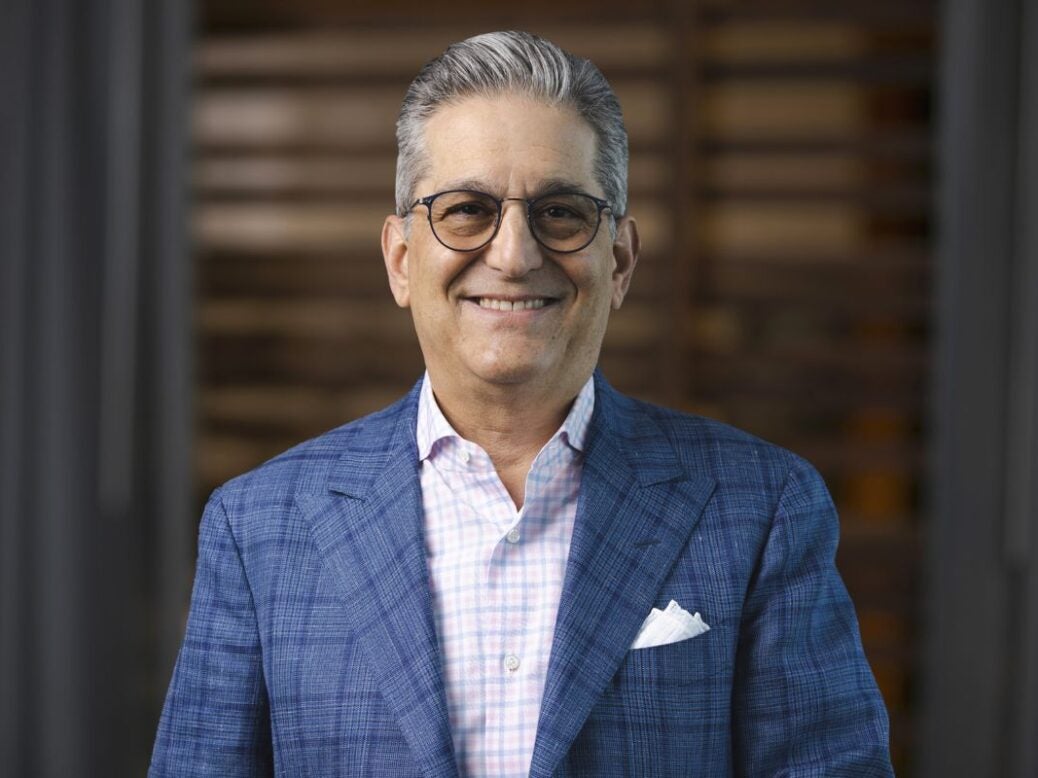
Considering he was ‘a Jewish kid from Baltimore’, Eric Becker says his father chose ‘a wildly unexpected career’. A job dressing up as Santa while he was still a student developed into a business that would run for 53 years and earn him the moniker ‘The King of Christmas’.
Many of Becker Jr’s formative life experiences happened against the backdrop of the family business. But neither he nor his brother ever took up the reins. Instead, he went on to a long, successful career in private equity. Retirement beckoned, but after a family tragedy – the death of his daughter from leukaemia at the age of 21 – he reassessed his life and career.
In 2017, Becker co-founded the Chicago-based multi-family office Cresset, which now has $235 billion in assets under management and advisement. In January it was revealed that the firm had raised $300 million at a valuation of $3.3 billion.

[See also: The best family office advisers]
Related


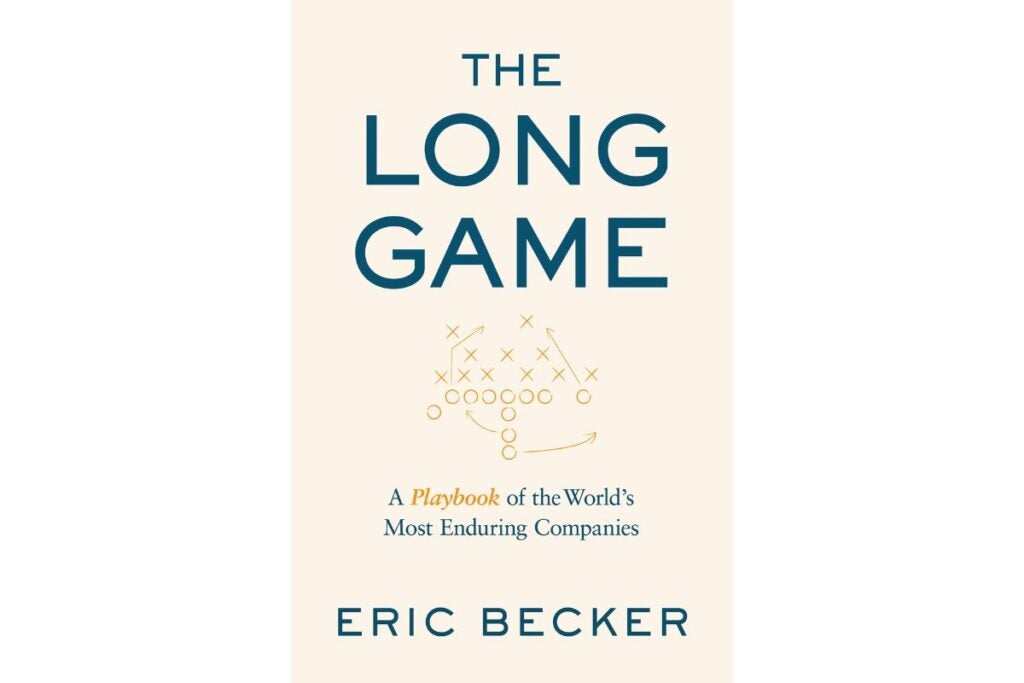
Earlier this year he published a book, The Long Game: A Playbook of the World’s Most Enduring Companies – a deep dive into how the best family businesses manage to thrive.
What prompted you to write the book?
Three things. The first happened 30 years ago: I was in downtown Baltimore, where I grew up and where I started my businesses, and I picked up a copy of the Baltimore Business Journal. Inside was a list of the oldest companies in Maryland.
There were names I recognised, like Johns Hopkins University, a famous investment bank called Alex Brown and one of the big defence companies; I think it was Martin Marietta or Lockheed Martin. And then I see there’s a company called Loane Brothers. It might have been the oldest company on that list – almost 200 years old. I knew they did tent rentals for big events, like weddings and things. But I thought: ‘How did a family business survive for 200 years?’ It would have gone through recessions, depressions, wars… It piqued my curiosity.
Content from our partners



What was the second thing?
I grew up amid this amazing family business in Baltimore. My father was the first one in our family to go to college and, despite being Jewish, started this Christmas company that sent Santas to shopping malls and all that sort of thing. When I was a little boy, I literally thought my father was Santa Claus.
[See also: The human angle of succession]
The business ran for 53 years, but we did not have a good succession plan. As much as we loved Christmas, my brother and I didn’t want to go into the business, so my father was kind of forced to sell his company. I saw how sad that made him. This business was so deeply ingrained in who he was. It got me thinking again: ‘What would have had to happen for my father to be able to pass that business forward and to maintain its character?’
And the third?
After a long career in private equity and entrepreneurship, and after overcoming a family tragedy where our daughter Cara passed away from leukaemia when she was 21, I had fully retired and never expected to work again. But the last piece that brought this all home was when I met Avy Stein. We became friends. He helped me through my retirement, after our daughter passed, and then he and I decided to start Cresset.
[See also: Why more family offices are closing or downsizing despite rising wealth]
We were very clear that we wanted the business to have a differentiated culture: a culture of service and innovation. And it was going to be an employee-owned company, so it could go on generationally. We also decided that we were going to tell people that we were on a 100-year mission.
You decided to use an employee ownership model at Cresset. Why?
My father had no formal business education, or even a mentor. He sold his company to its employees via an ESOP [employee stock ownership plan], but it lacked the organisational structure or leadership to go on to be a success. The employees were forced to sell it. So when Avy and I started Cresset, we knew we wanted it to go on to serve the next generation and the one after that. It’ll serve our kids, and then hopefully my grandchildren. So all employees get shares by joining the company.
We also have a succession plan. Avy’s 70, I’m 63. Our successor is Susie Cranston, an incredibly talented leader who went to Stanford, worked at McKinsey and was chief operating officer at First Republic. She’s been carefully put in place, with a team around her.
The third really powerful piece is culture. My father’s idea of culture revolved around the joy of Christmas. It was this amazing holiday, but he never connected that with the things people did in the business day to day. At Cresset, we’ve always said that we’re on a 100-year journey. Our culture is to all be owners, and to act like owners. We’re going to share the success here. That was designed right from the beginning. It’s like dad’s Santa business, but it’s the 3.0 version of it.
For anyone who has built a family business, there seems to be an almost universal desire to pass it on to the next generation.
It must be in our DNA that, if we can, we pass family businesses forward. But it’s really important that children have the opportunity to pursue their own dreams. It’s a delicate balance.
My dad always let my brother and me know that the Christmas business was ours if we wanted to take up the mantle, but he never pressured us to do it.
From the perch that I have now at Cresset, I see so many different families. One of our clients was a founder and CEO. He got to the point where he decided to exit his business, but he had never discussed it with his family; his kids were in their twenties. So, one day, he comes home and says: ‘I put the company up for sale.’
The kids were so upset: ‘We can’t believe that you didn’t discuss this with us!’
The father told me he didn’t think that the kids were interested in the business and so it didn’t even occur to him to discuss it with them. He’d also always thought of the business as his own.
But he learned something really profound. He told me: ‘If I had sat down with them, even if we had collectively agreed that it was time to exit and that they had other dreams for their own lives, it would have just been so much better for the family.’
[See also: Heirs apparent: When legacy becomes reputational capital]
Throughout the book, there are case studies of historic business-owning families that you have met with – from the Ferragamo family to the Vanderbilts. How do the most successful strike the right balance between maintaining traditions and making improvements?
There’s this myth that old companies are slow to move, bureaucratic and all that. Nothing could be further than the truth. Their DNA is survivability, agility, resiliency – all these things that we are constantly reminded are important for companies and organisations. So I think it’s a combination of taking what they know – you might call it ‘your gut’ – then combining that with a value system that has stood the test of time, and then looking at the data.
You also have to ask yourself whether there are things you need to confront, or if there are hard truths you need to recognise. These families and organisations consistently step up in these moments of truth, and they pivot. Even before the word ‘pivot’ became popular among entrepreneurs, they were pivoting.
[See also: Majority of family businesses experienced cyberattacks in past two years, report reveals]
How do you know when the next generation is ready to step forward?
One thing that came out of the research for the book is this idea of a super-steward.
Sometimes I think of them like Superman, but the ‘s’ on the Superman outfit stands for ‘Super Steward’. These are the people who take the responsibility so seriously they are able to control ego and to put the organisation and everything it serves – the customers or clients, the children or next generation – at the forefront of everything. They recognise it’s bigger than themselves.
This article first appeared in Spear’s Magazine Issue 99. Click here to subscribe