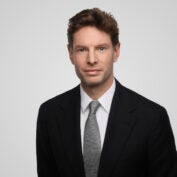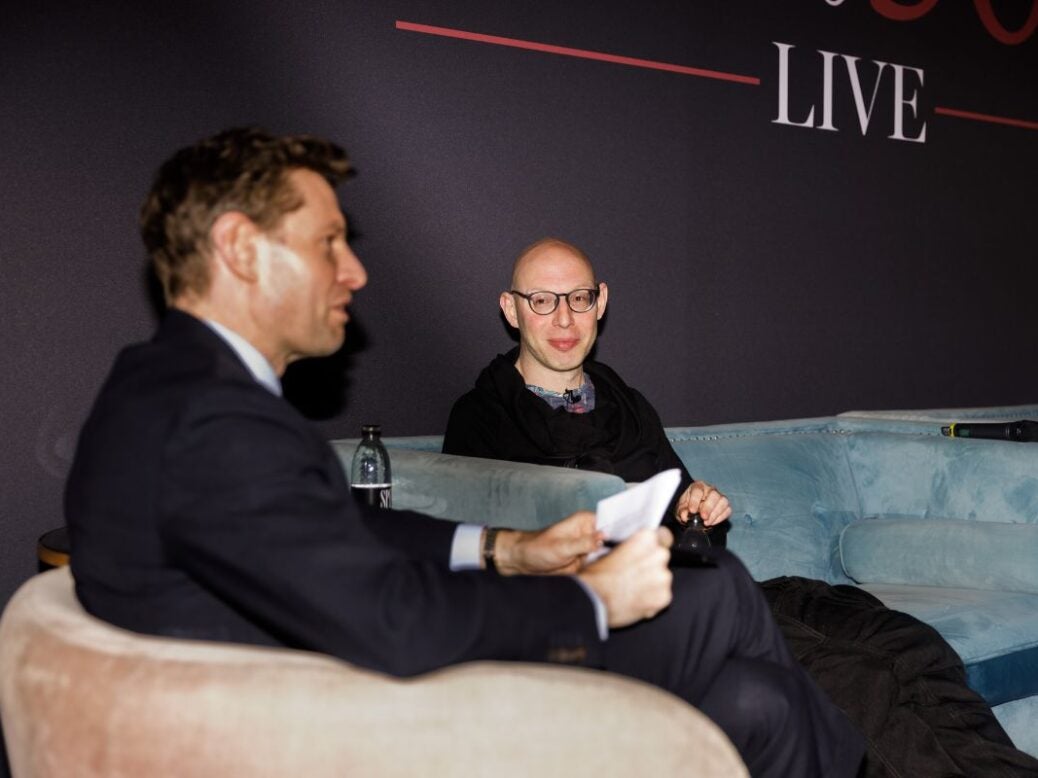
Tax lawyer Dan Neidle made history last month by facing down an £8 million libel claim that was the first lawsuit to be officially designated as a ‘SLAPP’. But Neidle believes UK law still enables the rich to use legal threats and lies to silence legitimate criticism with near impunity.
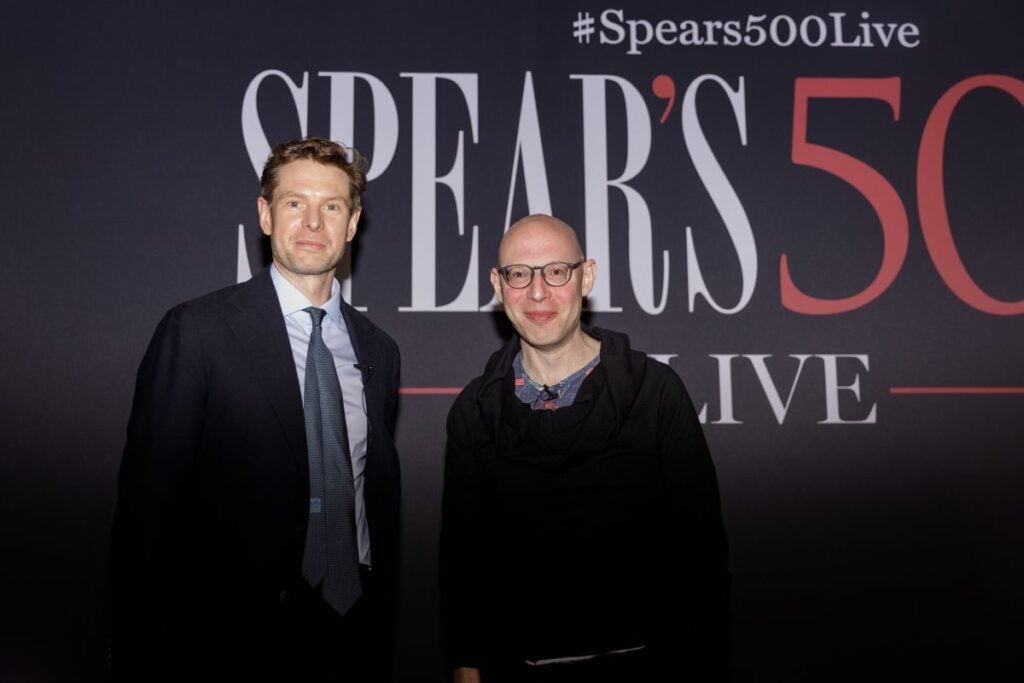
Speaking at Spear’s 500 Live, Neidle said: ‘[P]eople with significant access to money and resources can silence their critics, and they can lie when they do it. And there’s no consequence for them. That needs to change.’
The striking out of a £8 million libel claim against Neidle last month was the first instance of a UK court assigning the statutory definition of strategic litigation against public participation (SLAPP) to a lawsuit. The definition came into force in June last year as a result of the the Economic Crime & Corporate Transparency Act 2023. The action had been brought by tax barrister Setu Kamal after Neidle had criticised tax schemes associated with Kamal.
[See also: The tax trap waiting for rich expats leaving Dubai]
Related


Despite the High Court decision in his favour, Neidle told the Spear’s audience at the Savoy that in order to have the claim struck out he had to first incur £150,000 in costs (which have since been repaid) and pursue the matter over the course of six months. What’s more, the SLAPP designation can only be applied in cases relating to financial crime, meaning it offers limited protection.
‘There’s an awful lot of intimidation of whistleblowers, of victims of sexual assault, of other appalling conduct which has nothing to do with financial crime,’ said Neidle. He called for the ‘anti-SLAPP rule’ to be extended so that it could apply to ‘all defamation claims’ and added that lawyers or would-be claimants who are found to have issued false statements through lawyers’ letters should face consequences.
‘Time after time, oligarchs, criminals, rapists send libel threats under the cover of letters from lawyers containing statements that are false.’ If the person receiving those threats lacks significant financial resources, ‘the rational thing for them to do’ is to back down, Neidle said. But if someone does fight back, ‘the lawyers [can] just drop it and walk away – no consequence for the lawyers, no consequence for the clients. That is wrong.’
[See also: Experts warn HNWs to prepare as HMRC intensifies inheritance tax probes]
Content from our partners



Certain recent cases suggested that the Solicitors’ Regulation Authority (SRA) is not able to prevent such behaviour and, therefore, ‘the law should change’, Neidle said. However, he was doubtful any additional SLAPPs legislation would be announced in next week’s King’s Speech.
In a wide-ranging interview, Neidle also discussed his recent scrutiny of the tax affairs of Reform UK’s deputy leader Richard Tice. Tice had been asked about Neidle’s analysis when he took part in a panel discussion at the Spear’s conference earlier in the day. He responded that Neidle’s coverage was ‘full of wrong assumptions, wrong numbers, wrong dates’, but would not point to any specific error.
‘Whining about errors that you somehow won’t specify is not very persuasive. So I’m not a big fan of Mr Tice’s response,’ said Neidle.
Having retired from his role as UK head of tax at magic circle firm Clifford Chance, Neidle first rose to prominence in the media when his investigation into the tax affairs of then-chancellor Nadim Zahawi led to Zahawi’s sacking by PM Rishi Sunak. Further scrutiny of public figures – spanning Michele Mone and Douglas Barrowman’s Covid-era business interests, as well as Peter Mandelson’s Epstein leaks – have garnered widespread attention.
Despite numerous successes, at least two significant rulings – one by the High Court and one by the Solicitors Disciplinary Tribunal (SDT) – have run counter to positions advanced by Neidle.
During Neidle’s investigation of Nadim Zahawi’s tax affairs, he forwarded a letter sent by Zahawi’s solicitor – Ashley Hurst of Osborne Clarke – in which Hurst urged him to retract the allegation about Zahawi’s tax affairs in an email marked as ‘Confidential & Without Prejudice’. Neidle and the SRA concluded the restrictive label was improper because the conditions for using the relevant terms were not fulfilled – and therefore the letter ‘bore the hallmarks of a SLAPP’.
[See also: Is London losing its libel crown?]
In May 2024, the SRA applied to the SDT for a decision. The tribunal concluded there was no proper basis for describing the email as confidential and described the alleged misconduct as ‘very serious’. Hurst was fined £50,000 and ordered to pay £260,000 in costs to the SRA. However, Hurst appealed and the High Court overturned the SDT’s decision, ordering the SRA to pay Mr Hurst’s costs.
In a LinkedIn post after the decision, Hurst said: ‘It’s been a long and stressful road but I’m pleased to say that I won the appeal and have been exonerated.’
Another professional conduct case on which Neidle and the SRA were initially aligned, but ultimately unsuccessful, concerned a letter sent in 2017 by Carter-Ruck partner Claire Gill that threatened defamation proceedings against an investor who had spoken out about the cryptocurrency OneCoin. OneCoin would later be proven to be a scam and its founder Dr Ruja Ignatova placed on the FBI’s most wanted list.
[See also: Reform UK’s Richard Tice blasts London’s ‘anti-wealth culture’]
Neidle worked in partnership with the Bureau of Investigative Journalism to dig into the case and filed a detailed complaint about Carter-Ruck’s conduct to the SRA. The professional body announced it would prosecute Gill in August 2025.
Before the substantive SDT hearing, Carter-Ruck applied for an anonymity order and reporting restrictions. This was refused, with the tribunal finding that, on the balance of probabilities ‘the Carter-Ruck retainer was engaged in furtherance of fraud by OneCoin and Dr Ruja Ignatova’.
However, in December 2025, there was a turnaround when the SDT dismissed the case against Gill before the substantive hearing, finding it was based on ‘hindsight not evidence of professional misconduct’. The tribunal even praised Gill’s professionalism, and Carter-Ruck has said it will seek around £1 million in costs from the SRA.
[See also: Multi-million-pound stamp duty bills prompting super-prime renovation boom]
Asked to comment on the High Court decision that overturned the SDT’s ruling against Zahawi’s lawyer Ashley Hurst, Needle said: ‘The idea that someone can make a meritless threat of defamation proceedings and you are then never able to talk about it is inimical to freedom of speech and public policy, and it shouldn’t be permitted.’
On the SDT decision that went in favour of Carter-Ruck, Neidle doubled down on remarks that he had made previously. ‘When I said I’d say this, Carter-Ruck vaguely threatened libel action against me. When I then said it: nothing. And that’s because it’s true. So why the SDT found what it did, I don’t know.’
Critics have accused Neidle of being politically motivated. He is a member of the Labour Party, but declined to reveal to the Spear’s conference who he would vote for at the next general election. ‘[J]ust because you have a particular political view doesn’t mean you lose your powers of rationality,’ he said. ‘So I have been pretty mean about this government’s tax policy. I’ve accused several Labour politicians of failing to pay their taxes when they should. Anyone who thinks of some kind of partisan hack is, well, I think they’ve got an agenda.’
Asked how he would reform the UK tax system, Neidle said it was possible to ‘simplify tax in ways that are essentially costless’. Corporation tax is ‘way too complex’ and the ‘irrational kinks’ in the system – such as the one which means someone earning £100,000 pays a higher marginal rate than someone earning 150,000 – should be ironed out, he said.
‘Worry less about billionaires leaving the UK,’ he added. ‘Worry more about junior doctors, accountants, coders leaving the UK, because they’re at that point [of earning around £100,000] where the tax rules really bite and look deeply irrational.’ He also advocated the scrapping of stamp duty, council tax and business rates – and for the introduction of a land value tax.
Neidle, who has previously poured cold water on the prospect of a wealth tax, argued that it was ‘too late’ to tempt back UHNWs who have left the UK in response to the Labour government’s tax changes. He cited the sudden introduction of inheritance tax on former non-doms’ worldwide assets as a crucial misstep. ‘It would have been much more sensible […] phase it in over time, bit by bit: boil the frog.’
‘If you did something like that, then some of those who left wouldn’t have left.’
Though Neidle has made the switch from advising powerful organisations to scrutinising powerful individuals, he dismissed any suggestion he was a ‘poacher turned gamekeeper’.
Addressing the Spear’s audience – many of whom were advisers to UHNWs and family offices – Neidle said: ‘Most advisers, a lot of what we do is keeping our own clients on the straight and narrow. Our clients are complicated people […] with many competing interests. Very often [they] will want to do a thing that we think is on the wrong side of the line, or too close to the line. We need to make sure they do the right thing and, ideally, also keep the client. The people who are making sure the correct tax is paid by the very wealthy [and] multinationals are mostly not HMRC, it’s the advisers. So I was a gamekeeper then, I’m a gamekeeper now.’
Watch the full interview
Find out more
Spear’s 500 Live is the premier live event for private client professionals and leading figures from the private wealth and family office ecosystem. The 2026 edition took place on 6 May at The Savoy in London.
Spear’s 500 Live was presented in association with our partners the Charities Aid Foundation, CMB Monaco, Guernsey Finance, HCA Healthcare UK, Payne Hicks Beach, Riverstone, Scott Dunn Private and Stewardship.
For commercial enquiries concerning Spear’s events, contact shady.elkholy@spearswms.com.