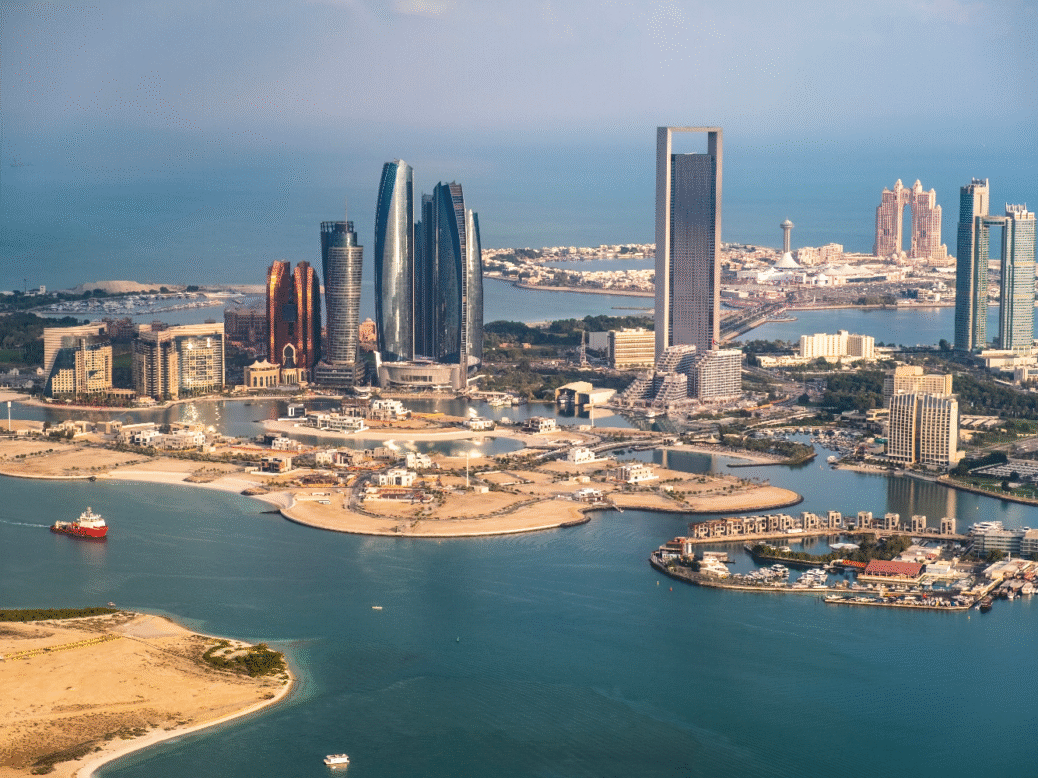
Accountant Amal Shah has one piece of advice for his wealthy clients who recently left the UK for the tax-free and – until recently – safe and secure lifestyle of Dubai: ‘Do not come back to the UK for too long, the tax implications could be enormous.’
Shah, a tax partner at London accountancy firm Gerald Edelman, told Spear’s that many of his clients who he has recently helped relocate to Dubai have been getting back in touch to ask for advice about the tax implications of coming back to the UK as Dubai becomes increasingly caught up in the conflict in the Middle East.
‘It’s not what they expected when they moved to Dubai, they wanted sunshine, safety and gated communities,’ Shah says. ‘No one thought missiles would be fired at Dubai.’

But that’s exactly what has happened. Strikes and debris have hit some of Dubai’s most well-known buildings, including the sail-shaped Burj Al Arab hotel, the five-star Fairmont hotel on Palm Jumeirah, and Dubai International Airport several times.
Related

[See also: Experts warn of £3m tax bills as wealthy families rush lifetime gifting]
Dubai’s millionaire population is estimated to have doubled since 2014 to more than 81,000, according to residence and citizenship advisory firm Henley & Partners. Last year alone Henley estimated that almost 10,000 millionaires moved to Dubai – making it the single biggest destination of choice for the world’s wealthiest people.
However, thousands of expats are thought to have already left Dubai – and the other emirates of the United Arab Emirates – since the war began on 28 February, with some spending hundreds of thousands chartering private jets. Private jet broker Jet-VIP said there had been a “significant increase” in bookings since the war broke out. Prices more than doubled for some routes. For example a light jet carrying six people between Dubai and Istanbul jumped from about $50,000 to $110,000.
The Home Office reports that more than 115,000 British nationals have returned from Dubai to the United Kingdom. While safety is likely to be the primary concern, many of the wealthy individuals who have come back to the UK are also concerned about their tax exposure.
Content from our partners



‘A large part of the reason for going to Dubai in the first place was to mitigate tax,’ Shah says. ‘Coming back permanently could lead to them paying huge amounts of tax.’
Shah says anyone who comes back within five years of leaving ‘could end up paying tax on historical gains going back years’.
One of his clients who moved to Dubai in response to the Labour government’s scrapping of the non-domiciled tax status, could be exposed to more than £100 million in capital gains tax if they return.
‘They are worried about their families’ safety, and they want to come back here [to London],’ Shah says. ‘But my advice is “come back for a few days and see the grandparents and the wider family, but don’t come back permanently”.’
Staying for a longer period could trigger the so-called ‘183-day rule’, which is a key part of the Statutory Residence Test (SRT) which automatically triggers UK tax status. ‘Luckily we are close to the end of the tax year (5 April) so the clock will restart,’ Shah says. ‘But many of these people may have already spent quite a few days here so you don’t want to chance it.’
While many people are aware of the 183-day rule, Shah cautions that the SRT test is much more complicated. In some circumstances the number of days allowed can be reduced to 90 under the ‘tie test’ which may end up with people being considered UK resident if they have considerable ‘ties’ to the UK in terms of family, work and property.
His advice is to ‘go anywhere else’. ‘Go to Thailand, go to Europe, go on some long holidays. Just don’t come here.’
‘The biggest risk for individuals is simply slipping up on their day count,’ Shah says. But it’s much more complicated – and trickier – if you became non-UK resident for tax purposes within the last five tax years. ‘You need to be mindful of the Temporary Non-Residence (TNR) rules. These rules are deliberately tough,’ Shah says.
To minimise tax exposure, Shah advises that people considering returning to the UK ‘crystallise offshore gains’ and ‘draw dividends or profits’ while still non-resident, and keep ‘meticulous day-count evidence’ by using travel apps or logs.
David Little, financial planning partner at Evelyn Partners, says the biggest tax threat is to people who sold businesses or other assets while non‑resident in the UK and legitimately avoided paying capital gains tax on the gains.
‘The difficulty arises if they now return to the UK too soon,’ he says. ‘Under the UK’s temporary non‑residence rules, anyone who leaves the UK, becomes non‑resident, and then returns within five full tax years can be taxed in the UK on certain gains realised while abroad.
‘The challenge is that there is no clear end-date to the circumstances forcing their return,’ says Little. ‘With the timeline uncertain, people often find themselves in a difficult limbo –exploring alternative countries to move to so they can avoid spending enough time in the UK to trigger tax residency.’
Little says he has one client who moved to Dubai two years ago ‘specifically for tax planning, fully expecting that the tax savings from selling their businesses while non‑UK resident would comfortably fund their entire lifestyle in the UAE for the five years they needed to remain abroad.’
‘They are now facing the difficult prospect of returning to the UK with their family – and, with that, the risk of an unplanned multi‑million‑pound Capital Gains Tax liability if they re‑establish UK tax residence before the five-year term has expired.’
Little says there is ‘no single “right” answer to these situations as every client’s circumstances are unique.’
‘For some individuals, the best outcome is to return home, prioritise family, and accept the associated tax cost. For others, the more suitable solution may be to relocate to another jurisdiction – such as Portugal or Italy – both to remove themselves from harm’s way and to remain offshore, avoiding UK tax residency.’
Elsa Littlewood, a partner in the private client tax team at accountancy firm BDO, says some clients ‘left immediately’ when the conflict started ‘but many haven’t and are monitoring the rapidly changing environment’.
Littlewood says Dubai – which is just 150 miles away from Iran across the Persian Gulf – has ‘already seen its safety and security selling point damaged’ by the crisis and it could affect the city state’s image and future prosperity. ‘It is really important for its economy and image to retain these expats.’
London estate agents claim the wave of departures from Dubai since the war began three weeks ago are driving an uptick in London’s prime rental market as they look for the temporary boltholes to see out the crisis.
Mark Pollack, co-founding director of Aston Chase, a luxury estate agency focused on Hampstead, St John’s Wood and Marylebone, says there has been a ‘surge’ in enquiries.
‘It [the war] has been a bit of a reality check for people,’ he says. ‘People went there for the tax-free status, the warm climate and to have big homes with lots of staff.
‘But the dream has lost more than a bit of its appeal with missiles targeting the area. You don’t get that in Hampstead.’