‘The art market is very fast-paced – much faster than people realise,’ says Diane Abela, a director at international art advisory Gurr Johns.
For newcomers, or those with little time to immerse themselves, the art market can appear opaque and difficult to navigate. Even experienced collectors can benefit from an expert’s perspective on price or provenance, not to mention their access to contacts at auction houses and galleries, as well as private dealers.
The advisers in Spear’s 2026 Art Advisers Index are deeply engaged in the art market, and use their professional experience and connections to provide strategic, commercial advice on art collecting, curation and collection management to a (U)HNW client base.

Related


Explore the other rankings within the 2026 Spear’s Lifestyle Indices:
- Best Aviation Advisers
- Best Yacht Advisers
- Best Whisky Advisers
- Best Collectibles Advisers
- Best Gallery, Auction House & Dealership Representatives
- Best Wine Advisers
Some are ex-auction house directors boasting decades of experience, while others specialise in specific art movements – from Old Masters to Post-war and Contemporary art.
All help to bridge the gap between clients’ desire to enjoy their art and ensuring that they are making informed decisions and that their short- and long-term interests are always protected.
Content from our partners



Auctions and prestigious art fairs – Art Basel and TEFAF Maastricht, to name but a few – dominate the art collecting world, and these events are as much about reflecting the trends of the industry as they are setting the pace for the next 12 months.
Many of our featured advisers can act as an intermediary for buyers and sellers, conducting due diligence on available works. They also might accompany collectors to auctions and provide strategic insight during this high-stakes situation.
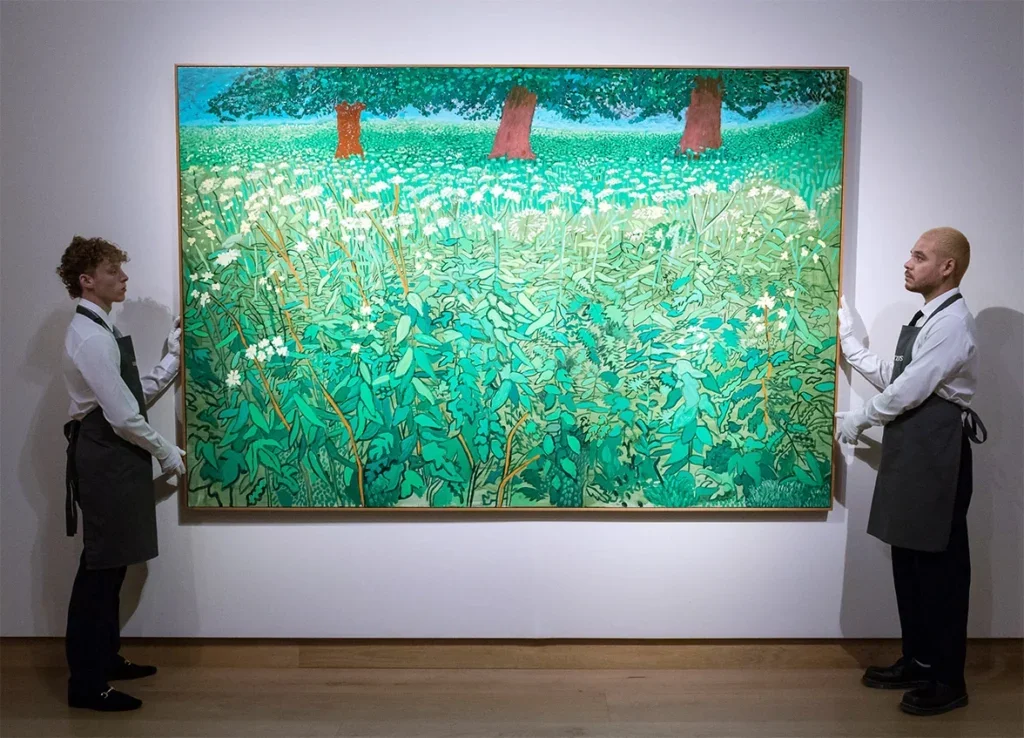
Patrick Bourne puts things into perspective: ‘If you buy a picture at auction, you’re spending more than anybody else in the world is prepared to pay for that picture that day.’
Other clients will prefer to conduct their business discreetly, conducting transactions via private sales. Drawing on their existing relationships with private dealers and galleries, our advisers are often able to source exceptional, museum-quality pieces.
[See also: How to avoid buying stolen art – and what happens if you accidentally do]
Provenance research plays a significant role in an art adviser’s duties, with collectors, galleries and museums all keen to ensure works are authentic with a clear, documented history – any suspicion of a stolen or looted artwork could massively impact its value.
Similarly, reports on an artwork’s history and condition are also important for insurance and probate purposes, as well in cases of divorce and disputes.
Gurr Johns and Cadell specialise in valuations and can help price an artwork before sale or as part of an overall assessment of a collection.
Cécilia Battin at Coram James explains why a third-party valuation is important: ‘The aesthetic quality of the work could be judged differently by experts than by an individual who likes it because it is associated with a moment of their life,’ she says. ‘[Our job] is to bring objectivity.’
[See also: Why I’m selling a $20 million Rembrandt and giving the proceeds to charity]
For UHNWs with large and ever-expanding collections, an art adviser can provide advice to ensure that their art strategy aligns with their broader financial and legacy planning goals.
One aspect of this is helping heirs make sense of what they own when they inherit art – for example when ‘second and third generations inherit huge collections and they want independent advice’, says Willem-Joost de Gier.
UHNWs also engage in philanthropy, and some advisers can help collectors loan works to museums or exhibitions, as well as ‘support certain projects and collectives’ within the art world, says Abela.
The art market in 2026
One of the recurring themes in Spear’s conversations with art advisers in 2026 was the idea of art as an asset class. Most of our featured advisers acknowledge that, while art does have a place in an overall portfolio, it should not be viewed as a straightforward financial investment.
‘I do not think that the art per se is a financial investment where you should expect to make a return on investment as you would, for example, with stocks,’ says Thomas Reinshagen. ‘If we talk about a very important Andy Warhol artwork, then you might be happy in a few years that you can sell it with a profit, but I would say that normally art is underperforming the stock market. If you really want to invest money and make returns, you either buy real estate or stocks, because art is illiquid. Art also doesn’t pay any dividend.’
De Gier adds: ‘The purpose of art is to make you feel something, and that should be the primary reason why anybody buys a work of art, not as a long-term investment.’
[See also: Art Basel CEO shows careful confidence in global art market]
This discussion of art as an asset class goes hand in hand with an examination of the art market in general, which has seen a softening in recent years. Many of our advisers highlight a renewed interest in blue-chip and established artists. ‘Safer names – that’s what carries the market at the moment,’ notes Battin.
‘[Clients] want to collect the best example of an artist as opposed to getting their hands on anything because it’s trendy,’ agrees Bojana Popovic. ‘In the last couple of years, we have seen exponential growth for some very, very young artists who are at a very early stage in their career and who have started achieving prices in the millions.
‘A good lens to look through when collecting is to think: is this historically important? Does it have this longevity that trends don’t have?’
Abela adds: ‘We have definitely seen a renewed interest in Modern, Impressionist and Contemporary art,’ with younger collectors shifting the demographic in the market.
Advisers were also keen to point out that collectors’ relationship with art is a deeply individual one. ‘There’s always a personal story, I think, when you collect art,’ says Battin.
‘People aren’t necessarily wanting to follow trends but actually [want to] form a collection that’s meaningful to them,’ Popovic adds. ‘I think gone are the days where people are heavily gambling on emerging talent that is achieving crazy prices, and I think people are actually stepping back and thinking: what am I actually adding to my collection, and why?’
Click the links below to jump to a section of this article:
- Methodology
- The best art advisers: some names to know
- The best art advisers: the complete list
- Contact us
Methodology
Each year, the Spear’s Research Unit reassesses and refreshes its rankings of the leading providers in each sector by gathering data from and about the advisers and firms themselves, assessing submission forms, collating nominations, carrying out peer reviews, reviewing data from third-party sources, gathering references and recommendations, canvassing experts and conducting hundreds of interviews.
Advisers are evaluated using a proprietary scoring system that assigns different weightings to certain attributes. These scores feed directly into each new set of rankings in the Spear’s Indices. Each of these indices are published first online (according to the research calendar) and then in print. Print publication takes the form of the annual Spear’s 500 directory, which includes the top advisers in every index.
[See also: A guide to The Spear’s 500: Everything you need to know]
Each featured adviser is profiled on spears500.com. The site allows users to search the Spear’s database of more than 4,000 entities to find one (or more) to meet their specific requirements by filtering for specific attributes such as an adviser’s location, their specialist expertise and information about their client base.
The best art advisers: some names to know
Julia Bell
- Focus: Modern, Post-war and Contemporary art
- Ranking: Top Recommended
- Firm: Parapluie
Parapluie founder and principal partner Julia Bell has over 25 years of experience in the world of art.
Bell sources art from all over the world for individuals and companies, and past clients have included collectors, architects and designers. Formerly head of partnerships at the Baltic Centre for Contemporary Art, Bell also has experience in valuation and appraisal services. (She is a USPAP-qualified appraiser and a member of the International Society of Appraisers.)
Read Julia Bell’s full profile on Spears500.com
Philip Hoffman
- Focus: Art investment, finance, sales, appraisals and advisory
- Ranking: Top Recommended
- Firm: The Fine Art Group
Philip Hoffman launched The Fine Art Group in 2001 after 12 years at Christie’s – where he became CFO at the age of 27. Noting the need for investment-focused approaches to the art market, the firm was the first company to launch a successful $25 million ‘art hedge fund’, which later morphed into seven successive funds.
‘We are the merchant bank of the art world,’ Hoffman says. The company has now expanded to offer a broad spectrum of services for the art and collectible markets, including art investment, financing, advisory, sales and appraisals. With more than $2.4 billion in art and luxury asset transactions executed as of 2026, it aims to provide its clients advice, liquidity and profits.
Read Philip Hoffman’s full profile on Spears500.com
Myrna Ayad
- Focus: Middle Eastern art advisory
- Ranking: Recommended
- Firm: Myrna Ayad Cultural Strategy and Art Advisory
Myrna Ayad is one of the Middle East’s foremost art advisers, working with individual and family collectors as well as large cultural institutes and galleries. She is a writer, strategist, curator and adviser.
She now has a range of UHNW, government and corporate clients, including multinationals such as PepsiCo and Bulgari, and she regularly speaks at art conferences and events. Having lived in Dubai for over four decades, she is a strong advocate for the promotion of Middle Eastern artists and creatives, and has seen a sharp rise in art fairs, foundations, galleries and museums flocking to the region in recent years.
Read Myrna Ayad’s full profile on Spears500.com
Robin Hereford
- Focus: Fine art, heritage and tax advice
- Ranking: Recommended
- Firm: MEUM Private
Robin Hereford’s experience in the art world spans over a quarter of a century. Before joining MEUM as a consultant, he worked at Bonhams, including as director of private clients.
Hereford’s expertise lies in art valuation, sales and acquisitions; he also advises on insurance, tax and heritage. This appeals to a wide clientele, including landed gentry who are considering opening up their houses and taking stock of their collections, as well as many UHNW families, collectors and institutional clients.
His own collections management business complements his offering at MEUM, and over the years he has seen fabulous artwork – from Old Master paintings to French porcelains – come through his doors.
Read Robin Hereford’s full profile on Spears500.com
The best art advisers: the complete list
Click on the individual names to be directed to more detailed profiles of each adviser on The Spear’s 500 website. The table is ordered by ranking and then alphabetically by surname.
Contact us
- To apply for inclusion in The Spear’s 500, complete our submission form.
- For further information about rankings, please email research@spearswms.com; we aim to respond to all queries within two working days.
- For commercial enquiries and questions relating to enhanced profiles, please contact Commercial Director Shady Elkholy: shady.elkholy@spearswms.com
- To keep up to date with the Spear’s 500, subscribe to our magazine, newsletter and follow Spear’s on Linkedin and Instagram.
- If you have missed calendar deadlines for our research cycles in 2026, you can still register your interest for updates about upcoming research and rankings.
- Click here to order a print copy of The Spear’s 500.
With additional reporting by Alice Coleman.