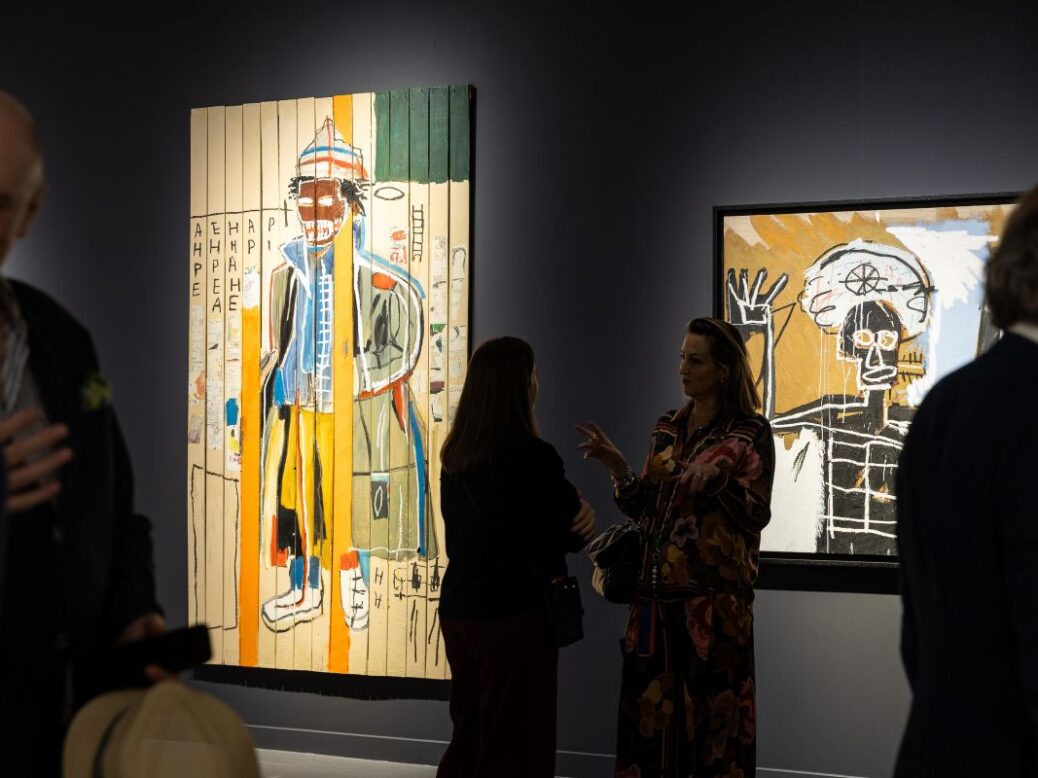
The CEO of Art Basel, one of the world’s biggest art fairs, has expressed quiet confidence in the global art market after sales grew in 2025 following two years of contraction, a report from Art Basel and UBS has shown.
Noah Horowitz, who took the helm of Art Basel in 2022, highlighted that while geopolitical tension is on the rise, the art market has proven itself to be robust, with global sales increasing by 4 per cent in 2025. This is according to data from the Art Basel & UBS Art Market Report 2026, which summarises the state of the global art market over the past year and assesses its performance against the backdrop of the world economy.
Following a slump in sales in 2023 and 2024, Horowitz said the art market worked to return to growth in 2025 despite rising geopolitical tension.
‘The market has corrected its course, prices have adjusted, and some great material has come to the market too,’ he told Spear’s.
Related
The global art market saw an estimated total of $59.6 billion in sales in 2025. This is a slight increase on last year’s total of $57.5 billion, which represented a 12 per cent fall in sales.
[See also: The best art advisers]
Despite the art market seeing new growth in sales, Horowitz admitted the industry is still facing some serious challenges.
‘The biggest challenge the art market is facing right now is the rising cost of doing business,’ he said.
Content from our partners



Art dealers’ total operating costs rose by five per cent in 2025, which was higher than the rate of inflation in many countries that year and notably one per cent higher than sales growth.
Horowitz also pointed to geopolitical tensions and conflict as a source of uncertainty for the art market and the global economy.
‘Of course, all eyes are on what is happening geopolitically in the Middle East at the moment,’ he said. ‘I want to be sensitive about this matter and don’t want to make any predictions for the future. Everyone is waiting to see what this crisis means for the market.’
This comes as Art Basel Qatar, the art fair’s first foray into the Middle East, saw success as it opened for the first time in February this year.
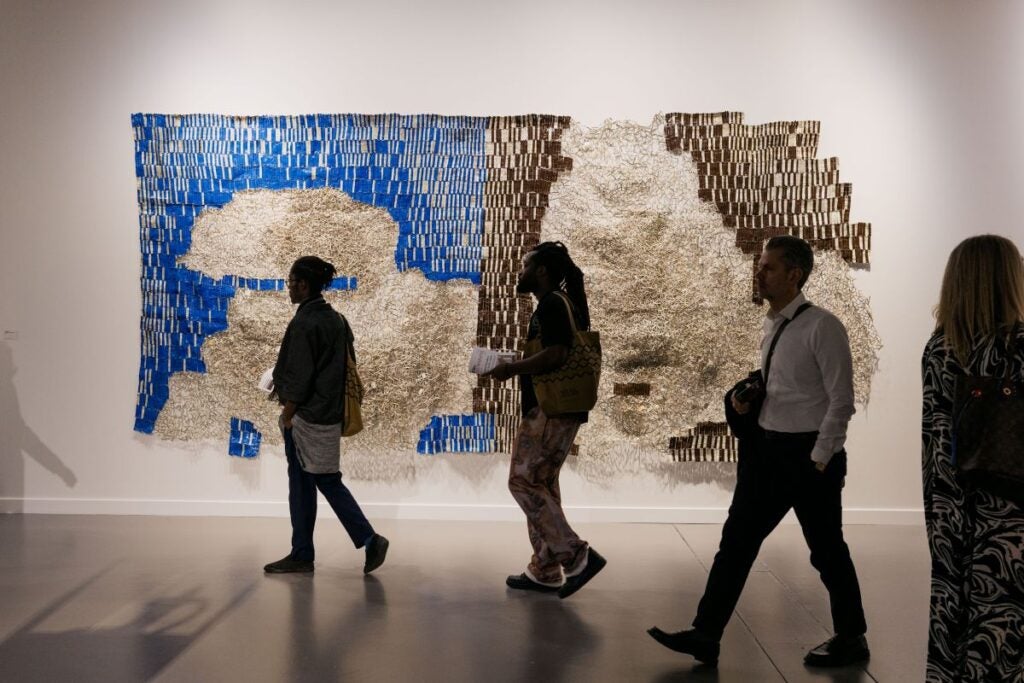
‘We closed Art Basel Qatar on an extraordinary note,’ Horowitz said.
Art Basel’s Doha iteration differed from the Swiss art fair’s other events in Miami, Basel, Hong Kong and Paris, as work by regional artists took centre stage instead of the Picassos, Kahlos and Kusamas which often attract attention.
[See also: Art market shows signs of recovery after sales slump]
One of the biggest reasons for Art Basel Doha’s success was the involvement of Al-Mayassa bint Hamad bin Khalifa Al Thani (Sheikha Al Mayassa), the sister of Qatar’s ruling Emir, Tamim bin Hamad Al Thani, said Horowitz, who was instrumental in bringing the fair to Doha.
‘Sheikha Al Mayassa is an extraordinary person and visionary within the art world,’ Horowitz said.
As chairperson of Qatar Museums, Sheikha Al Mayassa is one of the most influential figures in the Middle Eastern art world.
While Horowitz expressed discomfort at predicting the future of the Middle East’s political situation, the war in Iran has affected the Gulf states in recent weeks. Amid airstrikes in Qatar, the Gulf nation closed its airspace on 3 March, and it has yet to fully reopen. With similar disruption in the UAE and Saudi Arabia, this has raised questions for some over the safety of these nations. While it is unclear whether these issues will continue in the long term, the effects have already been felt, with Aldar Properties, Abu Dhabi’s biggest property developer, seeing its shares fall by 5 per cent last week, according to Reuters.
[See also: The best art finance providers]
The Great Wealth Transfer, which is already seeing vast sums of wealth move from the ‘Boomer’ generation to their Millennial and Gen Z offspring, is one of the most significant changes the art market will see in the coming years, according to Horowitz.
‘There is a generational transfer of wealth happening at the moment, which has been widely reported on, which is changing much of what the contemporary art world is built on,’ he said. ‘The collectors of old are ageing out of the market and many of their collections are coming up for sale at auction.’
UBS has predicted that this transfer of wealth will be worth $84 trillion over the next 25 years. The chief economist at the Swiss investment bank, Paul Donovan, seconded Horowitz’s view that this will have a significant impact on the art market.
‘As wealth increasingly moves into the hands of women and younger collectors, family dynamics, collecting motivations and philanthropic priorities are evolving, reshaping collecting patterns and long-term engagement with the art market,’ he said.
The younger generation of buyers, while they often discover artists on social media, are looking for community in the art world, Horowitz noted, which has led to an increase in in-person sales.
‘On a practical note, art fairs bring together large volumes of material in a very efficient way. This allows collectors to come and discover artists together,’ he said. ‘This is really important, especially as the world is becoming more fragmented.’
The figures reflect this change. Art fair sales increased by four per cent year on year to 35 per cent of dealer turnover, reaching their highest level since 2022. Conversely, online art sales were at their lowest since 2019, making up 16 per cent of total dealer sales.
For the art market to continue seeing success in 2026, it needs to remain international, said the author of the report, Dr Clare McAndrew, who founded Arts Economics, a research firm focused solely on the economics of the art world.
‘A wider shift toward protectionism and more domestically focused sales also poses longer-term risks, as the art trade relies heavily on international circulation and access to global audiences,’ McAndrew said.
‘Early indicators suggest cross-border trade in art remained broadly stable in 2025, but how these flows evolve will be critical to the market’s future growth,’ she added.
[See also: Monet to Mondrian: why these three paintings sold for over $40 million in 2025]