The Middle East has never been a market for the faint-hearted. In 2026, with conflict reshaping the region’s geopolitical landscape and capital flows under pressure from multiple directions, that has never been more true. And yet the families that wealth managers in the Gulf serve have navigated turbulence before, often emerging from it with their wealth more deliberately structured, more internationally diversified and more professionally governed than before.
For the advisers featured in this Index, it is precisely that quality – the capacity to hold a long-term view through short-term disorder – that defines what excellent private client advisory looks like in this part of the world.
[See also: The Spear’s Wealth Management Indices 2026]

Explore the other rankings within the 2026 Spear’s Wealth Management Indices:
Related


- Best UHNW Wealth Managers
- Best HNW Wealth Managers
- Best Wealth Planners
- Best Wealth Managers: Jersey
- Best Wealth Managers: Guernsey
- Best Wealth Managers: Switzerland
- Best Family Office Advisory & Consultancy
- Best Family Office Banking & Investment Services
- Best Generational Wealth and Family Business Advisers
Trends in 2026
A market in motion
The Middle East enters 2026 with what UBS described, before the outbreak of war with Iran, as ‘exceptional momentum’. Personal wealth across the region has surpassed $5.7 trillion, and the client base is increasingly mobile and sophisticated.
[See also: The UAE is attracting HNWs – and wealth managers are following]
But the more significant shift is qualitative rather than quantitative: the region’s wealthiest families are becoming more deliberate in how they deploy and govern their capital, and the advisers best placed to serve them are those who can hold both realities at once: the long-term opportunity and the short-term risk.
The rise of Abu Dhabi
Abu Dhabi has emerged as the defining story of the year. The emirate is no longer just a place to register structures but it is a base where families are making investment decisions day to day, with family offices often running investment platforms alongside their wealth structures.
Content from our partners



The numbers bear this out: the number of operational entities within Abu Dhabi Global Market (ADGM) has risen to 3,227 – a 43 per cent increase year-on-year. For wealth managers with genuine presence in the region, this shift represents a significant opportunity. For those treating the Gulf as a satellite market, it is a warning.
The ambition behind that growth is perhaps best illustrated by the International Holding Company (IHC), the Abu Dhabi conglomerate controlled by Sheikh Tahnoun bin Zayed Al-Nahyan, which commands a market capitalisation approaching $275 billion and recently acquired a majority stake in Richard Caring’s London hospitality empire – a deal that captured, in a single transaction, how decisively Abu Dhabi capital is moving from the Gulf outward.
[See also: Abu Dhabi’s $275 billion secret: what is Sheikh Tahnoun’s IHC?]
The Lunate effect
The announcement in April 2025 that Lunate, the Abu Dhabi-based alternative investment manager with more than $110 billion in assets under management, would acquire a stake in Azura Partners signalled something broader about where the region’s wealth is heading.
Access to private markets – private equity, private credit and co-investment – has become a defining feature of what sophisticated Middle Eastern clients expect from their wealth managers.

Several advisers in this Index noted that their alternative offering has been among the most actively discussed parts of their proposition, with clients seeking access to opportunities including late-stage private technology companies that are not yet available on public markets.
Looking ahead
The long-term direction of the region remains ambitious. Saudi Arabia’s Vision 2030 – now four years from its deadline – continues to draw private capital into sectors from tourism and technology to renewable energy, and the Kingdom ranked fifth globally for net millionaire inflows in 2025. The UAE has retained its position as the world’s leading destination for millionaire migration.
[See also: Bernard Arnault latest billionaire to comment publicly on Iran conflict]
The war with Iran has complicated the near-term picture considerably, though some of the world’s most prominent billionaires have remained publicly hopeful that it will be resolved before causing lasting structural damage. The families that wealth managers in this Index serve tend to think in decades rather than quarters — and the best advisers have learned to do the same.
Who serves the Gulf’s wealthiest
Advising Emirati wealth remains, as one adviser in this Index observed, a tight-knit circle that international firms have found difficult to break into. The advisers who have built genuine relationships within local Gulf families tend to have done so over many years, through cultural fluency and patience rather than product.
The expat and international community – Indian, European and East Asian – remains more accessible, and continues to grow as Dubai and Abu Dhabi attract talent and capital from across the world.
The advisers featured in this year’s Index are those who have demonstrated the depth of relationship, the breadth of capability and the regional knowledge to serve clients in one of the world’s most dynamic and demanding private wealth markets.
Click the links below to jump to a section of this article:
- Methodology
- Best wealth managers in the Middle East: some names to know
- Best wealth managers in the Middle East: the complete list
- Contact us
Methodology
Each year, the Spear’s Research Unit reassesses and refreshes its rankings of the leading providers in each sector by gathering data from and about the advisers and firms themselves, assessing submission forms, collating nominations, carrying out peer reviews, reviewing data from third-party sources, gathering references and recommendations, canvassing experts and conducting hundreds of interviews.
Advisers are evaluated using a proprietary scoring system that assigns different weightings to certain attributes. These scores feed directly into each new set of rankings in the Spear’s Indices. Each of these indices are published first online (according to the research calendar) and then in print. Print publication takes the form of the annual Spear’s 500 directory, which includes the top advisers in every index.
[See also: A guide to The Spear’s 500: Everything you need to know]
Each featured adviser is profiled on spears500.com. The site allows users to search the Spear’s database of more than 4,000 entities to find one (or more) to meet their specific requirements by filtering for specific attributes such as an adviser’s location, their specialist expertise and information about their client base.
Best wealth managers in the Middle East: some names to know
Mazy Moghadam
- Focus: Local Gulf region clients
- Ranking: Top Recommended
- Firm: Julius Baer
With two Ivy League degrees under his belt, Mazy Moghadam has spent the past decade supporting private clients with their wealth management and investment needs. He has spent his career advising UHNWs across global wealth hubs including London and Monaco. His latest challenge is Dubai, where he focuses on building the bank’s presence in the UAE and wider Gulf region.
‘My next push is to tackle local clients, particularly in Abu Dhabi and Saudi Arabia,’ he reveals. ‘Abu Dhabi is on the charm offensive right now, attracting wealthy investors.’
Read Mazy Moghadham’s full profile on Spears500.com
Ali-Abbas Merali
- Focus: Islamic finance
- Ranking: Recommended
- Firm: Azura Partners
Ali-Abbas Merali is a partner and head of the investment solutions group in Azura Partners’ Middle East office, working alongside Middle East CEO Mohamed Virani.
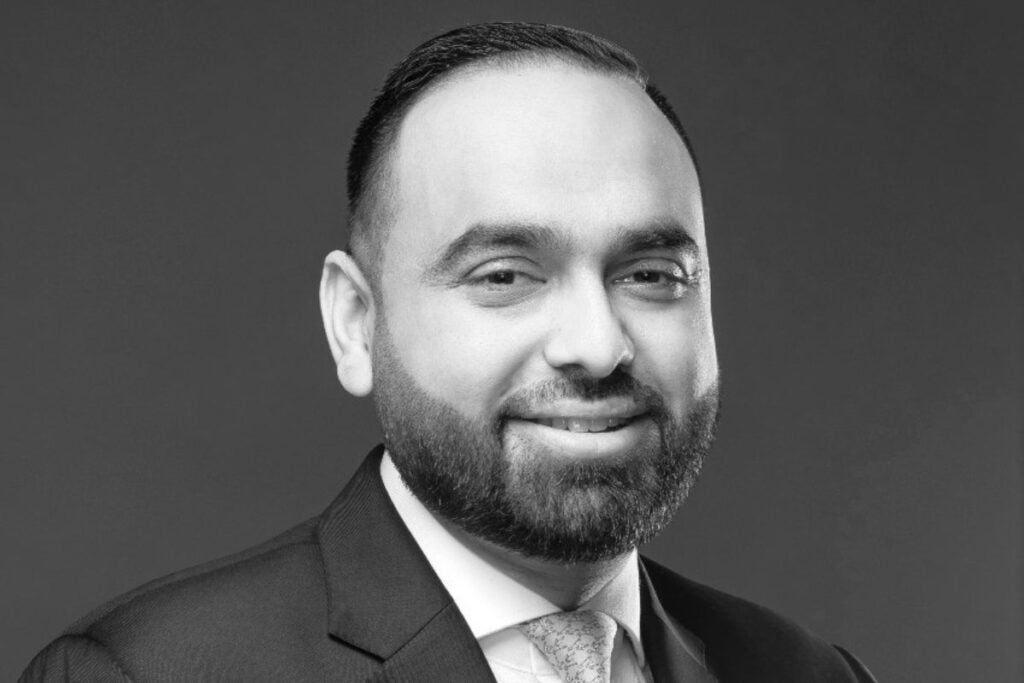
The Dubai outpost has been thriving since opening in 2021, Merali says, and has further benefited from Abu Dhabi-based alternative investment manager Lunate’s involvement. (Lunate, which has more than $115 billion in assets under management, acquired a stake in the firm in 2025.)
Being ‘in front of clients’ and providing them with ‘solutions that are best suited for the time’ are core to Merali’s investment ethos, and he is an avid proponent of using technology for information sifts in order to remain delivering top-quality client service.
Read Ali-Abbas Merali’s full profile on Spears500.com
Nash Mithani
- Focus: South Asian clients in UAE
- Ranking: Top Recommended
- Firm: Standard Chartered Global Private Bank
Nash Mithani joined Standard Chartered in 2008 and has since built a specialism at the intersection of two of the bank’s most significant growth areas: the UAE market and the global South Asian community. Now head of private banking for the UAE, he oversees the full spectrum of private banking activity for UHNW clients across the region, drawing on more than two decades in financial services.
His career has taken him from the dealing desk to the advisory suite. He began as a derivatives dealer at Citi before moving to Credit Suisse, where he worked as a relationship manager and senior investment adviser before joining Standard Chartered.
Read Nash Mithani’s full profile on Spears500.com
Best wealth managers in the Middle East: the complete list
Click on the individual names to be directed to more detailed profiles of each adviser on The Spear’s 500 website. The table is ordered by ranking and then alphabetically by surname.
Contact us
- To apply for inclusion in The Spear’s 500, complete our submission form.
- For further information about rankings and entries, please email research@spearswms.com; we aim to respond to all queries within two working days.
- For commercial enquiries and questions relating to enhanced profiles, please contact sales@spearswms.com
- To keep up to date with the Spear’s 500, subscribe to our magazine, newsletter and follow Spear’s on Linkedin and Instagram.
- If you have missed calendar deadlines for our research cycles in 2026, you can still register your interest for updates about upcoming research and rankings.
- Click here to order a print copy of The Spear’s 500.