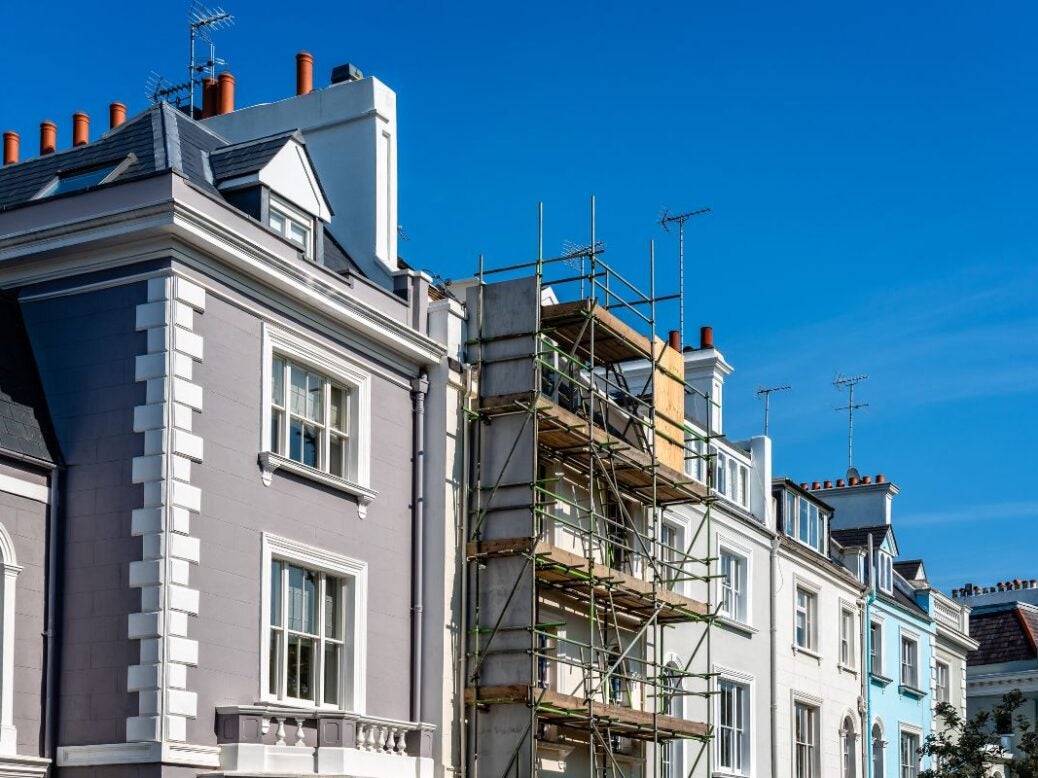
If Kirstie Allsop and Phil Spencer hosted a special UHNW edition of their hit Channel 4 series Love It or List It there’s no question which team would win.
‘Team Love It, by a country mile,’ says Alex Greaves, founder of luxury property buying agency Ridgestone Property. ‘Now when people say they want to move house, they are as likely to end up staying put and refurbishing.’
Greaves, who founded Ridgestone in 2023 after two decades working for large UK property companies, says people have become ‘put off from moving house due to the huge whack they will have to pay in stamp duty. They want to move, but they don’t want to pay six or seven figures in tax. So increasingly the solution is to extend and refurbish their current home.’

Related



It comes as no surprise that there have been reports of lavish renovation projects in the press recently. Richard and Patricia Caring, for instance, have just completed a multi-million pound complete refurbishment of their vast £40 million home hidden behind Grade II* listed Georgian terraces near South Kensington Underground station.
Patricia, 44, who married nightclubs impresario Richard, 77, in 2018, recently showed off the home, which now features a swimming pool-cum-ballroom, a spa and cryochamber, to Harper’s Bazaar. The works included closing a main road for two weeks in order to have mature trees lifted over nearby houses and into his garden.
Meanwhile, billionaire hedge fund manager Chris Rokos is overseeing the finishing touches of a £175 million refurbishment of his country mansion Tottenham House in Wiltshire.
[See also: Billionaires’ Rows: where do the world’s wealthiest UHNWs live?]
Content from our partners



Refurbishments being carried out by the rich and famous is nothing new, of course. But experts have now linked an uptick in such projects to tax increases that have made the prospect of moving house less attractive than perhaps ever before.
It’s a trend that has been witnessed by several estate agents, architects, interior designers and mortgage providers who spoke to Spear’s. It’s also supported by market data.
While there is no way of measuring how many people are choosing whether to ‘love it or list it’, there has been a pronounced decline in sales of the most expensive prime central London properties.
[See also: The priorities guiding the world’s top buyers of super-prime homes]
The volume of £5 million-plus residential property transactions was down 54.8 per cent in February 2026 compared to the same month a year earlier, according to figures compiled by LonRes.
‘While a single month of data from a relatively small market can overstate the situation, activity has been trending lower for many months,’ says Nick Gregori, head of research at LonRes.
Many factors have contributed to the drop in high-value sales, but most of the experts Spear’s spoke to for this article report that prospective buyers often mention the cost of Stamp Duty Land Tax (SDLT).
[See also: The best property investment, finance and management services in 2026]
This month, temporary threshold increases which had reduced stamp duty bills were reversed. Previously, no SDLT was payable on the first £250,000 of the value of a residential property, but the tax-free amount has halved to £125,000 for most buyers. Though this change was scheduled and will have only a small impact on buyers of high-value homes, it may be seen as yet another straw upon the proverbial camel’s back.
SDLT is levied in bands, which means that buyers of lower-value homes pay less tax relative to the value of their property. When it comes to purchases above £1.5 million, buyers must pay SDLT at a rate of at least 12 per cent on the value of the purchase above that threshold.
Additional stamp duty is payable on properties classed as second homes. In October 2024 the surcharge for second-home buyers was raised from 3 per cent of a property’s value to 5 per cent.
[See also: Highland estate owned by Russian tycoon listed at £67 million]
Non UK-resident buyers must also pay a 2 per cent surcharge, as a result of rules put in place in April 2021.
Many buyers of high-value homes would be affected by all three of the increases implemented over the past five years. A non UK-resident purchasing a £10 million second home would be in line for a stamp duty bill of £1,813,750 (and effective tax rate of 18.14 per cent) – which represents a £400,000 increase on the SDLT that would have been due on the same purchase before all three tax increases were brought in.
Even for a UK resident buying a primary residence worth £5 million, the stamp duty due is more than half a million pounds. Rather than buy a new house and hand such a sum to the tax man, many HNWs are choosing to invest in their current properties. ‘There’s a lot you can do for £500,000,’ says Marc von Grundherr, director at estate agent Benham and Reeves. ‘You could extend and refurbish your house and have some money left for a holiday.’
Von Grundherr says that recently the owners of a £4 million house in Hampstead took it off the market after ‘doing the stamp duty calculations, and realised it was the best part of £500,000’.
‘They decided to stay put, and do an extension instead,’ he says. ‘And with that the government lost [the tax income] from two house transactions.’
Peter Izard, head of intermediary mortgages at Investec, said the bank has noticed the growing trend for refurbishment rather than moving house.
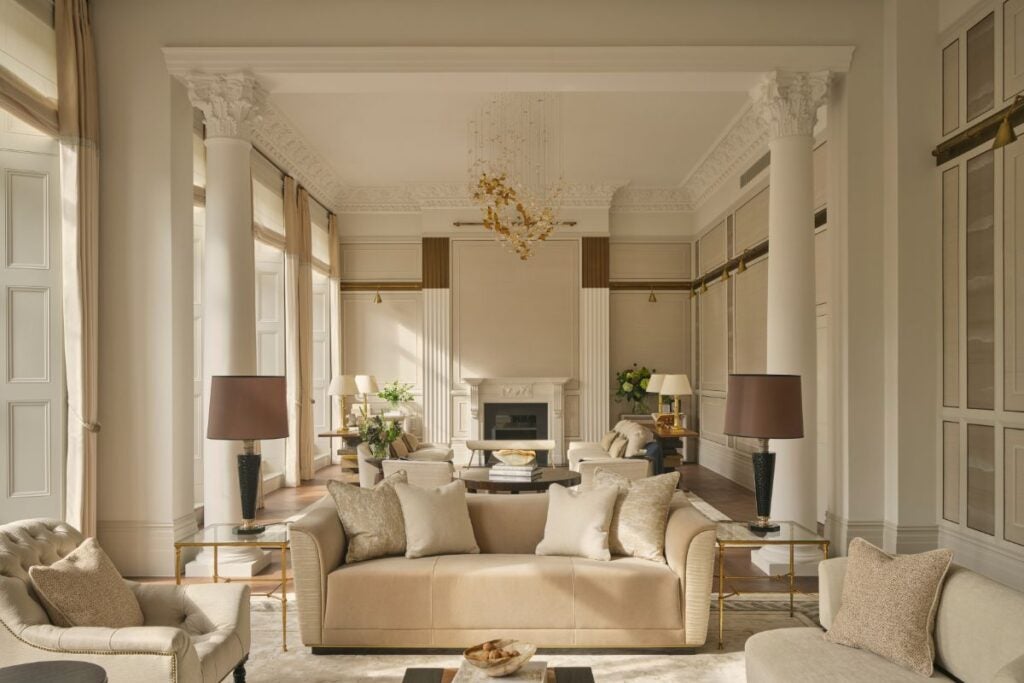
‘If the footprint of their property allows, they can extend their current home – add extra bedrooms, larger kitchens, everything they might need and want, for sometimes less than the cost of stamp duty,’ Izard says in a video call from Investec’s office in the City of London. ‘It focuses the mind – even if the budget ends up being double the cost of stamp duty, at least you’ve invested in your property.’
[See also: Becky Fatemi on breaking glass ceilings in the super-prime property world]
Izard says that even people who ‘really have their hearts set on moving’ will go to the lengths of ‘getting architects to draw up plans… just to be able to compare what they could do at their current place with what they could move to.’
The projects are mostly in London and the southeast, and generally include adding bedrooms, larger kitchens, living spaces, gyms, and have sometimes dug down in new basement.
Perhaps unsurprisingly, the banker emphasises the importance of financing such projects in an appropriate way. ‘A tailored solution such as a Revolver Mortgage can allow funds to be drawn down gradually during the renovation, so clients can meet building costs as the bills come in and only pay interest on the amount they have actually used.’
[See also: Will the mansion tax hurt prime property prices?]
Izard says that the bank is funding over a dozen such major projects per year. They tend to be undertaken on homes already valued at least £3 million and Izard has worked on some worth more than £20 million.
Those that do decide to extend and refurbish their current homes are calling on some of the country’s most sought-after architects and interior designers to remodel their houses.
Among them is Charu Gandhi, founder of Kensington-based architecture and design studio Elicyon. Gandhi, who has designed a number of apartments in One Hyde Park as well as in Dubai’s One Palm Jumeirah, tells Spear’s that the ‘friction cost’ of Stamp Duty has led more people to call on her services.

[See also: What Budget 2025 means for high-earners and HNWs]
‘They are now more likely to renovate because of Stamp Duty and because they took a lot of time and focus to buy the house they did and they want to stay put for longer,’ she says. ‘There is a lot of cost and effort with each transaction, they will have to do AML (anti-money laundering) checks again.’
Gandhi says she is currently working on a renovation project for a couple in Chelsea, who – after 17 years in the house and seeing their children leave home – are finding their home ‘slightly too large’.
‘They have decided to renovate rather than move because their home is really special and unique and they don’t know if they will be able to find anything as special,’ she says. ‘And the Stamp Duty cost would be considerable.’
The house, she says, is worth considerably more than £100 million, and the renovation she has planned will be ‘north of £10 million’.
‘We are at the concept stage,’ she says. ‘There are five different approaches we could take.’ All of the options will involve a complete overhaul, with a new kitchen, new bathrooms, and new furniture throughout. This project will also include a ‘wellness zone’ focused on pilates.
Gandhi says the family will move out to one of their houses overseas throughout the construction project. ‘They’re less intimated by taking on a project, because at that level of wealth they have the ability to put in place a professional team to handle everything,’ she says. ‘Our goal is they only have to do the fun bits.’
Spear’s 500 advisers featured in this article include Alex Greaves, Recommended Property Broker. To contact Alex Greaves, click the button on the right.