Luxury never sleeps. The top fashion and hospitality brands are always looking for novel ways to part the super-rich from their money and a glut of them seem to have come up with the same solution all at once: superyachts.
Superyachting, the brands’ thinking goes, is the ultimate indulgence – but it is pricey. Take the £170 million Carinthia VII, considered by many to be the original superyacht. It costs £285,000 a day to charter. Yes, you read that right. But what if you could have a similar experience, shared with a small number of similarly well-heeled guests, from around £40,000 a week? Would that be tempting?
Four Seasons, Ritz-Carlton, Aman, Jumeirah and Waldorf Astoria think so. They are all building or launching branded luxury boats (which are super yachts but not, technically, superyachts). So is Bernard Arnault, the head of the LVMH conglomerate. He has partnered with the French hotel group, Accor, to revive the Orient Express trains and diversify into hotels and yachts.

[See also: The best yacht advisers]
Related



Which is why, on a choppy afternoon just off the coast of Cannes, I arrive at the Orient Express Corinthian sailing yacht.
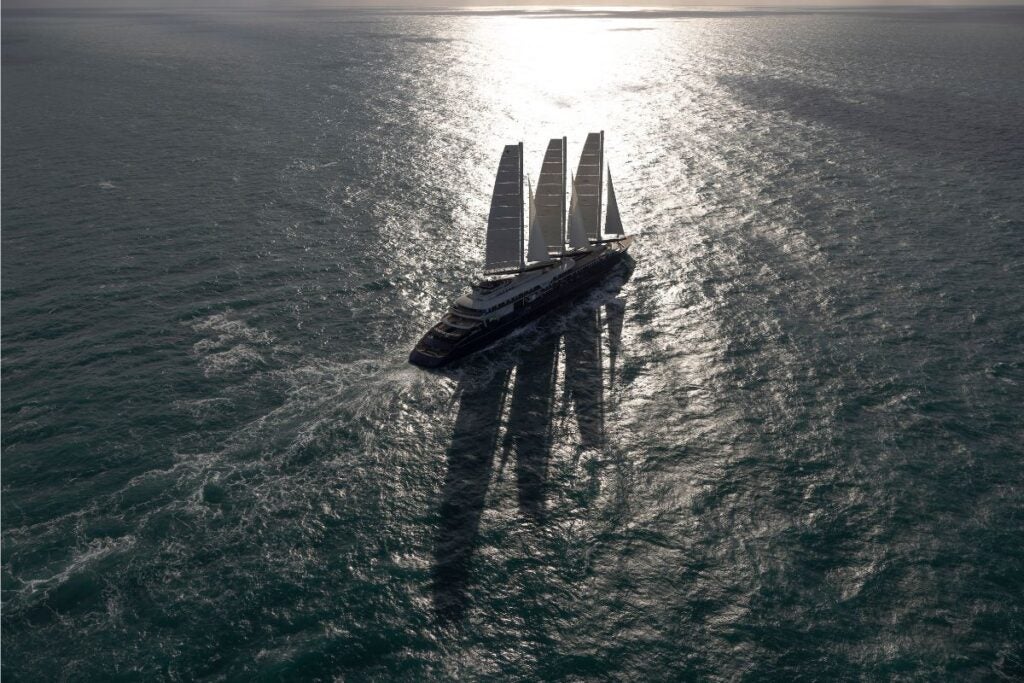
First impressions count and the 220m-long Corinthian looks the best of the new breed of hotel-branded vessels. The three masts soar 328ft from the navy-blue hull. They are so tall that they are designed to lean to one side so the ship can pass under the bridge at the entrance to New York City’s cruise ports.
The 48,500 sq ft sails create silent journeys and cut fuel consumption by 40 per cent. When the sails are down and the vessel is powered by its vast engine, they fold neatly on to balestrons which look like yacht hulls.
[See also: Superyacht maker latest to defy London wealth ‘exodus’ with new Mayfair showroom]
Content from our partners


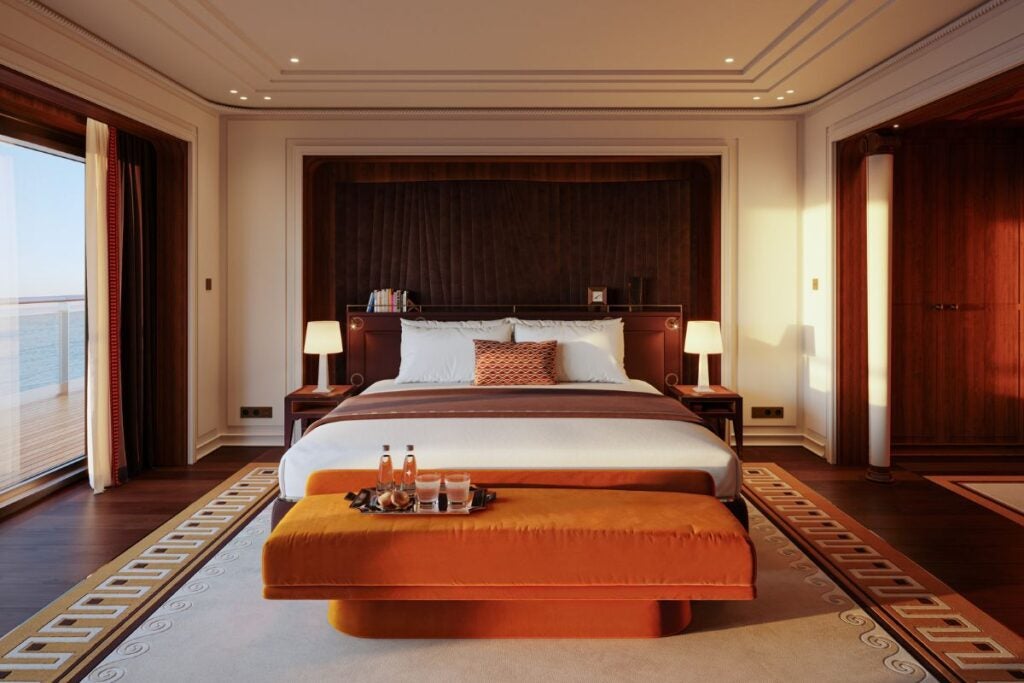
The 54 suites accommodate up to 110 guests, who will be heavily outnumbered by the 170-strong crew. ‘We are smaller, have fewer guests, better service and offer a more luxurious atmosphere,’ says Maxime d’Angeac, the Paris-based architect and designer behind the yacht and one of the restored Orient Express trains.
Smaller here does not mean cheaper. The Corinthian costs £35,000 for two people for seven nights on an all-inclusive basis, including all drinks, laundry and dry cleaning. Spa treatments and the top restaurant cost extra – which could easily push the damage up to £40,000.
All rooms are large enough that every bathroom has natural light, a feature many hotel-branded yachts lack, including the Four Seasons. The Guerlain Spa is the most upscale on any boat I’ve seen. The treatment tables face directly towards the panoramic windows, so you can admire the view while the masseur rearranges your internal organs. There is French fine dining, a plush cinema, and library and bars that evoke the golden age of train travel and luxury liners.
One note of caution for those tempted. As a sailing yacht, rather than a large motor cruiser, the Corinthian pitches and rolls more than some stomachs may be able to bear.
The Four Seasons 1 – the first of the Toronto-based hotel group’s three vessels – takes twice the number of guests as the Corinthian and is finding its sea legs.
I boarded in Greece for a four-day cruise and while the overall design of the yacht, rooms and spa were more to my liking – cherry woods, baby blues and vast sun-filled windows – its service and food are a work in progress. Creating a super luxury hotel at sea is harder than it looks.
[See also: Forget product – luxury is now about privacy, trust and emotional value]
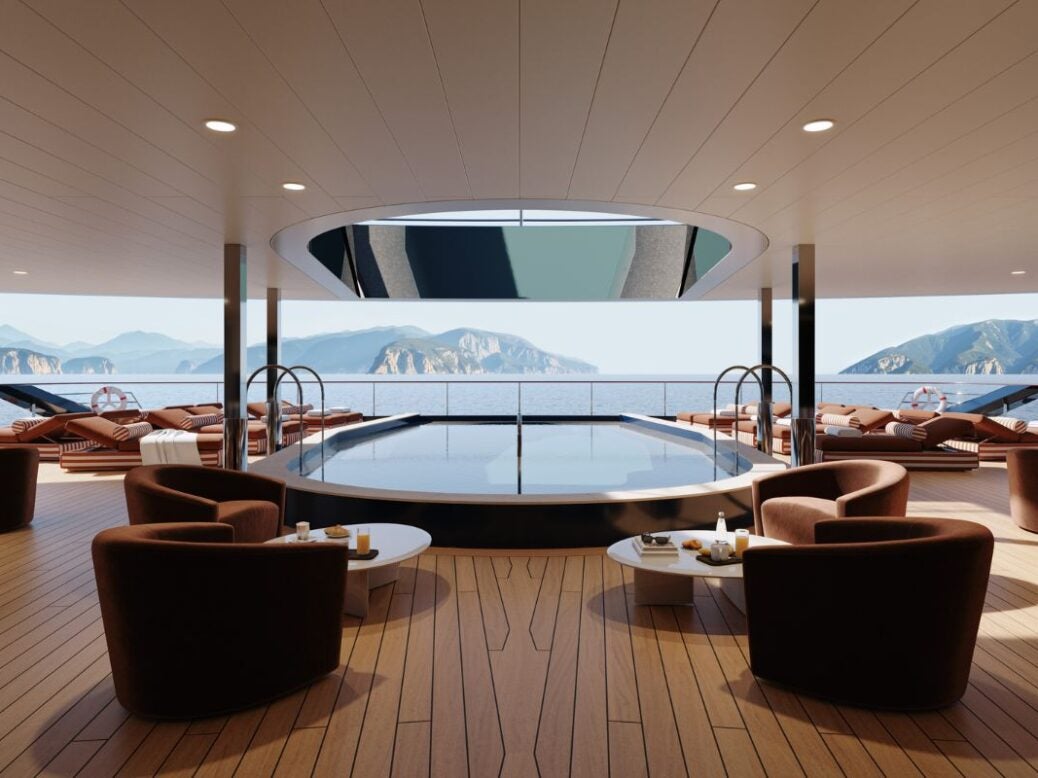
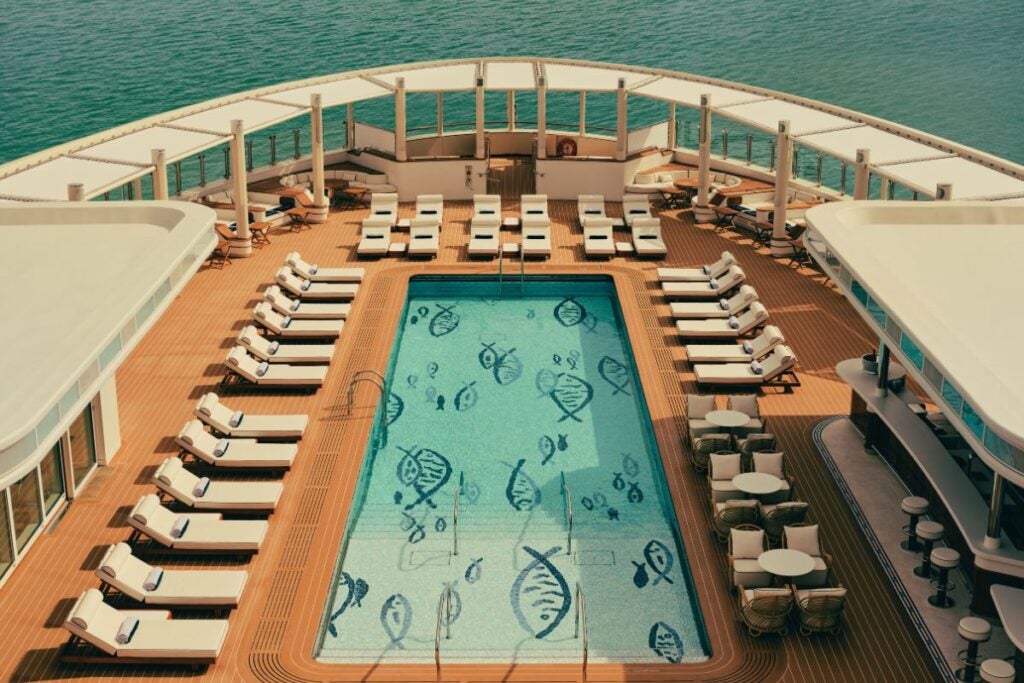
Swimming pools illustrate the point. The Four Seasons has got it spot on, creating a 10m x 6m pool. By contrast, the pool on the rear of the Corinthian could pass as a puddle. There is a stylish 54ft long saltwater lap pool on the top deck beneath the sails, with walls to create a little shade. But it is only big enough for one or, at a pinch, two guests to use at a time.
Early design wrinkles aside, the case for recreating a branded luxury hotel or train experience on the water looks strong.
Luxury cruises have been growing rapidly, with passenger numbers rising from 767,000 in 2022 to an estimated 1.21 million in 2025, according to the Cruise Lines International Association. That’s why other luxury titans and tourism operators have practically been queuing up to crack the champagne on the bow of their own new vessels, among them Gucci owner François Pinault and luxury travel company Abercrombie & Kent.
[See also: The best luxury travel advisers in 2026]
But the market is getting crowded. The Ritz-Carlton Yacht Collection, whose three vessels – Evrima, Ilma and Luminara, which are twice the size of the Four Seasons – have struggled with low occupancy rates. The group has accumulated reported losses of almost $700 million since 2017.
The company has dialled up marketing to try to boost demand, notably by hosting what came to be regarded as the celeb party of last summer aboard Luminara (attended by Kendall Jenner, Colman Domingo, Martha Stewart and Naomi Campbell).
Time will tell whether the strategy pays off. In the meantime, its lenders have agreed to push back repayment dates and relax debt terms.
[See also: The best luxury travel companies in 2026]
How will the other new yachts fare? I suspect Corinthian will succeed because it is targeting a very small subset of the ritzy yachting market – wealthy folks who want a large sailboat.
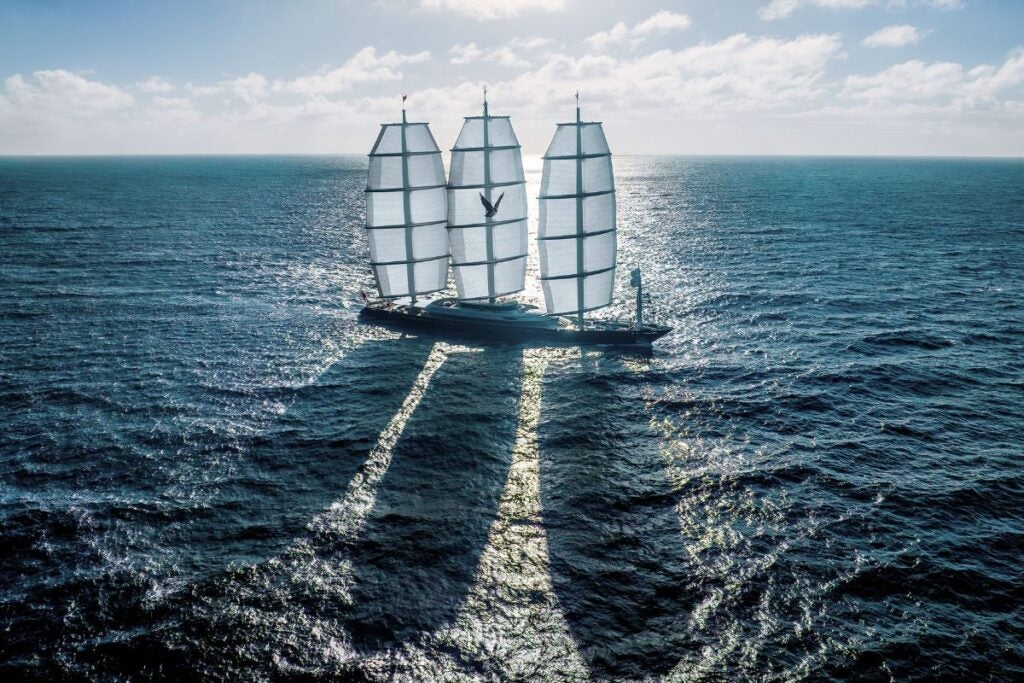
The only other sailing yacht in the sector is Jumeirah’s Maltese Falcon. It can take just 12 guests, which provides a guarantee of privacy and great service on a charter that many wealthy travellers prize. Waldorf’s vessel is also small and should thrive.
Four Seasons did not get to be the world’s leading luxury hotel group without grinding the gears when needed. Its plans to improve 53 the Four Seasons 1 will include leveraging the playbook of its highly successful branded private jet, which it uses on multistop, three-week adventures across Africa, Asia and Latin America. CEO Alejandro Reynal will tell his well-heeled regulars that, like the jet, the boat offers ever-changing scenery, privacy, safety and security.
[See also: Will Mercedes’ superyacht members’ club sink or swim?]
Reynal will also play up the fact that unlike most of the other hotel-branded yachts, his is not all-inclusive. He wants guests to get off to eat and drink when the boat is at anchor. In an industry which is often accused of doing too little to bolster local businesses, this is a smart move.
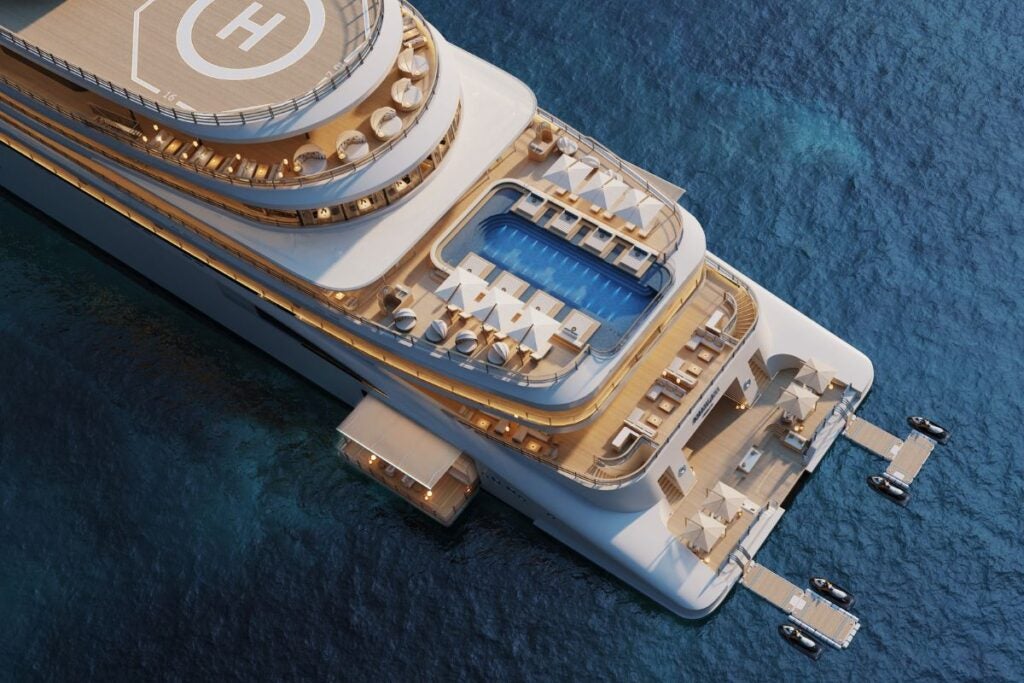
If that doesn’t work, he can fall back on the ultimate bragging rights. The four-deck, 927 sq m Funnel Suite has 280º views, three bedrooms, a dining room and lounges, a gym, an outdoor shower, a pool and a private lift. It costs more than £250,000 for a week.
[See also: Why is the first electric Ferrari dividing the brand’s clientele?]
As for Aman’s incoming offering, Amangati, reports suggest the £500 million vessel, which will set sail in 2027 with around 100 guests, will start at £5,000 a day, rising to £20,000 a day. That might test the pockets of even the most devoted ‘Aman junkies’, as the brand’s devotees nickname themselves.
For that kind of cash they could charter a private, staffed catamaran for six people and tell the captain where they want to go, what they want to do and what they want to eat when they wake up in the morning. Aman would counter that those are not Aman boats.
Decisions, decisions.
This article first appeared in Spear’s Magazine Issue 100. Click here to subscribe