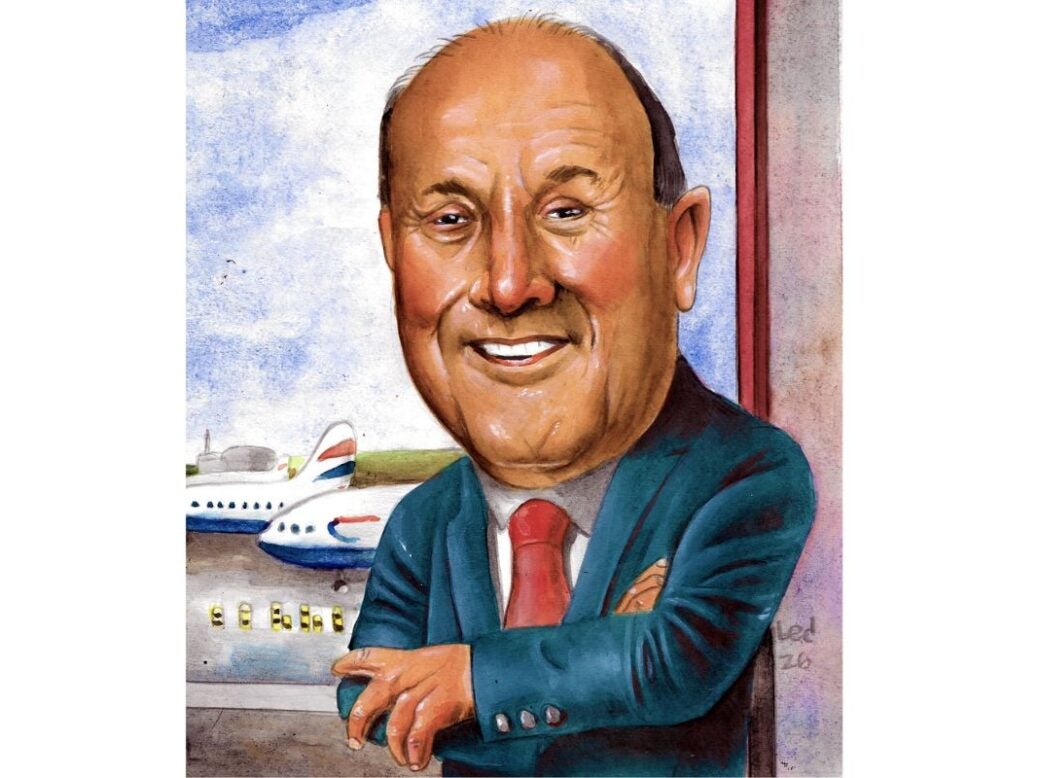
Heathrow transformed Surinder Arora’s life. It made him a billionaire. Now the hotelier and developer wants to return the favour to Europe’s biggest and busiest hub airport.
‘I want to build a third runway and build and operate a new Terminal 6 to handle all the flights on the new runway,’ he says, as he looks out of the top-floor windows of Terminal 2’s Hilton Garden Inn, which he owns and runs.
‘We need to grow the airport and our economy. If we don’t, other European airports and economies will benefit.’

[See also: The Windsor is bringing seamless luxury to Heathrow]
Related
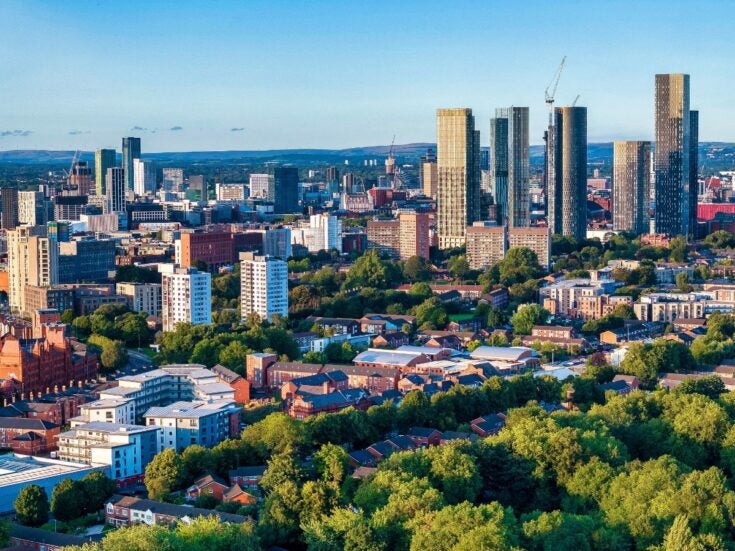
From his eyrie, Arora can survey his empire: his office on the other side of the northerly runway, the land beyond where he hopes to build the third runway after the government has approved it, other hotels he owns and runs, and Terminal 3 next door. It was at T3 that he first arrived in Britain in April 1972, aged 13, on a flight from India. ‘I could only speak Punjabi,’ he recalls.
He is telling me the story because his business life defines the immigrant’s dream – even if it started in difficult personal circumstances.
The young Arora was met on his arrival by Shila and Munshi Arora, ‘who I had always been told were my aunt and uncle’. He did not know he was actually meeting his real mother and father for the first time.
[See also: The secret life of London’s Billionaires’ Row]
Content from our partners


He was brought up from birth by his mother’s sister, Jumna, but Shila decided to take over her son’s upbringing after successive visits to India, where she could see he was not studying. He explains: ‘She said to Jumna: “Send him to London and I’ll knock him into shape”.’ Shila revealed her true identity a few days after he moved into the family home in Southall.
Her efforts with the teenager succeeded beyond both their wildest dreams. Arora, 67, is one of Britain’s most successful Asian-born entrepreneurs with a personal fortune of £1.7 billion, placing him 97th on the latest Sunday Times Rich List. He created and runs the Arora Group, Britain’s largest family-owned hotel company.
By year end, it will have 21 hotels, with over 8,500 bedrooms and more than 3,000 employees. Arora Group’s hotels are created by its own development division, Grove Developments, which specialises in commercial, residential and hospitality projects.
[See also: The most expensive hotels in London]
Arora is now pushing for his biggest deal yet – building the troubled, long-delayed third runway at Heathrow. He pauses to order for us both before he explains his £23 billion plan. Grilled prawns and crunchy salad followed by peri-peri chicken wrap with fries and chilli sauce, accompanied by fizzy water and coffee.
Heathrow’s owner, Heathrow Airport Ltd, has proposed a £50 billion scheme for a 3,500m-long runway that would mean diverting the M25. Arora suggests a shorter runway – 2,400m, which is big enough for narrow body and some wide body long-haul jets but would not impact Europe’s busiest motorway. The runway could be extended later, if need be.
Arora’s scheme, called Heathrow West, has the backing of major airlines, including British Airways and Virgin Atlantic, as well as key airport operator, Swissport. The ultimate cost of either scheme is likely to be borne by the airlines, who will pass it on to passengers in the form of ticket surcharges. However, passengers would likely benefit from lower surcharges if Arora’s plan goes ahead, since the cost of his proposal is lower. Ministers have yet to make a decision.
[See also: Ultra-luxury hotels double down on high-net-worth travellers]
The hotelier claims he could build the new runway by the current target date of 2035, if legal and planning obstacles are bulldozed by the government. Heathrow insists its scheme would be operational by 2035, though critics question whether this is realistic given the scale of its proposals.
Arora also wants to build a new sixth terminal at Heathrow on land between T5 and the M25 motorway to help serve the 40 million passengers a year who will use the new third runway.
‘I have never built an airport terminal before but I knew nothing about hotels or construction when I started. I used to say to my team: “Can I deliver a four-star hotel with five-star service at three-and-a-half-star prices?” And it’s the same dream here. There’s always an element of David and Goliath in what I do.’
[See also: The best aviation and yacht lawyers in 2026]
The young boy who arrived in London in 1972 would be astonished to hear the man talking today. He could not shake off his ‘old ways’ when he had settled into his new home town.
‘I skipped school and lied to my mum about it. She told me: “If you ever lie to me, next time you’re out of the house.”’ From that day, he says, he began to get his life together.
After leaving school, he started work as a junior clerk with British Airways at Heathrow. His introduction to hotels came at the Penta Hotel at Heathrow, which later became the Renaissance, where he worked as a wine waiter in the evenings.
His mother was always on the lookout for other job opportunities for him, so when in 1982 a financial adviser from Abbey Life knocked on the door trying – and failing – to sell her investments, she asked: ‘Do you have any jobs for my son?’ He started the following week as a part-time financial adviser.
He would start at 6.30am at BA, finish at 2.30pm, then drive to Isleworth to the Abbey office, ‘and then I would see clients in the evening. Very rarely would I get back before 11pm. And then I was back at BA at half six’.
I ask if he experienced racism in those days. ‘Yes. But racism to me, that’s all nonsense. You just work through it. If I have to work twice as hard as someone else, I’ll do it. Some people, my countrymen, used to sit back, and say: “Oh, I can’t get this because of my colour.” I say: “Guys, get out of bed. Stop moaning and get on with it”.’
[See also: Why the rich continue to bet on bricks]
The financial training convinced him that property would be a good bet, so he used his savings to begin buying modest homes around Heathrow airport. After snapping up a dozen, he finally quit BA and later Abbey, and devoted himself to the sector full time.
He bought four derelict homes near the airport that were owned by Sheila Hancock, John Thaw’s wife, for £161,000 and converted them into cheap guest houses for British Airways cabin crew. That led to a larger – £20 million, 270 bedroom – hotel: the Arora Heathrow.
‘Then I got the chance to buy the 710-room Renaissance where I had waited tables,’ he says.
[See also: Welcome to Scarsdale, New York – America’s wealthiest suburb]
More than a dozen hotel purchases and developments followed, including the Sofitel at Heathrow Terminal 5, the Crowne Plaza and Holiday Inn Express at Terminal 4, the InterContinental at the O2 and the Fairmont Windsor Park.
Arora’s firm runs hotels for brands such as InterContinental, Accor (Sofitel), Marriott and Hilton that usually insist that they manage operations themselves. ‘They see what we do and they trust us with their brands,’ he says.
Arora will break new ground later this year when he opens his first overseas property: the Sofitel Dublin Airport. It will be followed by his first five-star luxury hotel in central London.
‘We bought the Ministry of Justice building in Petty France, St James,’ he reveals.
In total, he says the Arora Group is set to invest £2 billion in the UK over the next two years.
Success has rewarded Arora with a villa in Dubai, which he visits often. In the UAE, he is surrounded by wealthy families, who have moved to the desert city state to avoid ‘punitive’ taxes.
[See also: The Whiteley sets the standard for luxury developments in London]
‘We’ve lost so many people, so many taxpayers. Sadly it will come to hit us all in future generations,’ he says. ‘Not today, not tomorrow, but in the next five to 10 years. We will miss the capital and entrepreneurship.’
Is he not tempted to join their ranks? ‘My family decided we’re going to stay here.’ He says he is hopeful that future governments will reduce taxes and control immigration: ‘To grow and to begin to pay down our national debt, we need lower taxes on businesses and people coming into the country to work.’ But he adds that immigrants should only be admitted ‘if they have a job guaranteed before they come in’.
His view is that businesses should help the government in this effort. ‘These days it’s so easy, through Teams and Zoom, to recruit people. It should be up to the employer to make sure the employee has accommodation and also private medical cover.’
[See also: Saudi Arabia opens doors to foreign property buyers – but is it worth investing?]
He and his son Sanjay, 36, who now works as the Arora Group’s CEO, believe ‘Britain should and can still be the best in the world. We should be in the lead around the table at the G7 and the G20’.
Arora looks out of the window towards T3 and concludes: ‘I came to this country with nothing and with no education. Now we have a group employing over 3,000 people. If someone like me can make a success in this great country, then anyone can do it.’
There’s only one question left to ask. When England and India play cricket, and he takes a seat in his box at The Oval, which team does he support? ‘That game I always support the umpires.’ That’s a complete cop-out, I protest.
He relents: ‘I have Indian blood. You never forget your past.’
This article first appeared in Spear’s Magazine Issue 100. Click here to subscribe