Big, brash luxury is increasingly a thing of the past. Instead, modern luxury consumers are looking for ‘quiet luxury’ and intangible expressions of wealth and status such as privacy, trust and meaningful relationships.
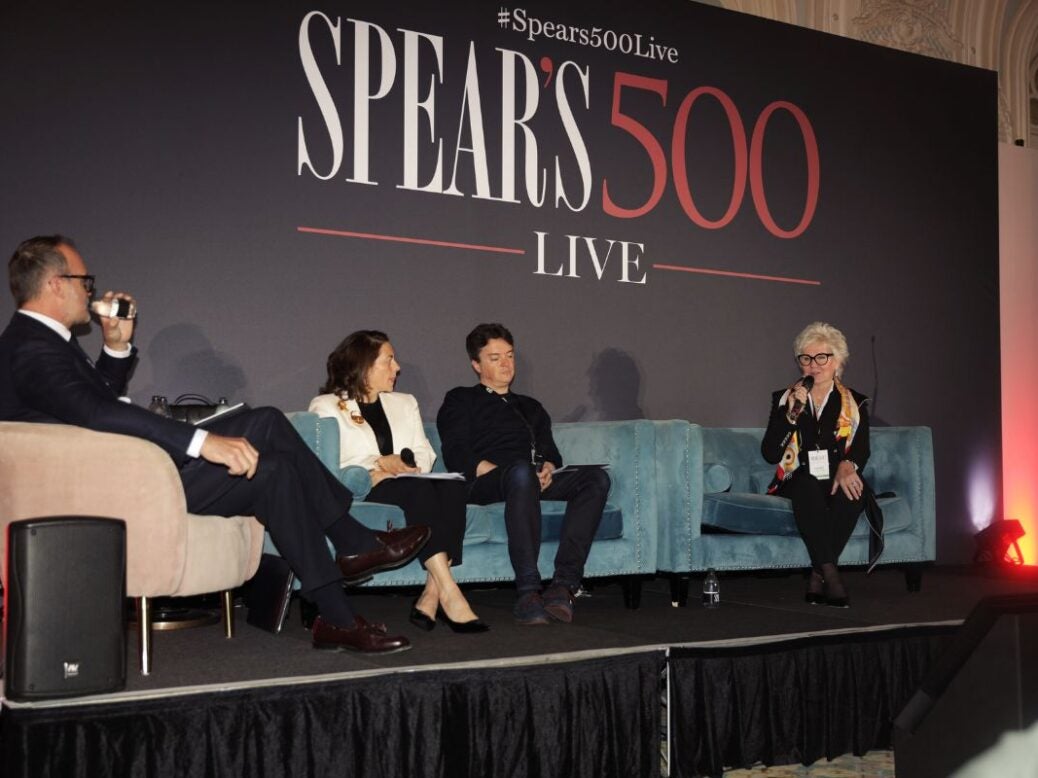
‘Luxury is no longer about the product and the price, nor even the craftsmanship and the history of the brand,’ said Alyne Hansen-Damm, founder of AHD Consulting, at Spear’s 500 Live earlier this week. ‘It’s about how it makes the client feel. Emotional connection is key.’
Hansen-Damm was joined on the panel by Jules Maury, head of Scott Dunn Private, which arranges unique travel experiences for ultra-wealthy clients, and Jamie Caring, founder of the consultancy Sevengage and scion of the restaurant and private members’ club empire founded by his father, Richard.

[See also: Will Mercedes’ superyacht members’ club sink or swim?]
Related

‘True luxury is linked to cultural relevance and emotive impact,’ said Caring. ‘And it’s centred around trust and privacy.’
Caring also noted what he called a ‘duality’ in how modern consumers approach luxury. ‘A lot of luxury is linked to heritage and brands that have decades of reputation,’ he observed. ‘But luxury consumers are also looking for convenience, innovation and modern technology.’
For Maury, the success of her invitation-only travel concierge business is based on one-to-one relationships and offering antidotes to the pressures each of her clients lives with. ‘They’re time-poor, their lives are fast-paced and they get burned out,’ she said. ‘And when they get burned out, they come to us to take them and their family somewhere special. For them, true luxury is having one person, a relationship manager, who knows them inside out and knows what their family wants and all the things they enjoy.’
[See also: The best luxury travel advisers in 2026]
Content from our partners



Caring said the shift had forced brands to behave like members’ clubs. Already in London this year, luxury Swiss watchmaker Audemars Piguet has opened a new club-style space on Clifford Street called AP House that is designed to host rooftop parties and live performances for its clients. In April, the pop-up Louis Vuitton Hotel London opened on the site of the former Morton’s private members’ club. The three-storey townhouse blurs the lines between retail, hospitality and exhibition.
‘You walk into a members’ club and they know your name and your partner’s name, and which seat you like to sit in and that your brother is in hospital,’ said Caring. ‘Hyper-personalisation is about relationships.’
But Hansen-Damm said many luxury brands were still lagging behind the trend. ‘To an extent, everything is still now focused on sales and not the actual relationship with the client,’ she said. ‘The aim would be to be invited to the client’s wedding.’
She continued: ‘Luxury brands need to shift towards the art of servicing, where there’s no pressure to buy. Everything has been so transactional so far, and clients can sense that. Client relationships that are going well are those where the brand is not trying to sell them something forcefully but build an honest relationship. It’s not about huge spectacle, it about thoughtfulness and the emotion that will be generated through those experiences.’
But with hotels and restaurants gouging clients during events such as this summer’s FIFA World Cup, Maury warned that ultra-wealthy luxury consumers still prioritise value. ‘People will pay for anything as long as the service is there,’ she said. ‘But some places are charging a lot but they’re not delivering the quality. Today, the ultra-high-net-worth community does questions prices. Those clients won’t pay if they think something’s over-priced, if it’s taking the Mickey.’
Hansen-Damm also cautioned against hiking prices to maintain the veneer of scarcity, a policy adopted by many luxury brands since the pandemic luxury boom. ‘Clients are not stupid, they know how it works and they don’t like it,” she said. “Something has to change in the luxury world because clients are moving away from these brands.’
Caring pointed the finger at two of London’s newest clubs. He criticised The Leconfield Club, which is backed by former UK Prime Minister Liz Truss and has a reported £500,000 joining fee, and Belgravia’s The Pembroke, pitched as London’s first ‘superclub’ and due to open this autumn. ‘If the story is that you’re the most expensive thing you’ve ever seen, it’s not a story,’ he said. ‘If you’re selling memberships, no one wants them.’
Caring, who lambasted younger generations of members for ‘wanting everything quicker and bigger’ and always ‘complaining’, also commented on the future of rival Soho House, which was returned to private ownership last year in a deal worth $2.7 billion (£2 billion). ‘I think it’s going to take them a decade to gain people’s trust again,’ he said after the group’s catastrophic 2021 listing on the New York Stock Exchange led to a fall in popularity and profits. ‘If they were really brave, they would re-curate their membership, but I don’t think they can afford to.’
[See also:‘We never say “no” – unless it’s illegal’: The secret life of a Raffles butler]
The panel agreed that the luxury sector was entering a period of reverse democratisation, after a long period of open access to brands and experiences accelerated by the internet and social media. ‘There is a retrenchment, the opposite of democratisation, with smaller, more curated, more limited spaces for luxury,’ said Caring. ‘It’s much more private than it was.’
Maury summed up the discussion: ‘When you have someone who really wants to spend time talking to you, as opposed to someone who just wants to hand you an Amex card, that’s when the transaction almost moves behind you, when you’ve broken the glass ceiling.’
Watch the full panel
Find out more
Spear’s 500 Live is the premier live event for private client professionals and leading figures from the private wealth and family office ecosystem. The 2026 edition took place on 6 May at The Savoy in London.
Spear’s 500 Live was presented in association with our partners the Charities Aid Foundation, CMB Monaco, Guernsey Finance, HCA Healthcare UK, Payne Hicks Beach, Riverstone, Scott Dunn Private and Stewardship.
For commercial enquiries concerning Spear’s events, contact shady.elkholy@spearswms.com.