A generation ago, the most ambitious families in Asia Pacific sent their children to board in Britain. Today, many no longer need to.
As UHNW families have followed wealth and opportunity to Singapore, Hong Kong and Kuala Lumpur, the demand for elite schooling in the region has grown with them, and the schools have risen to meet it.
The most visible expression of that growth is the branded school: overseas campuses of British independent institutions that take the principles and reputation of their founding school into new territory. According to the Independent Schools Council’s 2025 census, 115 such campuses now operate worldwide, educating almost 87,000 students.

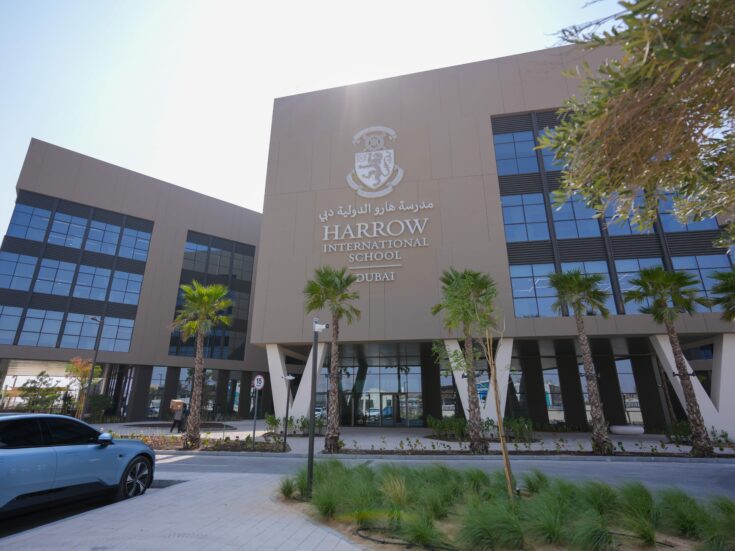
Among the branded schools in the Spear’s Index 2026 are Brighton College Bangkok, Harrow International School Hong Kong and Marlborough College Malaysia. The question that follows these schools, however, is one they cannot entirely escape: how faithfully do they replicate the original?
Related

Many have adapted – becoming co-educational, moving to day school models, adjusting their curricula. Some present themselves as near replicas; others as schools merely inspired by their British parent, shaped as much by local context as by the founding institution’s traditions.
Explore other schools within the Spear’s Schools Index:
- UK senior schools
- UK prep schools
- Switzerland schools
- Europe (excluding Switzerland) schools
- North America schools
- Middle East schools
- Rest of the world schools
The historic schools on this list carry a different kind of authority. Many were established by pioneering educators who arrived in the region with the explicit intention of building a British-style school from the ground up. The Scots College Sydney, Raffles Institution in Singapore and the Alice Smith School in Kuala Lumpur all fall into this category – institutions whose reputations have been earned over generations as opposed to inherited by association.
For many families, the draw of these schools is inseparable from the networks they have produced. Raffles Institution counts Singapore’s first president, Yusof Ishak, among its alumni; Malay College Kuala Kangsar counts the current Malaysian prime minister, Anwar Ibrahim.
Content from our partners



The schools featured in this year’s Spear’s Schools Index represent the finest private education the Asia Pacific region has to offer —selected by the Spear’s judging panel team for the rigour of their teaching, the breadth of their offering and the strength of their record.
Click the links below to jump to a section of this article:
- Methodology
- The best private schools in the Asia Pacific region: some names to know
- The complete list of top private schools in the Asia Pacific
- Find out more
Methodology
Spear’s has worked closely with the expert team at Thuso to refine the methodology underpinning the index, and to convene an expert panel of leading international educationalists to contribute their knowledge and insight to the research and selection process.
The Spear’s Research Unit collected data and information directly from candidate schools, using a combination of online forms and interviews. This was supplemented with additional research and intelligence and insight from Thuso and the panel of expert educationalists.
The Spear’s Schools Index has also been underpinned by the following key principles:
- While examination results and academic attainment are key considerations, they are not the only things that matter. Leading schools are not necessarily the most academic. ‘Hot houses’, therefore, are not to be viewed with approbation.
A wide range of social, cultural, and pastoral factors have been weighed in finalising the index. In some cases, some schools with strong academics have been omitted where they fall short in relation to these wider considerations. Notably, the team have been cognisant also of ‘cultural’ and ‘value based’ factors which are of growing concern in relation to many families. This is especially relevant in a climate in which some schools may be viewed as adopting an ‘indoctrinatory’ approach that might risk stifling free debate and the associated critical thinking. - Families are increasingly mobile, with new global cities emerging as key hubs. This is particularly the case for cities such as Dubai, as well as established regional hubs in Europe, Africa, Latin America, South-East Asia, and the Pacific. Likewise, a growing number of families, often citing concerns over cultural considerations, are opting for more ‘traditional’ institutions, in Africa, East Asia, and the Middle East, in preference to institutions in the United Kingdom, the United States, and Switzerland.
- Reputation and standing are not insignificant. The reputation and standing of a school shape and influence its character, the parents and pupils it attracts, and its position both regionally, and internationally. In particular, some of the schools best established in the Index continue to draw many generations of international families, demonstrating the extent to which they have retained the trust of alumni.
Further information about the composition of the panel is available here.
The best private schools in the Asia Pacific region: some names to know
Tanglin Trust School
- Focus: Respect, responsibility, purpose
- Country: Singapore
- Day fees: $27,400–$44,000
Initially opening with just five students in 1925, the Tanglin Trust School is the oldest British international school in Southeast Asia. Today, it continues to flourish, offering a high-quality, internationally minded education to a student body of 2,850 children representing more than 50 nationalities.
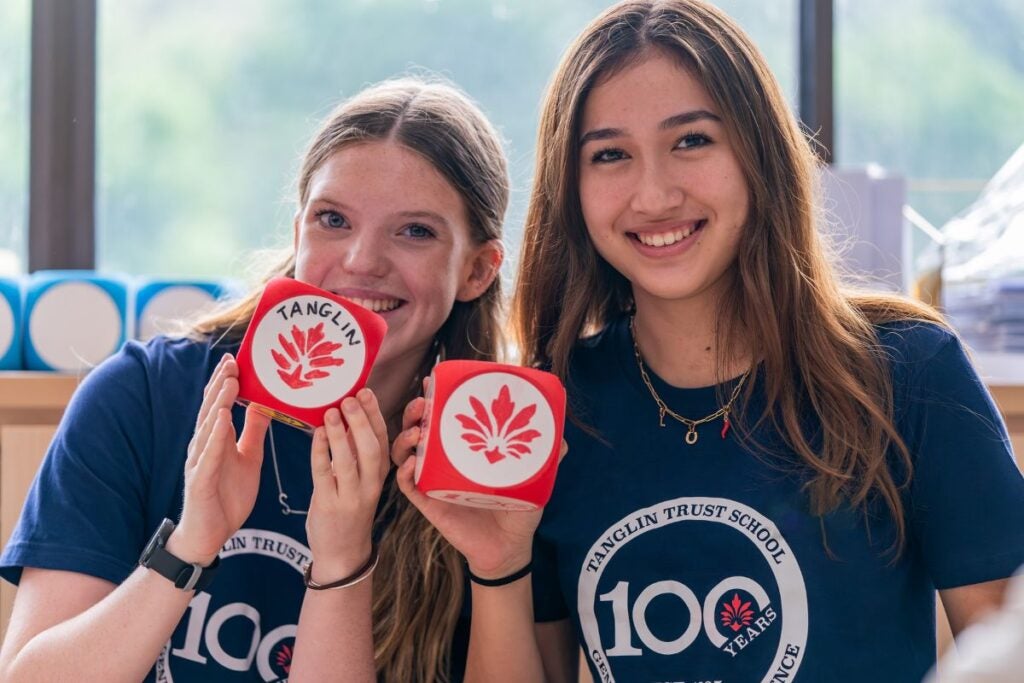
Tanglin is the only independent school in Singapore to offer both A-Levels and the IB diploma in Sixth Form, providing students an opportunity to choose the educational pathway that best suits them. Outside of the classroom, there are over 400 co-curricular activities on offer.
Read Tanglin Trust School’s full profile at Spears500.com
Alice Smith School
- Focus: Fostering courage, curiosity and compassion
- Country: Malaysia
- Day fees: $13,800–$30,100
The first British international school in Malaysia was founded as a practical solution to a practical problem: in 1946 Alice Smith couldn’t find a school for her own daughter so she started one.

Today, the Alice Smith School educates over 1,500 pupils representing 53 nationalities across two campuses. It follows the UK curriculum through to Sixth Form, where it offers a broad range of A-Level subjects.
Read Alice Smith School’s full profile at Spears500.com
Bangkok Patana School
- Focus: Fostering independence, creativity and critical thinking
- Country: Thailand
- Day fees: $15,900–$31,300
The non-selective and not-for-profit Bangkok Patana School is Thailand’s first and largest British international school. More than 2,300 students from nearly 70 different nationalities follow the UK curriculum through Year 11 and the International Baccalaureate in Years 12 and 13.

The school’s vast campus and outstanding facilities mean that students can pursue their personal ambitions and interests while preparing for higher education and developing into global citizens.
Read Bangkok Patana School’s full profile at Spears500.com
Jerudong International School
- Focus: Making a critical difference
- Country: Brunei
- Day fees: $10,700–$22,900
- Boarding fees: $34,600–$47,900
Founded in 1997, Jerudong International School (JIS) has grown into one of Asia’s most established British international day and boarding schools. Set across a 120-acre campus bordering beach and rainforest, it educates nearly 1,700 pupils aged 2 to 18 from 45 nationalities, creating a community that is both international and residential at its core.
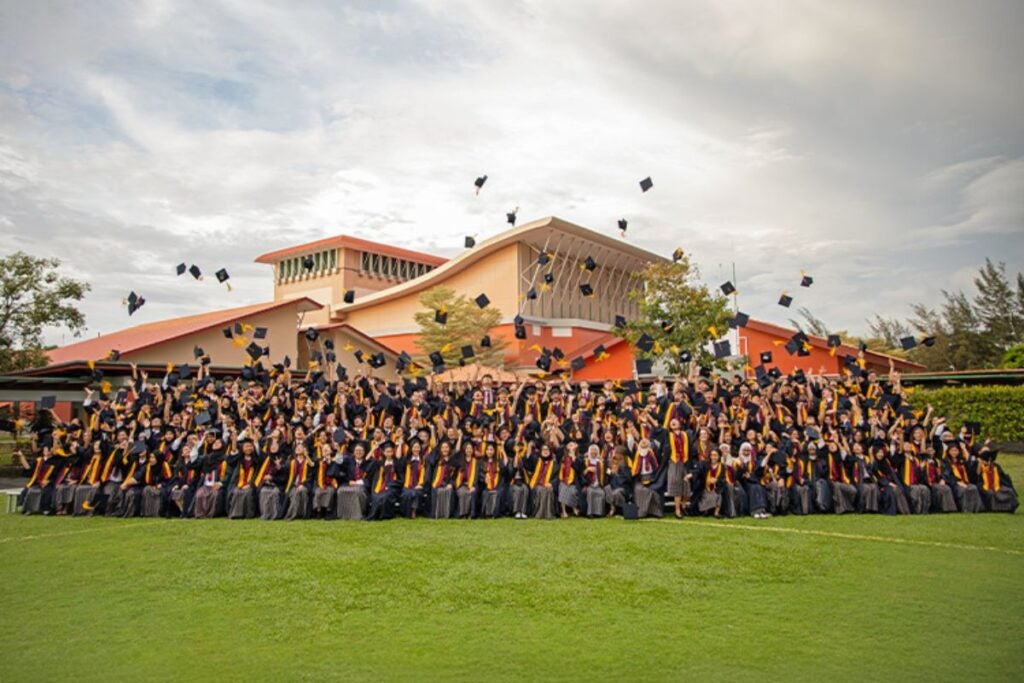
Boarding underpins the school’s ethos, with a house system fostering enduring friendships and a strong sense of belonging. Leadership is cultivated at every level, from student councils to peer-led initiatives, while a wide-ranging co-curricular programme encourages exploration beyond the classroom.
Read Jerudong International School’s full profile at Spears500.com
Marlborough College Malaysia
- Focus: Developing a breadth of experience
- Country: Malaysia
- Day fees: $15,400–$40,700
- Boarding fees: $50,100–$63,400
Marlborough College Malaysia is a co-educational British boarding school located in Iskandar Puteri. The 90-acre campus, 15 minutes from the Singapore border, draws architectural inspiration from its sister school in the UK. It allows space not only for sports pitches, a 50m pool and a full athletics track, but also a school farm.
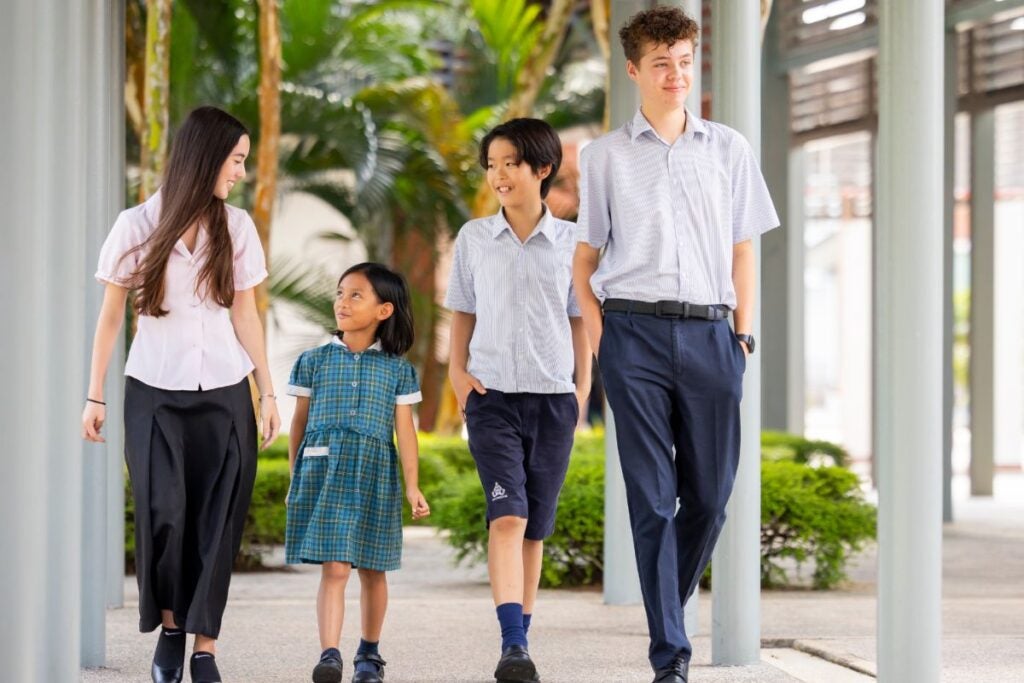
Intellectual rigour and breadth of experience are key pillars, along with the extracurricular activities, which the extended day of the boarding school allows. Those include a broad range of creative, active and service-based activities, ranging from lake water sports to orphanage visits and movie nights.
Read Marlborough College Malaysia’s full profile at Spears500.com
North London Collegiate School Jeju
- Focus: Developing an ambitious and global mindset
- Country: South Korea
- Day fees: $25,200-$36,000
- Boarding fees: $36,500-$48,000
North London Collegiate School (NLCS) Jeju is grounded in the British system, benefiting from NLCS UK’s 170-year history and educational expertise.
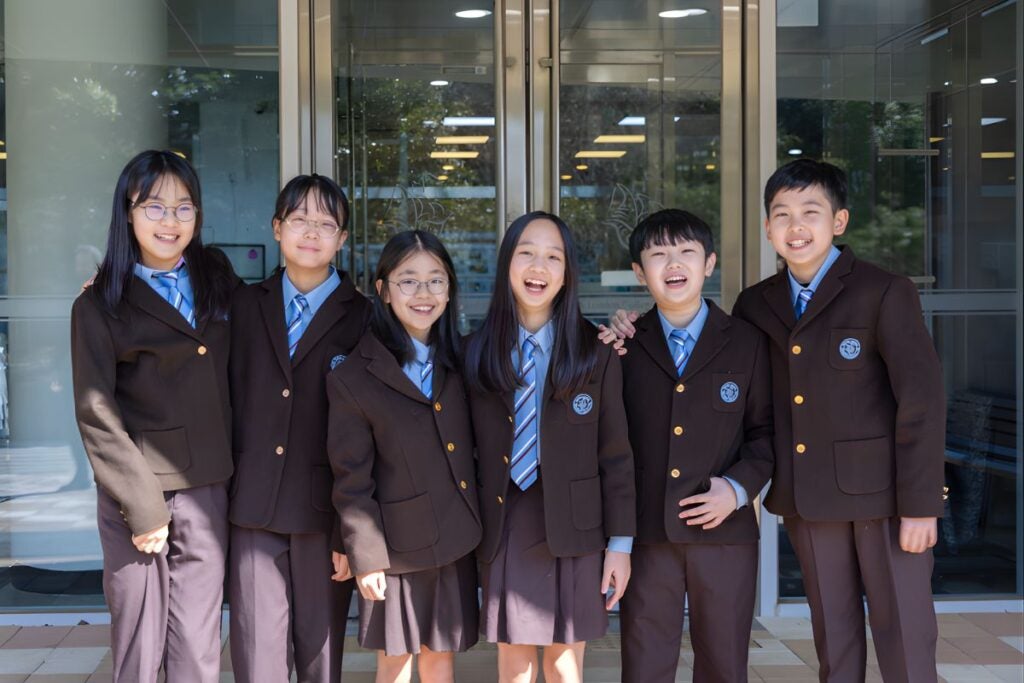
As the first international school to be opened as part of the Global Education City on Jeju Island, the school has become known for its highly qualified, knowledgeable teachers, and students who have gone on to attend some of the most prestigious universities around the world, including Oxford and Cambridge.
Read North London Collegiate School Jeju’s full profile at Spears500.com
The complete list of top private school in the Asia Pacific
Find out more
- For further information about the Schools Index, please email research@spearswms.com; we aim to respond to all queries within two working days.
- For commercial enquiries and questions relating to enhanced profiles and packages, please contact Commercial Director Shady Elkholy: shady.elkholy@spearswms.com
- To keep up to date with the Spear's 500, subscribe to our magazine, newsletter and follow Spear's on Linkedin and Instagram.
- Click here to order a print copy of The Spear's 500.