
As elite UK private schools are increasingly opening branded schools across the Middle East and Asia, some doubts have been cast over whether they will dampen the reputation of the home campuses.
Branded schools, which are schools operating under the franchised name of a well-known school elsewhere, are by no means a new concept. Around 45 to 50 UK schools have opened one or more international outposts, with there being approximately 150 overall, according to a report from Farrer & Co.
Harrow School is a pioneer in the world of branded schools, having opened their first outpost in 1998 in Bangkok. Following this, they have opened a further 11 schools in Asia, with eight operating in mainland China alone. While the original Harrow school was founded in 1572, which comparatively makes its Asian counterparts seem young, in the context of branded schools overseas theirs are some of the oldest.

As well as some UK establishments having invested in branded schools for many years, others have taken a particularly hands-on approach to the setting up of their foreign outposts. Marlborough College sent its former Second Master Robert Pick to head up Marlborough College Malaysia and the school still wholly owns its South East Asian counterpart. Furthermore, the governing council of Marlborough College Malaysia is almost entirely made up of the original school’s former pupils, according to their website.
Related

[See also: A guide to the Spear’s Schools Index: Everything you need to know]

North London Collegiate School, which was ranked 7th in the Times school league tables for 2025, has five international offerings operating under its name. Managed by the North London Collegiate School International, these schools maintain the standards of their high-achieving founding establishment.
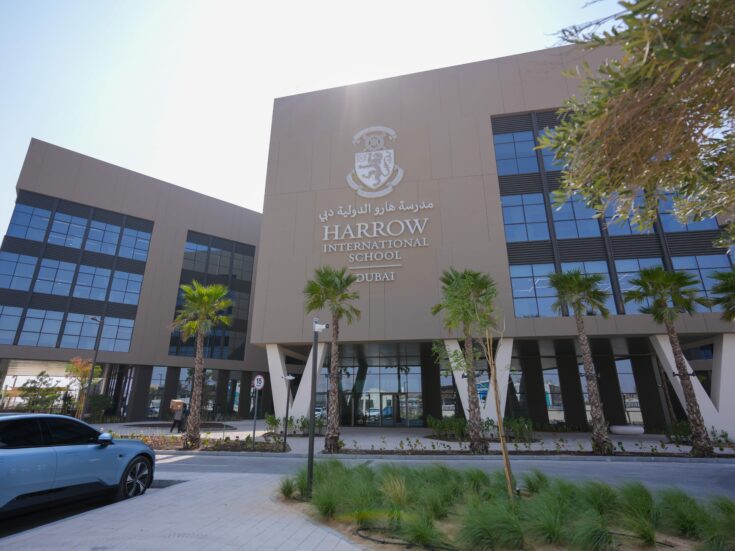
Repton School, Cranleigh and Brighton College each have branded schools in the UAE, with the latter also having one in Bangkok.
Dulwich College and Wycombe Abbey, two other well-known British boarding schools, operate branded schools in mainland China.
Content from our partners



However, not every branded school operates in the same way as these notably successful examples. With branded schools increasingly popping up in the Middle East and Asia, some doubts have been cast over how much involvement their ‘motherships’ will have in their operations and whether or not their reputations will be maintained.
‘There’s a little bit of smoke and mirrors with licensing versus actually running the school yourself,’ says Thomas Harley, founder of HRB education.
Harley points out that only sharing an elite British school’s name, while potentially misleading, does not mean that the overseas school will be subpar at teaching, as many still operate to high standards. In fact, the original UK schools will even want schools they are not heavily involved with to be successful, as they will be a reliable source of income in the coming years. This is especially relevant at a time where many British private schools are struggling to balance their books amid Labour’s implementation of VAT on their fees.
‘They know these areas are where the money is coming from in the future and obviously that is where they want to be’ says Harley.
With an increasing number of HNW individuals making low-tax areas like the UAE their home, Harley highlights that demand for these branded schools has increased, giving reason for more of them to be opened.
[See also: How to get your child into private school in the UK: the expert guide]
Harley points out that while some parents at UK schools may have their doubts about their branded counterparts, people living in the areas where these new schools are opening often welcome the appeal of their famous names.

‘At the moment, demand massively outstrips supply for elite schools in areas like the Middle East’ said Harley. ‘If you look at where the money is flowing, it is in expat hubs like Dubai and Singapore.
‘They want more of these schools, and they want these brand names. They see the brand name, they look at the prestige, and that is alluring to a lot of people.’
Matthew Goldie-Scot, managing director of Thuso, an education consultancy firm, also explains that parents need to be realistic about the financial advantages of branded schools.
He says: ‘Quite a lot of UK schools are very blunt with the parents and they say “look, we need to keep the Charities Commission off our backs. We want to be able to provide scholarships and bursaries.”’
‘Schools will openly say to parents applying to the home campus “look, this is a way for us to protect the school commercially and financially.”’
[See also: How to get your child into private school in the UK: the expert guide]
Goldie-Scot cites Marlborough College Malaysia as an example of a well-run branded school, as well as North London Collegiate School in Jeju, South Korea.

Yet, Goldie-Scot makes clear that elite UK private schools, like Harrow School and Marlborough College, will retain their status as the best option for many HNW families and that they should not feel threatened by their branded counterparts.
‘I think it would be fair to say as a broader point that historically none of these branded schools as of yet have achieved the standing or reputation of the original home campus.’ says Goldie-Scot. ‘While the UAE is a place we are seeing a lot of British families and high-net-worth families move to, the educational provision has not yet caught up with the very best.’
Along this line of thought, Johanna Mitchell, founder and director of educational consultancy Lumos Education, says there needs to be some realism regarding how much these branded schools can replicate their original UK homebase.
‘When you’re opening a school in the Middle East, you are subject to their jurisdiction, their educational policies and their rules, which differ from the UK.’ Mitchell says ‘they will not be exactly the same, because they are operating in completely different jurisdictions.
‘So, in my view, people will perceive these two kinds of school differently. But, if they [branded schools] are well-managed and run, the brand appeal and culture of the original school will continue overseas.’
[See also: Should you send your child to an elite boarding school?]