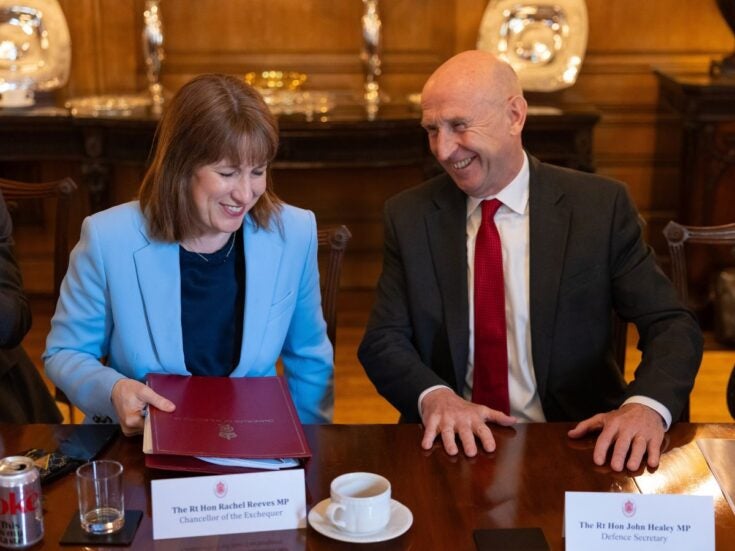
Rachel Reeves is expected to use the 2025 Budget to raise £2 billion in extra revenue by tightening the tax treatment of limited liability partnerships (LLPs) – a structure widely used by high-earning professionals such as lawyers, accountants and family doctors.
These arrangements are considered more tax-efficient than standard employment because partners are technically self-employed, meaning firms are not liable for employer’s National Insurance contributions – while also allowing partners to share profits, pay tax on their own income, use losses to offset other taxes, and benefit from limited personal liability, making the structure flexible and protective for high earners and family wealth.
‘Imposing national insurance contributions will obviously see a significant reduction in take-home pay for LLP partners,’ says Georgina Crane, senior associate at Collyer Bristow, speaking to Spear’s.

[See also: Arun Advani and the push for a UK wealth tax]
Related


According to a CenTax report published in September this year, around 0.1 per cent of taxpayers currently receive nearly half of all partnership income, and nearly all of any additional tax revenue generated by proposed changes to LLPs would come from the top 10 per cent of earners. The report also notes that solicitors in partnerships take around a fifth of all partnership income, earning an average of over £300,000 per year.
However, ‘it is important to stress that LLP taxation is not a loophole,’ says James Cohen, head of private client at Seddons GSC, speaking to Spear’s. ‘The framework was deliberately designed to recognise the entrepreneurial nature of partnership income. Members of LLPs bear financial and professional risk in a way that employees do not, so the tax treatment appropriately reflects that distinction.’
Therefore, according to Cohen, ‘any move toward corporate-style taxation or restrictions on profit allocation would fundamentally change the partnership model rather than simply close avoidance.’
[See also: HNWs brace for rising burden as pensions fall into inheritance tax scope]
Content from our partners



Family offices often use LLPs to pool investments while keeping ownership and decision-making clear among relatives, and professional and investment firms value the structure for rewarding performance and planning succession. For Cohen, if the rules become ‘too rigid or less transparent’, many organisations could shift to corporate or offshore setups, potentially weakening the UK’s competitiveness in wealth management and advisory services.
With more than 190,000 professionals in the UK operating through partnership structures – most of them (U)HNWs – Reeves intends to follow through on her long-stated principle that ‘those with the broadest shoulders’ should pay their ‘fair share of tax’, a point she reiterated last week in Washington DC while attending the International Monetary Fund’s annual meetings.
Will LLP changes push more UHNW individuals out of the UK?
Since April 2025, when the UK moved to a residence-based tax system, many internationally mobile individuals have reassessed their arrangements, and some have chosen to leave. Yet those who remain often stick with LLPs, reflecting the fact that partners take on genuine commercial risk and, as Cohen notes, ‘do not enjoy the security or benefits of traditional employment.’
Changes to the main tax benefits of LLPs could therefore lead more UHNW individuals leaving the UK. ‘That risk is very real,’ Cohen explains, as he believes that ‘the UK’s appeal has always rested on a stable and proportionate tax regime that rewards enterprise and that ‘overly aggressive reforms could make the UK less attractive just as other jurisdictions are seeking to draw in capital and expertise.’
‘The government’s challenge is to target abuse without undermining legitimate partnership structures that contribute significantly to the economy.’
Crane agrees that it’s plausible UHNW individuals could leave the UK. ‘The government will need to think carefully about incentivising valuable and high earning workers to stay in the UK,’ she says.
[See also: The Spear’s Tax & Trust Indices 2025]
She adds: ‘Professional services firms that use LLP structures can reward partners handsomely – precisely why the government is targeting them. However, this is why losing these members to foreign jurisdictions could be disastrous.’
All of this comes ahead of the 2025 Budget, scheduled for 26 November, in which Reeves aims to plug a £30 billion gap in public finances and is also expected to unveil tax increases – including a “mansion tax” imposing capital gains tax on the sale of the priciest homes.