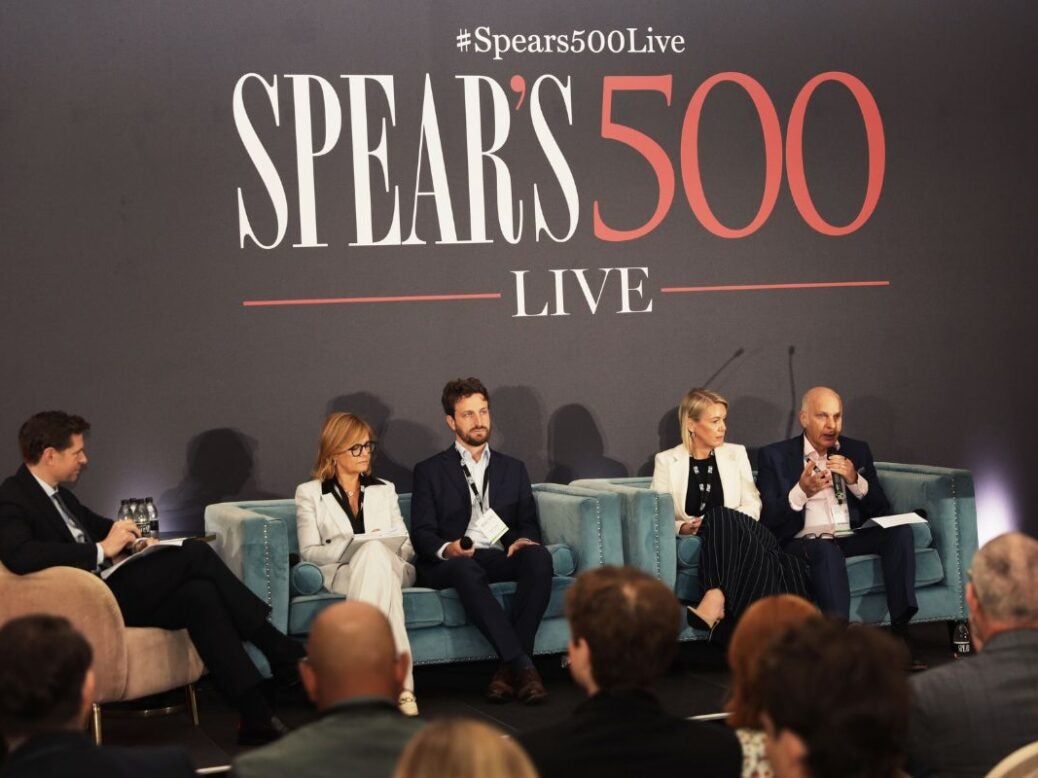
‘One of the key decisions when setting up a family office is deciding what to insource and outsource,’ family office expert and senior adviser Paul Reynolds told the audience at Spear’s 500 Live 2026 at The Savoy, setting the tone for what quickly became the central theme of the discussion.
The panel, which explored the changing shape of modern family offices, comprised Reynolds; Annamaria Koerling, co-founder and managing partner of Delfin Private Office; Sam Copley, investment adviser at Peleh Advisors; and Emily Dawson, head of private banking at Investec (Channel Islands). The session was chaired by Spear’s editor-in-chief Edwin Smith and presented in association with Guernsey Finance.
In the context of family wealth becoming more international, more complex and increasingly spread across generations, panellists returned repeatedly to the question of what actually belongs inside a family office and what is better handled externally.

[See also: Why more family offices are closing or downsizing despite rising wealth]
Related
For Reynolds, the starting point is ‘purpose’ rather than structure.
Too often, he argued, family offices simply ‘evolve’, rather than being deliberately designed. ‘It always slightly surprises me that someone sells a business which has been very successful, with great thoughts on strategy, and then takes money from the business and doesn’t put the same work into defining the strategy of the family office,’ he said.
Before building teams or structures, Reynolds said families should ask themselves a series of basic but surprisingly overlooked questions.
Content from our partners



First: what problem are they actually trying to solve? For some families, the answer is investment management. For others, it is governance, succession planning or simply removing the burden of dealing with lawyers, accountants and administrative complexity.
The next question is who the family office is really for – the current generation, the next generation or both. As wealth becomes more dispersed over time, Reynolds noted, alignment between family members often becomes harder to maintain.
And finally comes the core operational question: what should be kept in house, and what should be outsourced?
[See also: Fewer than half of family offices have a clear measure of success – here’s why]
‘Can you do it better or cheaper than outside?’ Reynolds asked. He also warned families against assuming that building internal investment teams is always the best solution. ‘If the person you’re employing is as good as you think they are, why aren’t they working for a major institution?’
That tension between control, cost and expertise ran throughout the conversation.
Koerling pointed to the growing popularity of newer and more flexible family office models, particularly among entrepreneurial wealth creators. Alongside the traditional single-family office and the fully outsourced ‘virtual’ model, she described the emergence of what she called a ‘multi-single’ structure, essentially a family office with the DNA of a single-family office, but shared among a small group of like-minded families.
[See also: Single-family offices worth over $4.6 trillion globally]
‘We’re seeing entrepreneurs who have exited businesses wanting to bring in other families they trust, partly to improve efficiency and partly to defray costs,’ she said.
The conversation also turned repeatedly to jurisdiction and the growing importance of stability in a volatile world.
Dawson said clients are increasingly looking for ‘consistency’ and political neutrality when deciding where to base structures, highlighting rising interest in Guernsey and the wider Channel Islands.
[See also: The best wealth managers in Guernsey]
‘People are proactively seeking out a bit of stability,’ she said.
That search for stability, the panellists suggested, is also shaping attitudes towards outsourcing. For some families, outsourcing provides access to better expertise and greater flexibility, while for others, keeping functions internal is ultimately about privacy and trust.
‘There are certain things where it’s not just about who can do it better or cheaper, but actually a question of trust and giving sensitive information,’ Copley said.
Trust, in fact, was also a recurring theme – though Reynolds argued it should not be treated too simplistically.
‘Trust builds over years,’ he said, adding that integrity and cultural fit are often more important in the early stages than technical credentials alone.
[See also: Why UHNW donors are turning to unrestricted trust]
The panel ultimately agreed that modern family offices are becoming less defined by size or traditional labels, and more by how carefully they balance internal capabilities with external expertise.
Or, as Koerling implied, the question facing wealthy families today is no longer simply what a family office is – but what they actually want it to do.
Watch the full panel
Find out more
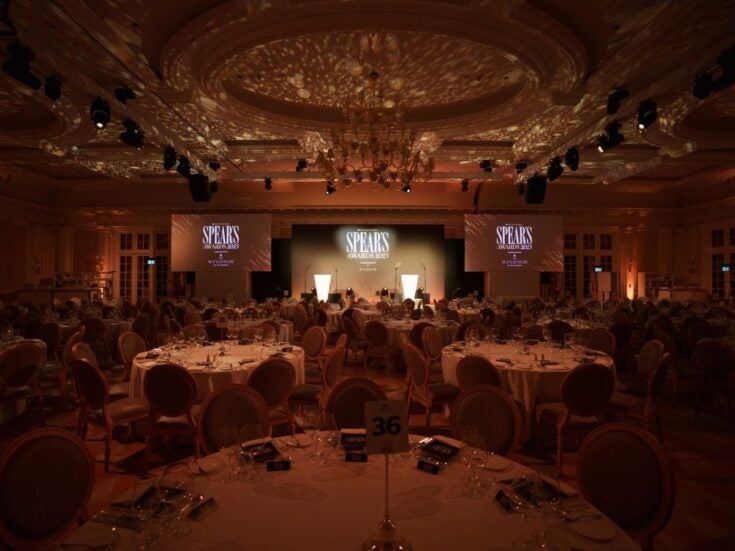
Spear’s 500 Live is the premier live event for private client professionals and leading figures from the private wealth and family office ecosystem. The 2026 edition took place on 6 May at The Savoy in London.
Spear’s 500 Live was presented in association with our partners the Charities Aid Foundation, CMB Monaco, Guernsey Finance, HCA Healthcare UK, Payne Hicks Beach, Riverstone, Scott Dunn Private and Stewardship.
For commercial enquiries concerning Spear’s events, contact shady.elkholy@spearswms.com.