

A man in a well-tailored suit stands on the front steps of a Belle Époque palazzo. An assassin commissioned by his ex-wife stands before him, a smoking gun pointed at his chest. As he slumps to the floor, a fashion empire falls around him.
The downfall of the Gucci family – bitter feuds, criminal scandals and a business sold off at a fraction of its worth – has become a legend, immortalised most recently by Ridley Scott’s House of Gucci. While the brand has since thrived under the ownership of luxury group Kering, the family itself has largely faded from view. Their name, once revered, now evokes infamy as much as prestige.
Prominent families wishing to avoid a similar – if less dramatic – story of decline have several tools at their disposal, says Zita Verbényi, founder of a consultancy that helps wealthy people to shore-up their legacies. ‘Legacy means something different for every family I work with,’ she explains. ‘It depends on their level of wealth, the maturity of their businesses and the way those businesses are managed.’

Verbényi, whose company is The Legacy Atelier, focuses on three core elements: first, uncovering what a family’s legacy actually is – a process that can involve deep dives into archives, private collections and personal papers; second, helping families reflect on how they relate to that legacy today; and finally, building strategies to protect and project that legacy into the future.
Related



One recent project involved a prominent Mediterranean family that wanted to sell their business to another, as yet unspecified family business group. Verbényi was brought in to help elevate and articulate their story in order to attract a buyer that aligned with the family’s values – and their valuation. ‘We created an exhibition at their headquarters that celebrated the family’s founders, their challenges and their achievements as a way of showcasing the dedication and excellence that has shone through their work,’ she says.
The value of legacy is something many younger members of multi-generational business families can understand intuitively, adds Verbényi. ‘They very clearly see legacy as reputational capital. They know that they can then capitalise upon these legacies and harness them in the long run so that their businesses thrive.’
[See also: Succession at the House of Arnault: who will wear the crown?]
However, those who grasp at their legacy too tightly may see it slip through their fingers, warns Matthew Fleming, a long-standing adviser to business-owning families through his role at his own family firm, Stonehage Fleming. ‘If families are seeing their legacies as assets that can eventually be commoditised, they’re going about it in the wrong way. They’re putting the cart before the horse,’ he says.
Content from our partners



At the same time, legacy and reputation do have material value, Fleming acknowledges. He notes that Stonehage Fleming’s strong heritage would undoubtedly have been viewed as desirable to a buyer (last September the firm announced that it would be acquired by US wealth manager Corient, with the move expected to complete in early 2026).
It’s a sentiment that influences the work of reputation adviser Beatrice Giribaldi Groak, who is herself a third-generation member of a prominent business family. While the business founded by her grandfather doesn’t operate in media, reputation or any immediately related field, her own experience prompted her to make it her professional focus. ‘I was the one to start thinking about questions of legacy for my grandfather,’ she says.
She quickly realised that few advisers in the private client space were explicitly focused on helping families understand and leverage their legacy. That gap led her to establish Rovero Advisors in 2023, a strategic advisory firm dedicated to preserving and strengthening a family’s legacy through its reputation.
‘Families and family offices have a greater sense of legacy than active individuals in business, but I’m not sure how often they associate it with reputation. So that’s what we’re trying to do because for me, they’re one and the same,’ says Giribaldi Groak. ‘Reputation management and risk analysis are like the walls of a house, a wrapper. But what’s important is not just how it looks but whether it’s built on values that represent the family. The foundations are just as important.’
Giribaldi Groak’s work with clients often begins with an in-depth examination of their family history, identifying the values that shaped their story. In the case of one recent client, that meant commissioning a book to anchor their family history and reinforce the values they hope future generations will uphold.
For Verbényi’s clients, a similar effect might be achieved by a film chronicling the family’s journey, or even a bespoke exhibition or private museum built from archival research and personal records.
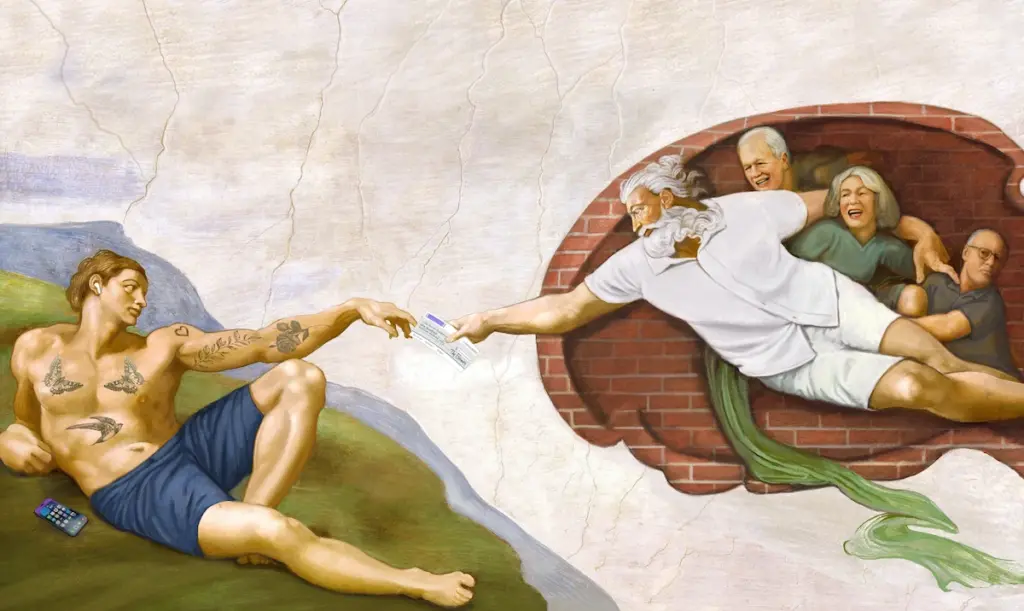
As trillions in assets ($80 trillion according to the latest estimates by the World Economic Forum) move to the next generation through the Great Wealth Transfer, inheritors are stepping into the spotlight. Social historian Eliza Filby describes this shift as the rise of an inheritocracy, a world where opportunity is shaped less by individual achievement than by the legacy one receives.
[See also: Why the Great Wealth Transfer will be a dangerous time for global capitalism]
For many next-generation family members, including Giribaldi Groak and Fleming, recognising that shift creates a sense of personal obligation – not simply to inherit, but to prove themselves worthy of what they receive.
Fleming recalls the moment this idea crystallised for him. ‘When I was 18, my father called me into his office to review my exam results, which were spectacularly bad. I was the oldest of four boys and he said, “It would be great if one of the children worked at the family business. It should probably be the cleverest – and that’s not you.” He was the gentlest man, so he wasn’t trying to be crushing, but as he explained to me later, “It is very hard to be respected without self-respect, and self-respect is earned by getting your knees dirty and achieving something yourself.”’
It’s a lesson that shapes Fleming’s view of legacy today, as both a birthright and a duty. It may also have prompted him to dirty his knees quite literally; he played cricket professionally, captaining Kent and representing England before entering the family business.
[See also: Stonehage Fleming on 150 years of managing wealth]
Governance mechanisms, such as family constitutions or charters, can help formalise values and align decision-making across branches of a family. But Fleming cautions that these tools must never be the starting point: ‘When [advisers] lead with things like family constitutions and charters, it’s absolute hogwash. The family might need one, but there’s a whole lot to go through before it becomes obvious to a family or their trusted advisers that a commoditised bit of support is the right support.’
Philanthropy or social-impact initiatives, too, can reinforce core values while projecting them outward, strengthening reputation in the public sphere.
The challenge, as ever, lies in finding a balance. As Fleming says, ‘It’s not dissimilar to driving a car. If you only look in the rear-view mirror, you’re going to crash. You can’t be guided entirely by what has gone on before. If you only look forward, you fail to appreciate what’s behind you. It’s getting the balance right between moving forwards and looking backwards that is the greatest challenge.’


