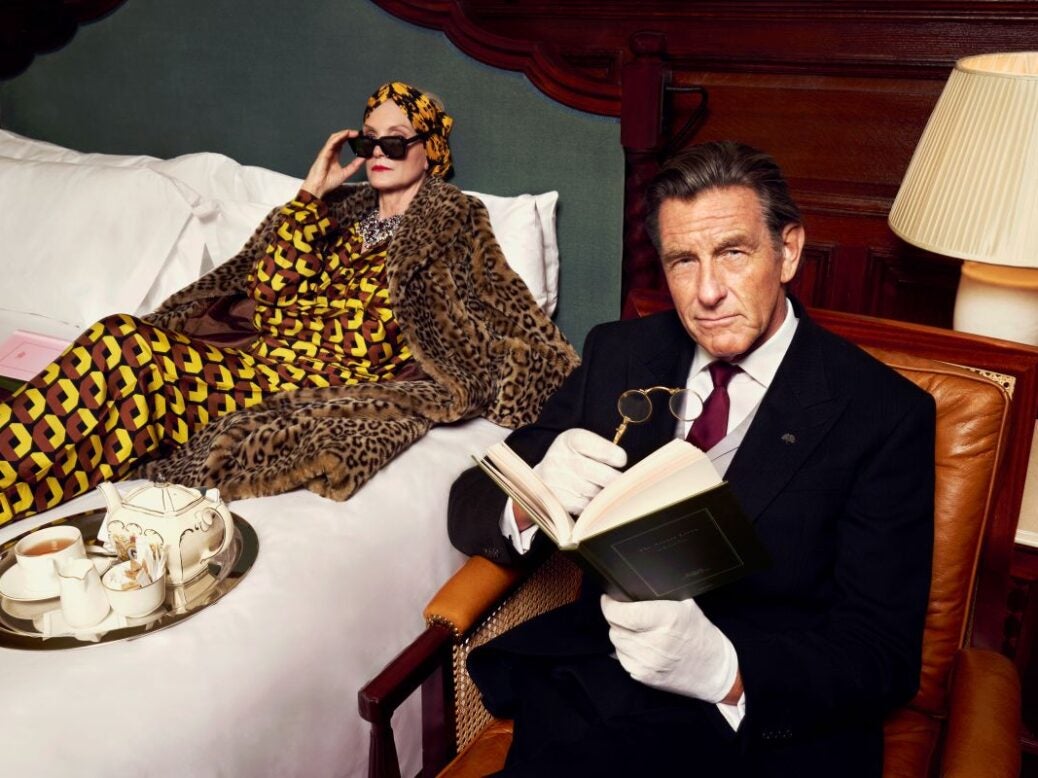
What does it take to be a first-class butler – a gentleman’s gentleman in the style of Bertie Wooster’s indispensable valet, Jeeves? I have always wondered how masters of this craft learn to develop the seamless anticipation of need and the quiet choreography of perfection that is their métier. And, not long ago, I had the chance to find out.
My journey of discovery took me to the OWO on Whitehall, aka the Old War Office. Built in 1906 – less than a decade before PG Wodehouse created Jeeves – the OWO was home to the MoD and served as the nerve centre for British military affairs during both world wars. After a sensitive redevelopment and refurbishment – the vision of members of the Hinduja family and a fitting legacy for the family’s recently departed patriarch, GP – the building is now occupied by a Raffles hotel, where guests can revel in the splendour of its handsome state rooms, five of which are now available as Heritage guest suites (in addition to 115 other rooms).
Everywhere you look, there are evocations of a moment in history when Britain bestrode the world – and did so with perfectly shined shoes. Today, Raffles channels this bygone era with a butler service that is proving popular with 21st-century titans from around the globe. In the name of gaining a deeper understanding of the offering, and of butlering’s enduring appeal, I agree to sign on for a trial shift.

[See also: Introducing Spear’s Magazine: Issue 98]
Related


It begins at 9am, when I join 14 heads of various departments to listen in on a briefing of the day’s operations. These include a security-related walk-around ahead of the arrival of an unnamed VIP and preparations for a celebrity guest (whose name is also withheld), who’ll be taking the Turret Suite with his wife for their anniversary.
Next, I follow the hotel’s director of guest relations and butlers, Joanna Swiecka, to her basement office. The cupboards are stuffed to bursting with every conceivable game and toy: PlayStations, karaoke machines, a golf putter, a popcorn maker, anything Joanna thinks a guest might find useful or entertaining.
‘Whenever a guest requests something, it needs to be bigger and better than they were expecting,’ she says. ‘The challenge is, guests increasingly make last-minute plans. They’ll want three suites and ten regular rooms for their entourage, and they’ll request them as they’re boarding the plane. That means we need to play with rotas and suppliers with only a few hours’ notice. One guest remembered it was his anniversary on the day. It’s not easy getting hold of 3,000 red roses on a Sunday.’
[See also: From Gstaad Guy to Supersnake: how social media finally went ultra-high-net-worth]
Content from our partners


Thankfully, she has the number of more than one emergency florist. Other demands have included the installation of a baby grand piano for a visiting playwright, live bunnies at Easter, an in-room ice rink, and getting hold of a guest’s preferred bottled water which is only sold in Colorado.
‘You can never say “no” to anything,’ says Joanna, before pre-empting my next question: ‘Unless it’s illegal.’ One guest, who was staying alone, let slip that he enjoyed table tennis. A table was installed in his vast suite (which was previously Winston Churchill’s office) as a surprise, and each butler went up to play – only for it to be revealed that the guest was practically the Roger Federer of ping pong. Half a dozen butlers were left wheezing and sudoriferous; a Wodehousean farce if ever I’ve heard one.
Joanna pairs me with Romas Seslauskas, one of the OWO’s six butlers who are assigned to the most prestigious of the hotel’s 54 suites. Dressed in grey tails, he compares being a butler to being a doctor or a priest (‘You see them without their make-up on. There’s a code of silence’). In addition to unpacking and ironing guests’ clothes, the modern butler moonlights as a personal assistant, often organising their schedule, travel and reservations and taking on dog-walking and shopping tasks, or rustling up tea in the guests’ personal butler pantry. The relationships are usually warm. ‘You become a sort of confidant during their stay. They arrive as a guest and leave as a friend. And they come back as family.’ One guest has visited 57 times since the hotel opened a little over two years ago.
[See also: The best domestic staff, nannies and nursing care providers]
‘I can deduce what the guest wants our relationship to be and what he wants to get from their stay within seconds,’ reveals Romas, ‘and I actually like the ones that are difficult to read, because it’s more of a challenge to make them your friend and encourage them to come back.’
We wander along one of the hotel’s wide corridors, passing two men on a chaise longue writing in their notebooks. ‘The secret service,’ Romas tips me the wink. They’re the lads scoping out the location ahead of that VIP checking in. ‘We never know who it’s going to be until they arrive.’ Romas takes 20,000 steps around this complex every day. He sees, and no doubt hears, all sorts, but he’s far too discreet to slip me any names.
Wodehouse imagined a private club for butlers and valets called the Junior Ganymede, where they would exchange gossip about their employers. Raffles, meanwhile, connects all its butlers throughout the world, usually via Teams or WhatsApp, to exchange guest information and ideas. I’m assured it’s all practical rather than blackmailable.
[See also: Welcome to Scarsdale, New York – America’s wealthiest suburb]
I’m given the task of filling the Turret Suite with candles and helium balloons ahead of the celebrity guest’s anniversary. Romas carefully sets a chocolate cake, a bottle of Dom Pérignon and two crystal flutes on the table.
The room is £10,000 per night, and butler service is included. Things like roses, balloons and champagne (or live bunnies, or an ice rink) are extra. The butlers add value, and their presence can encourage customer loyalty and more profligate spending. Flowers, for instance, run from £100 to £4,000, depending how Elton John you’re feeling, so there’s scope for significant additional revenue. ‘You have to be quite clever how you upsell them,’ concedes Joanna. ‘They should be aware of the costs, but not worried about them.’ Many guests need little encouragement to go all-out.
Joanna proudly cites a 100 per cent proposal success rate. No one has ever said no to an engagement ring at the OWO, and the lengths to which the butlers are prepared to go is laudable – although I note that Jeeves was normally summoned to get his master out of romantic entanglements rather than into them.
The Turret Suite features a telescope, and it played a central role in one ‘yes’ moment, as did the butler. ‘The lady was encouraged by her boyfriend to look through the telescope when she came into the room. It had been carefully positioned so that she would see a placard in the distance that read: “Will you marry me?” I was holding the sign, standing on the bridge in St James’s Park, and I had to wait there for some time. People on the bridge thought it must be me who was proposing. I assured them I was simply doing my job.’
This article first appeared in Spear’s Magazine Issue 98. Click here to subscribe