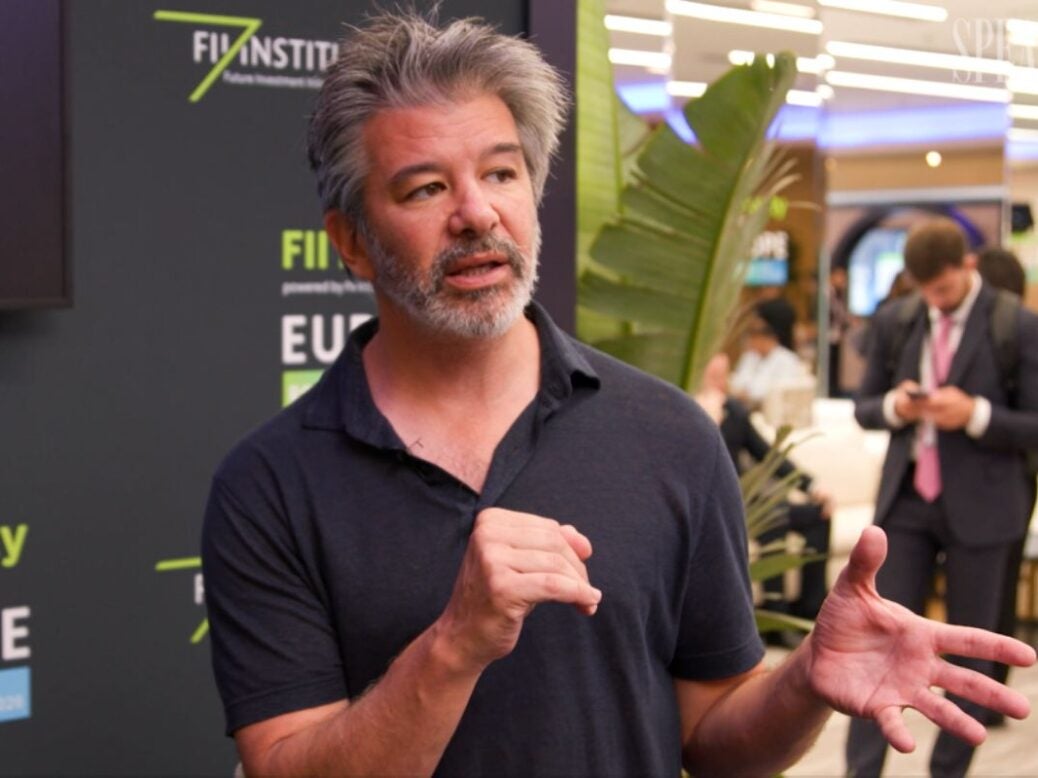
Travis Kalanick’s tenure as the CEO of Uber ended under a cloud, but as he emerges from ‘stealth mode’ with a new venture, the billionaire entrepreneur believes ‘the world is different today than it was then’.
Kalanick told Spear’s that, around the time he left Uber in 2017, ‘business was becoming politics, but nobody really knew it.’
He connected his departure from the ride-hailing app with the polarisation then already evident in politics and media, which he said had begun to seep into business. ‘As businesspeople, innovators […] it didn’t make sense [to us]. We didn’t yet realise that a lot of what we see in the mainstream media is just not true.’

[See also: Cresset co-founder Eric Becker on his 100-year mission to perfect the art of succession]
Related


He added: ‘We realise that business is politics now.’
After seven years at the helm, Kalanick stepped down as CEO of Uber in response to boardroom pressure arising from allegations he ignored reports of sexual harassment at the company. In its reporting of the controversy, the New York Times described Uber as having a ‘toxic culture’ and pursuing growth at all costs.
Kalanick subsequently went on to other ventures, deliberately keeping much of his activity below the radar. ‘A lot of stuff at that time was very negative, and we basically said, “Look, let’s just get to work. Let’s not worry about what the New York Times writes tomorrow when we decide what we’re going to do today. Let’s just build.” And so we went full stealth. At some point we had, I don’t know, 4,000 employees, and nobody could put the name of the company on LinkedIn.’
Content from our partners



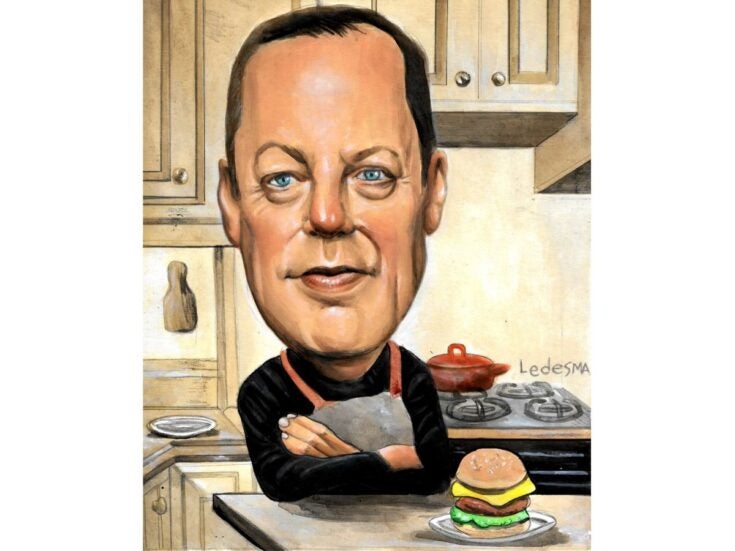
One of Kalanick’s projects is CloudKitchens. The business started out as a provider of ‘dark kitchens’ for meal delivery services, but there are plans to develop it further with increasingly sophisticated automation and robotics. Speaking to Spear’s on the sidelines of the Saudi-backed FII Priority Europe conference in Rome last month, Kalanick joked that his shorthand description of the business was ‘autonomous burritos’.
After launching CloudKitchens, he teamed up with a former Uber colleague on an automated mining startup, which aims to improve the efficiency of the extraction and transport of substances such as gold and lithium.
Both ventures are now under the umbrella of Kalanick’s newly launched firm, Atoms, which was unveiled in March. He described the company’s mission as ‘physical automation to transform industry’.
[See also: Is football financier Amanda Staveley preparing a bid for West Ham?]
‘That’s sort of a very pithy way of saying robotics and AI oriented towards specific industries to really change them.’
Saudi Arabia’s sovereign wealth fund PIF invested $3.5 billion in Uber in 2016 and has seen the stake rise in value. In 2025, having converted to Islam, Kalanick was granted Saudi Arabian citizenship in a move approved via royal decree.
Kalanick grew Uber largely from the company’s San Francisco headquarters, but recently moved his own US base to Texas, buying a lakehouse on Lake Austin. He revealed earlier this year that he made the move on 18 December 2025 – just two weeks before the retroactive residency deadline for a proposed California wealth tax would take effect.
[See also: Will California’s ‘billionaire tax’ trigger an UHNW exodus? Wealth managers weigh in]
‘I think California, for a long time, did a pretty good job,’ he told Spear’s. ‘I mean, it is in many ways the cradle of so much innovation in the world, but at some point you go over the edge, you go too far, and it’s no longer the right approach.’
Kalanick, who has an estimated net worth of $3.6 billion, stressed that California’s tax rates were not the only consideration, but the prospect of ‘property seizures’ and an apparent appetite to ‘take stuff’ from ‘a particular class of people that are wealthy’ had sparked concern.
Asked to assess the current investment landscape, Kalanick said: ‘We’re at the top of a cycle right now […] the volume of capital that’s out there right now is pretty profound, and it could very well be that the supply of capital is bigger than the things you can point it at.’
[See also: Goldman boss: Europe on ‘cusp of investment supercycle’]
Kalanick has a family office and was an ‘early believer’ in SpaceX in 2018. These days, he prefers to avoid the ‘layered SPVs’ that one might encounter on the private markets when investing in firms such as Anthropic. ‘It gets a little weird,’ he added.
One consequence of the huge supply of capital, he said, was that investors, including family offices, would have to ‘hustle’ to ‘find the deal, get the access’.
‘You can’t wait for the deal to come to you, you gotta go find it. Sure, that’s the world we’re in right now.’
To underscore this, Kalanick went so far as to give out an email address publicly, during the Spear’s interview: travis@atoms.co.
Asked whether he was open to receiving pitches via the email address, Kalanick said: ‘Well, I would send you to a guy who would handle that stuff. You never know.’