
Leading wealth managers have expressed concern over a potential ‘billionaires tax’ being introduced in California from late 2026.
Named the 2026 Billionaire Tax Act, the proposed state-wide initiative would impose a one-off five per cent tax on the wealth of billionaires who live in the state. Billionaires who are deemed to have been residents of the state from 1 January 2026 would fall under the tax’s remit, should it come to fruition. The bill would only come into effect if it is successful in the November 2026 California ballot.
The bill has already received criticism from some of California’s best-known billionaires.
PayPal co-founder Peter Thiel donated $3 million to a lobbying group, California Business Roundtable, which has been fighting against the bill. Thiel has a fortune of $26.1 billion and is currently a Los Angeles resident, according to Forbes, which could set the venture capitalist up for a $1.3 billion tax bill, should it go ahead.
Related



[See also: Why US billionaires keep betting big on British football]
The world’s second-richest man, according to Forbes, Larry Page, has already left California. The Google co-founder has moved his family office out of the state, reported Business Insider, and has since relocated to Miami, having bought two homes in the city for $173.4 million. Florida has no state individual income tax, making it a popular place for UHNWs to live, with Jeff Bezos also calling the Sunshine State his home.
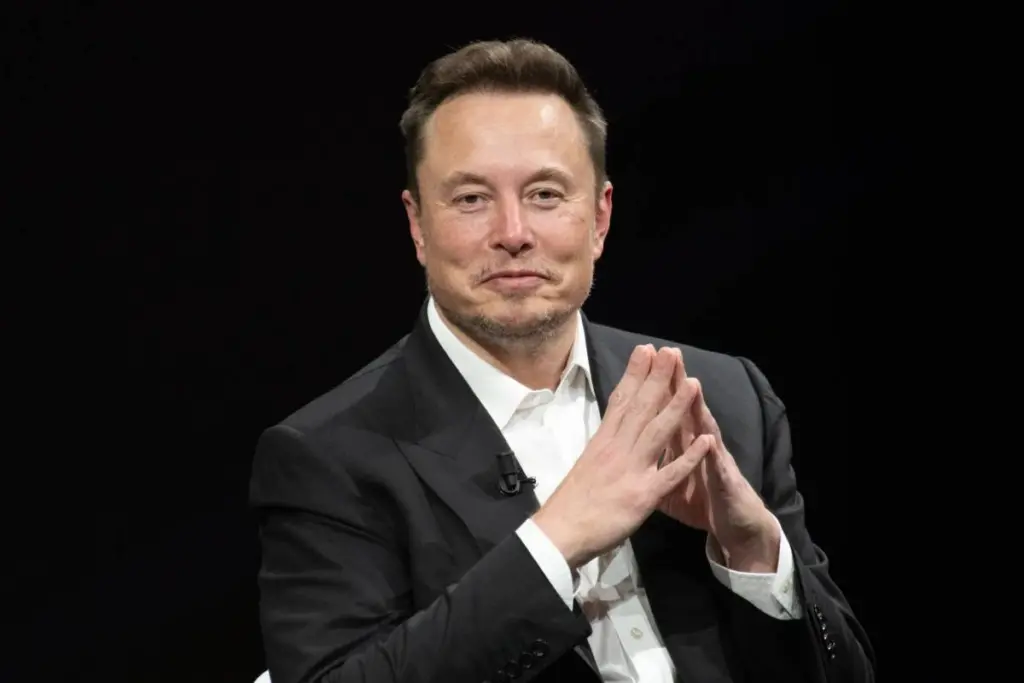
Elon Musk, the world’s wealthiest individual, lives in Texas, another state without a state individual income tax. Two of Musk’s business ventures, SpaceX’s Starship vehicle and Tesla’s ‘Gigafactory’, are both based there.
Conversely, one billionaire has expressed ambivalence towards the bill. Co-founder of AI chip builder Nvidia, Jensen Huang, said ‘I’ve got to tell you, I have not even thought about it once. We chose to live in Silicon Valley, and whatever taxes I guess they would like to apply, so be it. I’m perfectly fine with it,’ in an interview with Bloomberg.
Content from our partners



The 2026 Billionaire Tax Act has faced pushback from California’s Democratic governor as well. Gavin Newsom, who has served as governor of California since 2019, vowed to put a stop to the bill, saying ‘This will be defeated. There’s no question in my mind,’ in an interview with the New York Times.
The driving force behind the bill is the California-based health union named the Service Employees International Union-United Healthcare Workers West, which argued that the tax would fund education, healthcare and welfare within the state.
[See also: Why so many wealthy Americans are moving to the UK]
The proposed tax on billionaires could result in a brain drain from the Golden State, argues California-based investment expert Michael Ashley Schulman, a partner at Running Point Capital.
‘The innovation engine in California and the talent density are Jedi-level in strength,’ Schulman tells Spear’s. ‘You don’t want to push those people out.’
‘The fact that we’ve got something like 200 billionaires, largely due to the tech industry, is very unique to California,’ he adds. ‘We might see soon-to-be-billionaires moving states before they reach that level of wealth, because they could think “jeez, I could save $50 million if I change residency before this happens”.’
The US is home to 924 billionaires, a substantial portion of the world’s 2,919 billionaires, according to UBS Global Wealth Management’s Billionaire Ambitions Report for 2025. Of these figures, 215 billionaires live in California, according to Forbes, meaning a mass exodus of these ultra-wealthy individuals could have a significant effect on the spread of billionaires globally.
Billionaires leaving California may look to cities such as Miami and Austin, both of which fall within states without income tax, Schulman notes. He adds that many wealthy Californians have moved to Tennessee as well, which in comparison to the west coast state has a low rate of income tax.
Schulman says: ‘People can have their cake and eat it too. They can officially move out of state, yet still enjoy the California lifestyle, their friends. So they’ll take up residency in Florida, Tennessee, Texas, Nevada and still keep their California home.’
However, wealth manager Robert Paul of London-based firm W1M Wealth & Investment Management tells Spear’s that the proposed tax on Californian billionaires could have little effect, owing to the fact that many billionaires already lead international lifestyles.
‘Something we have observed over the past 15 years is the transient nature of wealth has expedited significantly and the boundary between “needing” to be somewhere and “wanting” to be somewhere has altered,’ he says. ‘Just because someone “wants” to live somewhere for personal reasons, as wealth increases, they have far less “need” to locate themselves somewhere, such is the flexible nature of travel, communication and work habits.’
He adds: ‘Headlines and logic will tell us that a good number [of billionaires] will leave because why stay to pay five per cent when you have the flexibility to move and the alternative is zero per cent just over the state line [in Nevada].’
[See also: The best wealth managers for ultra-high-net-worth clients]
While the proposed tax on billionaires may cause many of them to leave California, there will be some UHNWs who stay in the state because of the lifestyle it can provide, argues Chris Gabbett of LGT Wealth Management.
‘Overall, the US and California in particular remains a very attractive place to be based,’ he says. ‘Despite having the highest state income tax in the country and a high cost of living, California continues to rank highly as a place to live and work.’
However, Gabbett says that while California is currently the centre for technology in the US, this could change following the potential introduction of the tax.
‘In the short term, many billionaires are, in my view, likely to reorganise or shift their assets outside of California to reduce potential tax exposure,’ he says. ‘Over the longer term, the policy could influence where new startups choose to locate.’
He adds: ‘If future start-ups are established elsewhere, the resulting loss of investment, talent and tax income could negatively affect the state’s economy.’
[See also: Trump doubles his fortune as Musk breaks wealth record in world rich list]