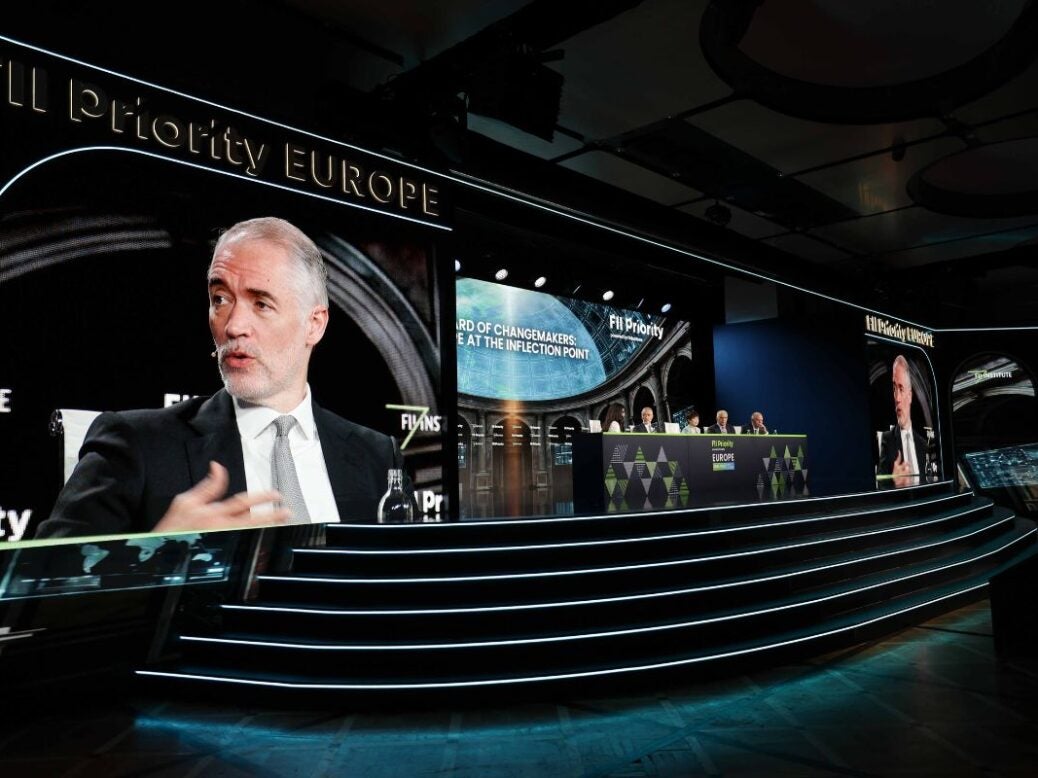
Europe is on the cusp of an ‘incredible investment supercycle’ but risks losing that opportunity unless it acts with greater speed, unity – and less onerous regulation.
That was the view of global co-head of investment banking at Goldman Sachs, Anthony Gutman, who was speaking at the FII Priority Europe summit in Rome today.
Yasir Al-Rumayyan, the governor of the $1 trillion Saudi sovereign wealth fund PIF; Sir Noel Quinn, chair of Julius Baer; and Stella Li, who leads Chinese automaker BYD’s business in the US and Europe, were among the other business leaders to speak at the conference.
[See also: FII heads to Rome as ‘Davos in the Desert’ takes on Europe]
Related

Figures from politics included Albanian premier Edi Rama; Matteo Renzi, the former prime minister of Italy; the mayor of Rome, Roberto Gualtieri; and the mayor of Milan, Giuseppe Sala. The current Italian prime minister Giorgia Meloni sent a video message recorded in France, where she had travelled to attend the G7 conference in Évian-les-Bains.
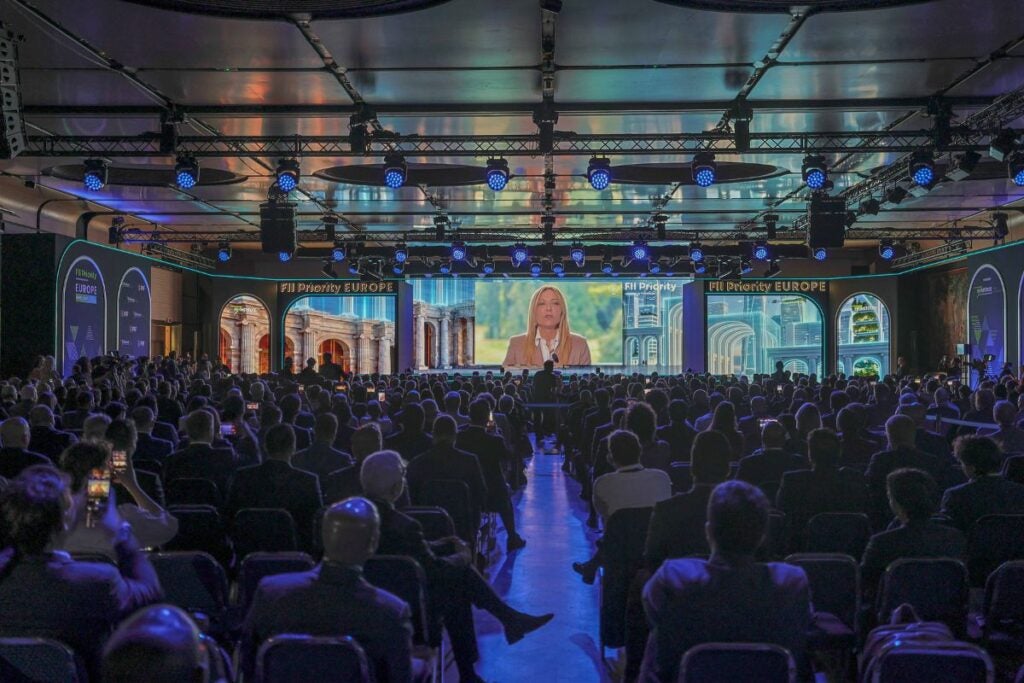
Gutman’s comments about the coming ‘investment supercycle’ were delivered shortly after opening remarks from FII Institute chairman Richard Attias, who launched the organisation in 2017, working closely with Saudi crown prince Mohammed bin Salman. The institute’s Riyadh conference has come to be unofficially known as ‘Davos in the Desert’.
Attias framed the conference by pushing back against the prevailing narrative of European decline.
[See also: Inside Milan’s rise as a haven for the world’s wealthiest]
Content from our partners



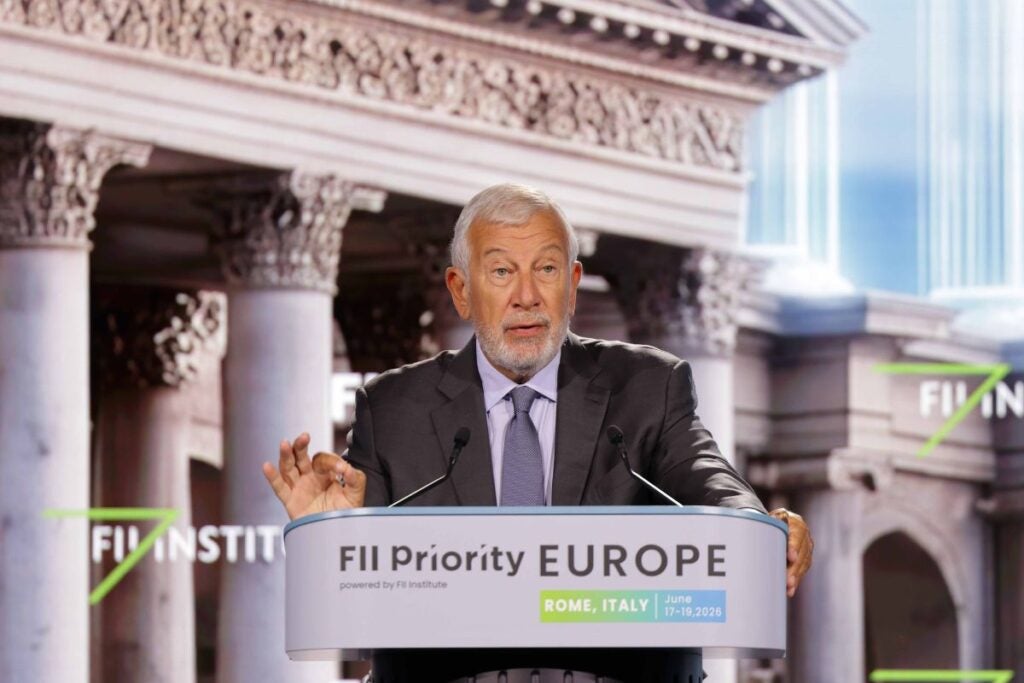
‘For years, we have heard the same narrative repeated again and again: Europe is declining, Europe is too slow, too regulated, too fragmented, too cautious, too old.’ But Europe, he argued, ‘still possesses something the world desperately needs: talent, creativity, stability, culture, innovation, research, industrial excellence.’
The challenge, Attias added, is not whether Europe matters but whether it is ready to change fast enough. ‘Europe must rediscover ambition. Not fear ambition, not regulate ambition – but embrace ambition once again.’
In her video message, Meloni called for Europe to develop ‘strategic authority, industrial capacity, technological sovereignty and financial power,’ saying that being a major commercial and regulatory platform ‘is no longer enough.’
[See also: CEOs spend more on personal security as threats ‘on the rise’]
She pointed to cooperation between Europe and the Gulf as a priority, arguing that it ‘has enormous untapped potential and can be decisive in connecting West and East, Africa and Asia.’
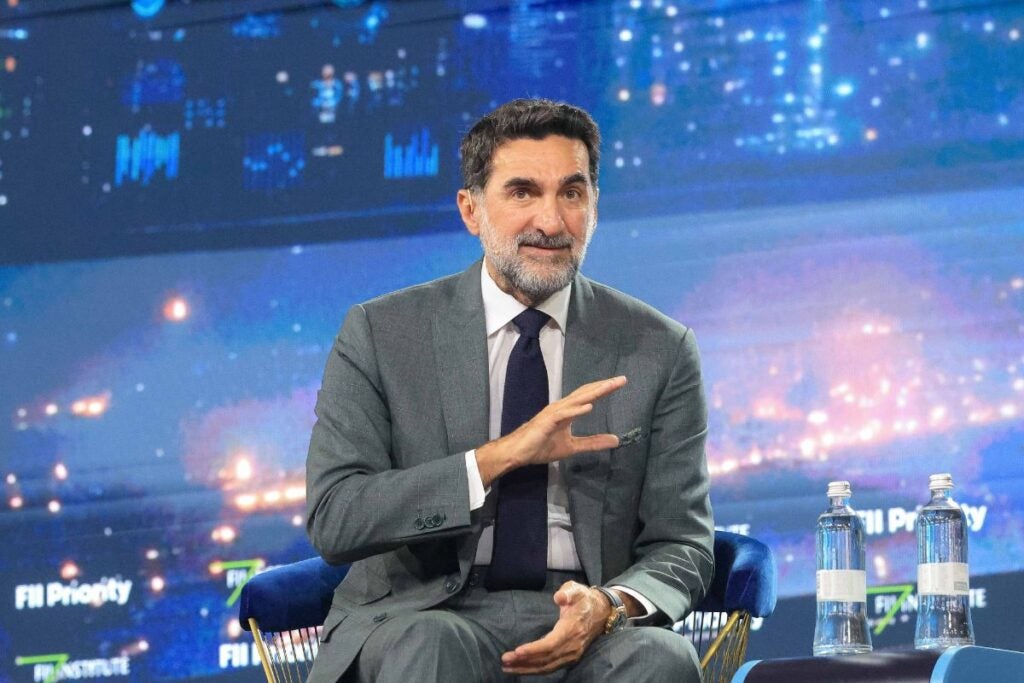
Al-Rumayyan, who, in addition to his PIF role is chairman of Aramco, the world’s largest oil-producer, also addressed the summit. ‘We do have challenges [in Europe],’ he said. ‘But the opportunities are greater.’
Since 2017, the PIF has invested about €98 billion in Europe and the UK, helping generate an estimated €70 billion in economic output and supporting around 160,000 jobs. The fund’s new strategy through 2030 includes 140 potential investments worth €10.4 billion, focusing on areas such as tourism, advanced manufacturing, clean energy and logistics.
[See also: HSBC Private Bank gives UHNW clients access to institutional-grade private markets]
Regulatory complexity, however, remains a barrier, Al-Rumayyan said. ‘It’s really hurting investors such as ourselves,’ he said, ‘not only to invest more but to keep their existing investments in Europe.’
He also called for ‘energy realism,’ saying renewables are ‘a great addition’ but ‘not going to be a substitution for fossil fuel – and we’ve witnessed this very well during the past few months.’
The curtain-raising panel discussion featured Gutman, Sir Noel Quinn, Stella Li and Andrea Orcel, chief executive of UniCredit.
[See also: Why British wealth management is taking on an American accent]
Gutman, who called himself ‘the optimist on the panel’, said Europe should not ‘default to a pessimistic view’ and described the continent as being ‘on the cusp of what we think is an incredible investment supercycle, driven by what’s going on with AI, driven by the need for enormous infrastructure spend, enormous need for new power generation.’
He told the audience that the world is also ‘at an inflection point,’ rebalancing geopolitically and entering a new technological wave, and that Europe’s opportunity lies in seizing that moment.
‘You cannot forget Europe is a €20 trillion GDP market. […] US is 30 trillion, China 19 trillion. So it’s a huge market,’ Sir Noel said. But he also set out the scale of the gap that has opened up. In 2011, Europe and the US each accounted for roughly 21 per cent of global GDP; today the US stands at 25 per cent and Europe has fallen to 17. He also pointed out that venture capital funding in Europe is €52 billion a year against $138 billion in the US. Europe files 200,000 patents annually while China files 1.8 million.’
[See also: The best wealth managers in the Middle East in 2026]
Europe, he said, ‘is falling behind, but it has tremendous capability to recover. What it needs is clear and unified strategies, and the agility to execute them.’
Orcel pointed to regulation and political fragmentation as the underlying problem.
The solution, he told the panel, is not to wait for political consensus but for business leaders to act: ‘The only thing we can do is say: this is the environment, let’s not wait for others, let’s do it ourselves.’
[See also: Goldman Sachs: Millennials are the ‘alts generation’]
Gutman pointed out CapEx-to-sales ratios in Europe have hit 10-year highs and cross-border M&A was up around 60 per cent.
‘But Europe needs to operate as Europe, not as 27 member states,’ he cautioned. ‘When innovation emerges, it’s not staying in Europe. It’s travelling to the US and elsewhere, because it travels to places where capital is available and where there’s lower regulation and higher risk appetite.’
Spear’s is an official media partner of FII Priority Europe.