
Not everyone buys the idea of the super-gift, least of all some of the people making them.
‘Many of my clients would be allergic to it,’ said Hannah Gibney, head of philanthropy at Stewardship. ‘What we’re working on, really, is how to be generous in our lives and how to do generosity well.’
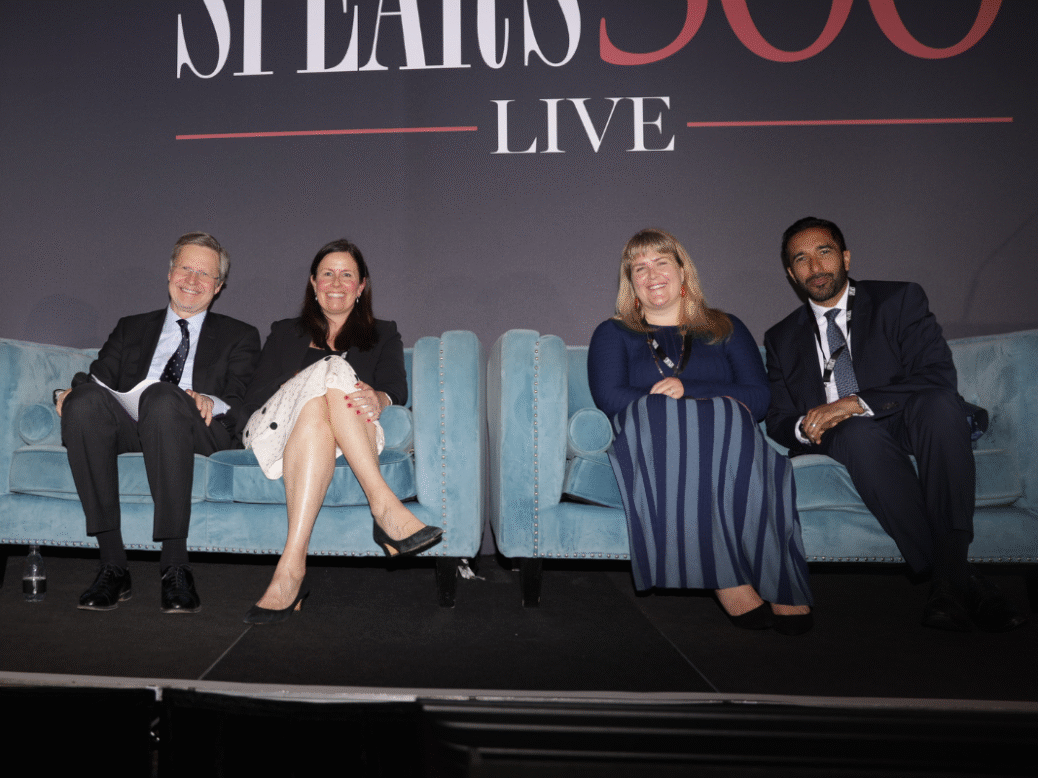
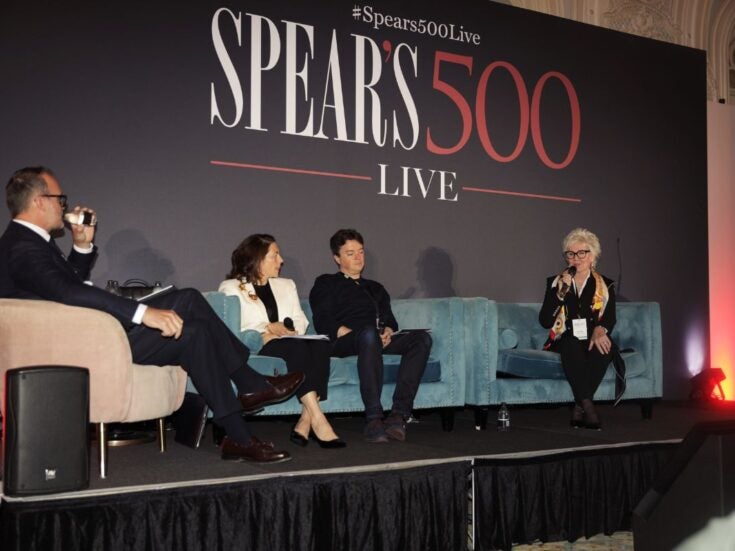
At Spear’s 500 Live, the premier live event for private client professionals, Gibney was joined by Philippa Cornish, client relations director at Charities Aid Foundation; David Forbes-Nixon OBE, founder and chairman of the DFN Foundation; Al-karim Nathoo, CEO of 4C Group and advisory board member for UK for UNHCR; and panel chair Aisha Alli, head of research at Spear’s, in a panel entitled: ‘Does the rise of the super-gift herald a new golden era of philanthropy?’ in association with Stewardship and Charities Aid Foundation.

According to CAF’s High Value Giving report, the UK’s wealthiest individuals give around £8 billion to charity annually – roughly 0.4 per cent of their investable assets. Were that figure to reach 1 per cent, it would unlock an additional £12 billion. Within that range, what actually counts as a super-gift is, according to Cornish, ‘very much in the eye of the beholder, or bank account of the beholder’ – a donation large enough to ‘totally alter what a charity can do, totally change their trajectory.’
Related
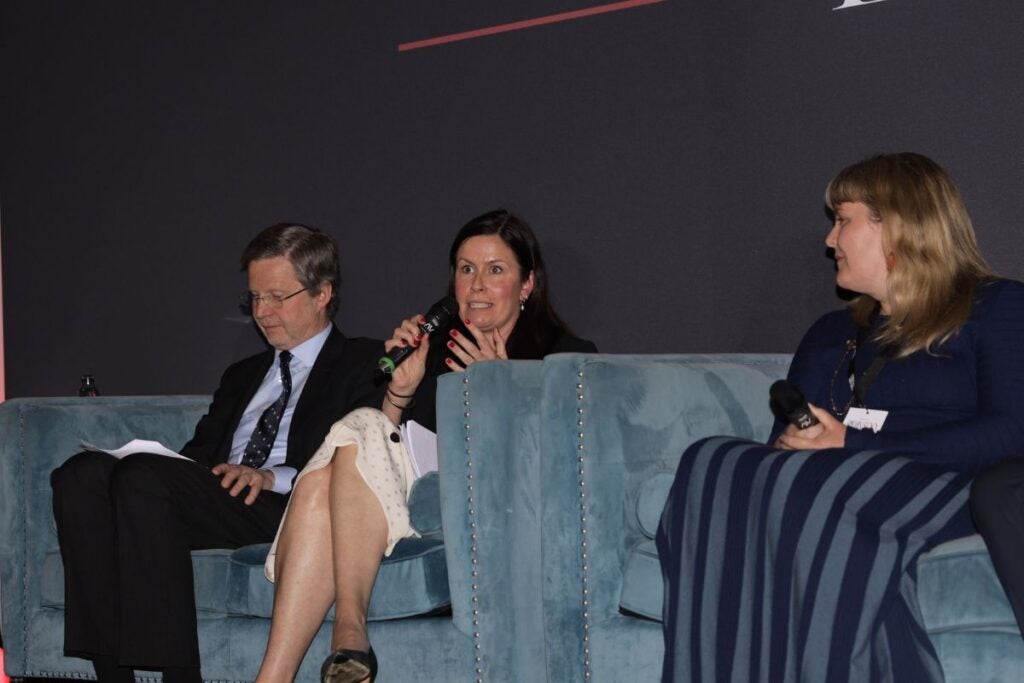
What drives someone to give at this scale, in Nathoo’s case, was personal more than structural. His family’s giving – through the Aga Khan Development Network, the Dafi refugee scholarship programme at UNHCR, and a culture of community engagement embedded in his company – sits within a longer tradition. ‘The process of giving is not necessarily a one-off or simply writing a cheque,’ he said. ‘It is actually a lot more multi-dimensional – more of a continuum.’
The case for measurement
Several panellists made the case that a charity’s capability to measure success is central to encouraging a culture of giving by allowing donors to observe the tangible results of their super-gifts.
Forbes-Nixon’s DFN Project SEARCH programme — which has placed more than 4,000 young people with learning disabilities into full-time employment with businesses including Amazon, Goldman Sachs and the NHS — tracks and measures its results in thorough detail: the hours interns work, the gender pay gap within each cohort, the kinds of businesses they end up in.
That level of rigour, Forbes-Nixon argued, is what much of the charity sector lacks. ‘Most charities, probably 95 per cent, don’t actually move the needle. And part of that’s because they don’t have the right construct. They don’t know what success looks like.’
Content from our partners


Gibney’s reply was not to dismiss the case for data but to widen it. ‘Data is very important. We can’t give well without knowing the impact of our giving.’ But, she added, the bigger question for the donors she works with is one of responsibility, something that can’t always be reduced to numbers or statistics. ‘The biggest thing we work with our clients on is thinking about stewardship as an action. How are we looking after what we’ve been given? We’re guardians of this for the time that we’re here.’
That orientation also has a practical dimension, panellists agreed. CAF’s economic modelling, conducted with the consultancy Public First, found that wealth advisers who raise philanthropy with clients see client lifetime value rise by nearly 25 per cent over a decade, with assets under management growing by 15 per cent more than at firms that don’t. ‘There’s a definite business case for having the conversation,’ Cornish said.
The burden – and the privilege – of giving big
A super-gift however does not always land as intended, panellists cautioned.
‘Someone comes along, super passionate about a cause, and says: “I want to donate a million pounds to this organisation tomorrow”,’ said Gibney. ‘What that might mean for an organisation with a turnover of £50,000 a year is that suddenly their strategy, the work that they do, the way that they’ve developed themselves, might change all of a sudden. They might think [they] can scale up – and then actually it becomes a burden later on, if it isn’t a gift that’s going to be reoccurring.’
The risk, she suggested, can be mitigated by donors working closely with the organisations they support and with intermediaries who can shape the gift to fit.
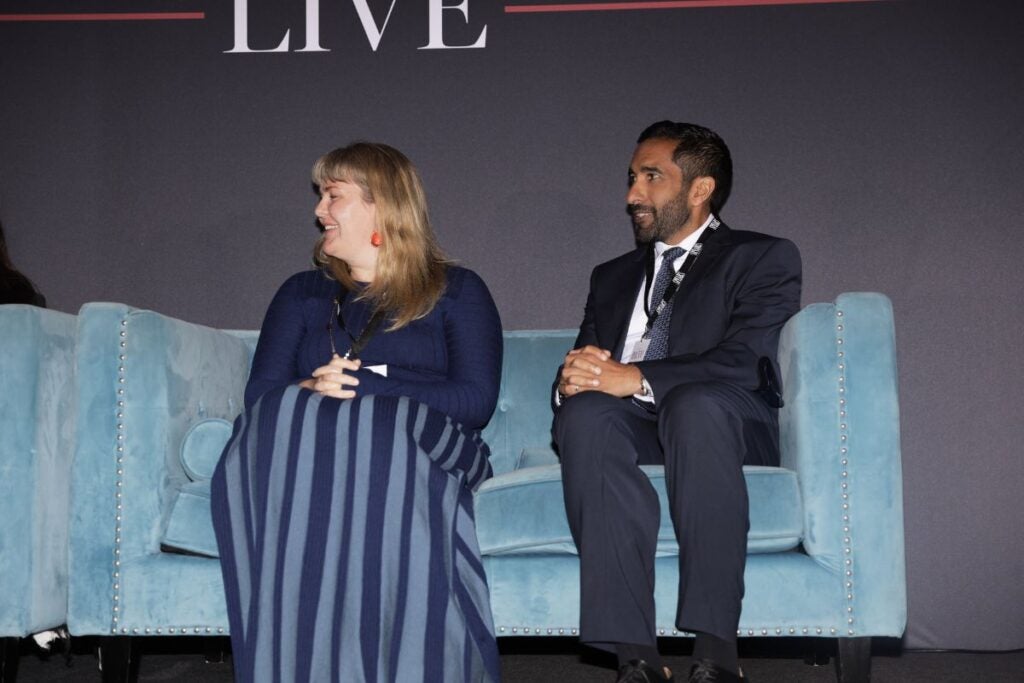
Not all of the criticism levied at big donors is fair, Forbes-Nixon argued – including one that has dogged major giving for years: that wealthy donors are able to ‘skip the queue’ by going directly to ministers and policymakers.
‘It’s a tough gig,’ he said. ‘Most charities are run by amazing and kind people, but they fail to execute what they’re actually trying to do. So if you’ve got a good relationship with a minister, go and see them. If you’ve got contacts, leverage them.’ His foundation, he explained, hosts a parliamentary reception each year for the disability employment charter, attended by around 50 MPs and the disability minister, Stephen Timms. ‘It’s how you nudge the government in the right direction.’
The future of philanthropy
For some donors, naming a gift is part of the commitment. But panellists agreed it can also be a powerful way to bring others in.
When Forbes-Nixon and his family came to set up their foundation, the question of whether to attach their name was not taken lightly. ‘I spoke to people across the forums [I support], asking whether we should use our name,’ he said. ‘The overwhelming response was yes. It commits you to not being a fair-weather friend and to really being there through good times and bad. I’m going to continue to do this as long as I live.’
Nathoo, part of a younger generation of donors, has chosen to keep his name out of the spotlight.
Giving, he argued, is encouraged not through publicity but by bringing donors closer to the work itself: meeting beneficiaries, understanding their motivations, hearing from those the giving has reached. Building a culture of generosity is then less a question of accountability than of authenticity, particularly with a generation that is digitally literate and globally connected. ‘That sense of authenticity is what charities need to respond to if they want to attract a new generation of wealth.’
Whether through the visibility of a named foundation or the subtler authenticity Nathoo described, both views pointed to the same wider question: what comes next. For Cornish, the answer lay in reach. ‘The importance is that this is something inclusive – that it inspires people of all different ages and different levels of wealth to feel agency. That through giving, they can help change our world.’
Watch the full panel
Find out more
Spear’s 500 Live is the premier live event for private client professionals and leading figures from the private wealth and family office ecosystem. The 2026 edition took place on 6 May at The Savoy in London.
Spear’s 500 Live was presented in association with our partners the Charities Aid Foundation, CMB Monaco, Guernsey Finance, HCA Healthcare UK, Payne Hicks Beach, Riverstone, Scott Dunn Private and Stewardship.
For commercial enquiries concerning Spear’s events, contact shady.elkholy@spearswms.com.


