Mayfair is undergoing a regeneration and development boom worth £4 billion, including more than £100 million of investment into ‘the public realm’, Spear’s can exclusively reveal today.
The findings are from a report by Mayfair property specialist Wetherell, using information and data from Westminster City Council, the Crown Estate, the Portman Estate and Reuben brothers, among other sources. The analysis has been shared exclusively with this magazine ahead of publication.
Major developments in Mayfair include the groundbreaking 1 Mayfair, which has a gross development value of £2 billion, and Reuben Brothers’ £1 billion redevelopment of a collection of major real estate assets that has been coined ‘the Piccadilly Estate’.


The construction of 1 Mayfair by Caudwell, the property development company founded by billionaire entrepreneur and philanthropist John Caudwell, will see the creation of 24 principal residences priced from £35 million and five smaller properties expected to house staff.
Related
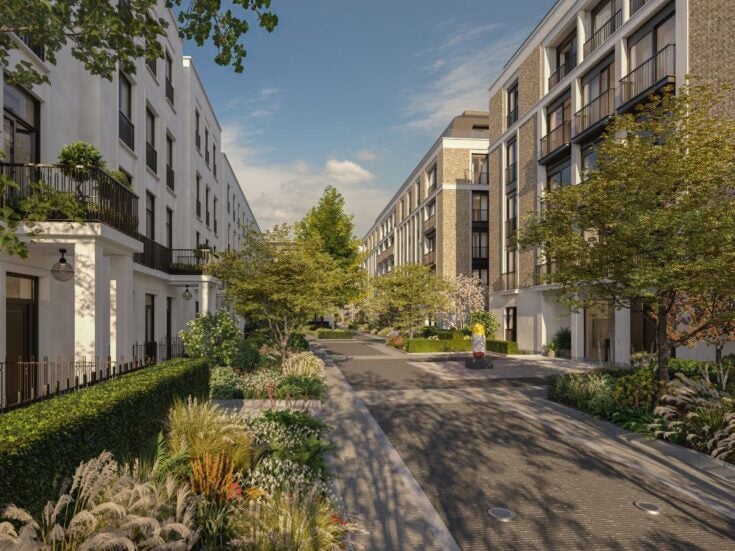
The project, which is expected to launch next year and includes the construction of a completely new Robert A.M. Stern-designed building on the site of the old Audley Street carpark, will also see the creation of a new public square. Audley Square will open out onto South Audley Street and feature a newly commissioned work by Philip Jackson, who was Royal sculptor to Queen Elizabeth II, alongside new planting and street paving.

When it came to the design of 1 Mayfair and its surroundings, John Caudwell wanted something ‘ultra-classical’ with ‘a nostalgic feel to it’. Once complete, someone looking at Audley Square might feel they ‘could have gone back 400 years’ to the 17th century, he told Spear’s.
Read more: 1 Mayfair – the latest prestigious development using ‘One’ in its name
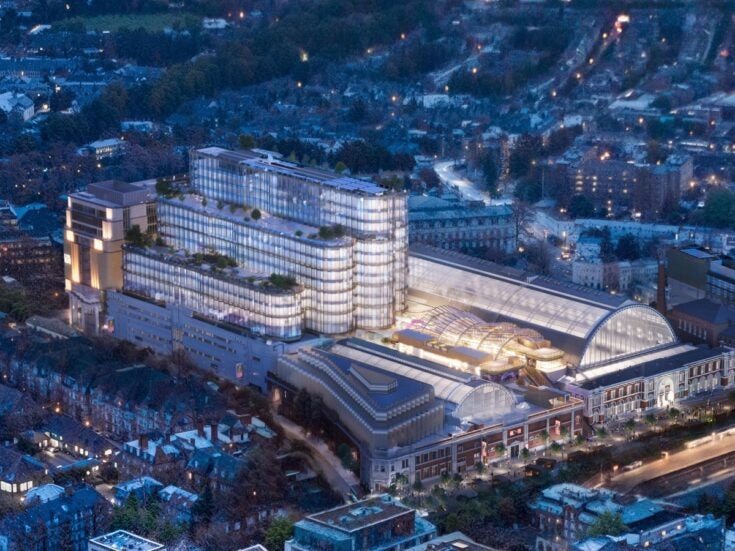
The redevelopment of the Piccadilly Estate by Reuben Brothers will include a new business and health-focused private members’ club, The Carrington, created by the man behind 5 Hertford Street and Oswald’s, Robin Birley. The project also includes the conversion of the former home of the Naval and Military Club, more commonly known as the In & Out. The Grade I listed, 18th century building, Cambridge House, will become a hotel managed by Auberge. The group currently has 36 properties, of which 25 are in the US.
Content from our partners



Shepherd Market, which is adjacent to 5 Hertford Street, will also be the site of a new ‘pedestrian priority’ public square with new English York stone paving, tree planting, public seating and improved street lighting.
‘The idea is to get people more engaged in Shepherd Market,’ said Jamie Reuben, principal at Reuben Brothers. ‘[T]here’s going to be increased pedestrianisation, a more interactive mix to the retail, and more events as well, to create a community vibe.’

The project has already resulted in the recreation of a thoroughfare connecting Shepherd Market with Piccadilly, which is said to have previously been closed off for around 300 years. This has opened up access for pedestrians, which runs past the front entrance of One Carrington, a new super-prime development comprising 28 residences priced at up to around £25 million.
Home values in Mayfair are 52 per cent higher than the prime central London (PCL) average, up from 27 per cent in 2012, according to data from LonRes that captures average achieved prices per square foot in a calendar year. By contrast, home values in Knightsbridge – which the report authors note is ‘owned by a variety of freeholders and lacking the public realm investment and estate curation of Mayfair’ – are just 18 per cent higher than the PCL average, down from over 50 per cent in 2012.
‘Investment in the urban fabric is why Mayfair has overtaken Knightsbridge as London’s premier address,’ said Peter Wetherell, the founder of Wetherell and the man known in the industry as ‘The Mayfair Guru’. ‘It’s been proven that the number-one most expensive address [in London] is Mayfair.’

Wetherell told Spear’s that Mayfair’s recent run of good form had its origins in events including the redevelopment of Grosvenor Square, which saw the launch of super-prime residential developments at 20 Grosvenor Square and 1 Grosvenor Square in 2019 and 2022, respectively, as well as the opening of 5 Hertford Street just off Shepherd Market in 2012.
Read more: How 5 Hertford St became the most influential members’ club in the world

Shepherd Market has a somewhat chequered past. It was home to the annual May Fayre, which took place from 1686 to 1764 and gave the district its name before it was blamed for bringing the wider area downmarket. It was subsequently developed by the Grosvenor family (who became the Dukes of Westminster), but Shepherd market had again slipped a little more in recent times, according to Wetherell. Not long ago ‘it was the Maltese mafia, running brothels and all that,’ he said. ‘That’s all been cleaned up. And then, suddenly, up turns Robin Birley [with 5 Hertford Street] and it’s the go-to destination. That was the big rock thrown into the middle of the pond, which created the ripple effect.’
Other changes to the urban fabric of Mayfair include Grosvenor’s £500 million redevelopment of the South Molton Triangle close to Claridges and 226,000 sq ft of new office space for Blackstone on the south side of Berkeley Square. The Wetherell report notes the development across Mayfair will also result in three new ‘Parisian-style pedestrian boulevards’, improvements to existing garden squares, the widening of pavements in five areas and a ‘green corridor’ project.

‘I think everyone’s so busy at the moment rushing around that they just don’t realise what’s happening underneath their noses,’ said Wetherell. ‘It’s only with the benefit of hindsight that people will look back in 50 years’ time and say, “There was an amazing thing happened in Mayfair in the 2020s.”’
Jamie Reuben described the amount of investment into Mayfair in the last decade as ‘enormous’. John Caudwell said: ‘Over the last ten years Mayfair has already been transformed. It has worked its way back up to the top of the Monopoly board, and it’s going to keep going (up) with all of these green spaces and beautiful developments.’
He added: ‘Mayfair is on an unstoppable course to be the absolute heart of London from a residential and desirability point of view.’
In addition to the schemes already approved and underway, there are proposals to pedestrianise vast swathes of Mayfair.
In June 2025, the Mayor of London, Sadiq Khan, announced his intention to move ahead with plans to pedestrianise the section of Oxford Street that runs between Orchard Street and Great Portland Street.
In July, Westminster City Council and the Crown Estate proposed the creation of more than 35,000 sq m of car-free public space across the West End. This would include the pedestrianisation of the south side of Piccadilly Circus and Regent Street St James (known until 2014 as Lower Regent Street). A decision on the plan is expected in 2026.
Another notable proposal is the creation of a pedestrian boulevard that would run along what is now the southbound carriageway of Park Lane, which has been put forward by the Mayfair Neighbourhood Forum.


‘That will be utterly transformational. I think it will be a no brainer,’ Caudwell told Spear’s, of the pedestrianisation plans. ‘It just means more and more footfall coming past the showrooms [on Park Lane]. I can’t really see anyone objecting. It will be great for Mayfair and consequently London too.’
However, Wetherell sounded a note of caution. ‘You can’t just block off one street and not have implications in the side streets,’ he said.
‘And it doesn’t necessarily make it a nicer habitat. If you can get to Oxford Street easily, then you’re going to shop there. But if it makes it harder to get to, there’s no point having all that lovely space to walk up and down.’
With so many interested parties, Wetherell said he expected ‘quite a bit of consultation’ before plans were finalised.
Of the proposal to pedestrianise the Mayfair side of Park Lane, he added: I’m very excited by it. I think it could be amazing.’
‘People are going to have to put their hands in their pockets, but the people who own the properties on Park Lane [such as the Qatar Investment Authority] actually have got pretty deep pockets anyway.’
The full report, ‘The Glamour and Psychogeography of Mayfair’ will be published by Wetherell