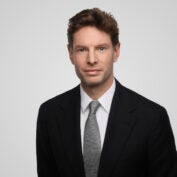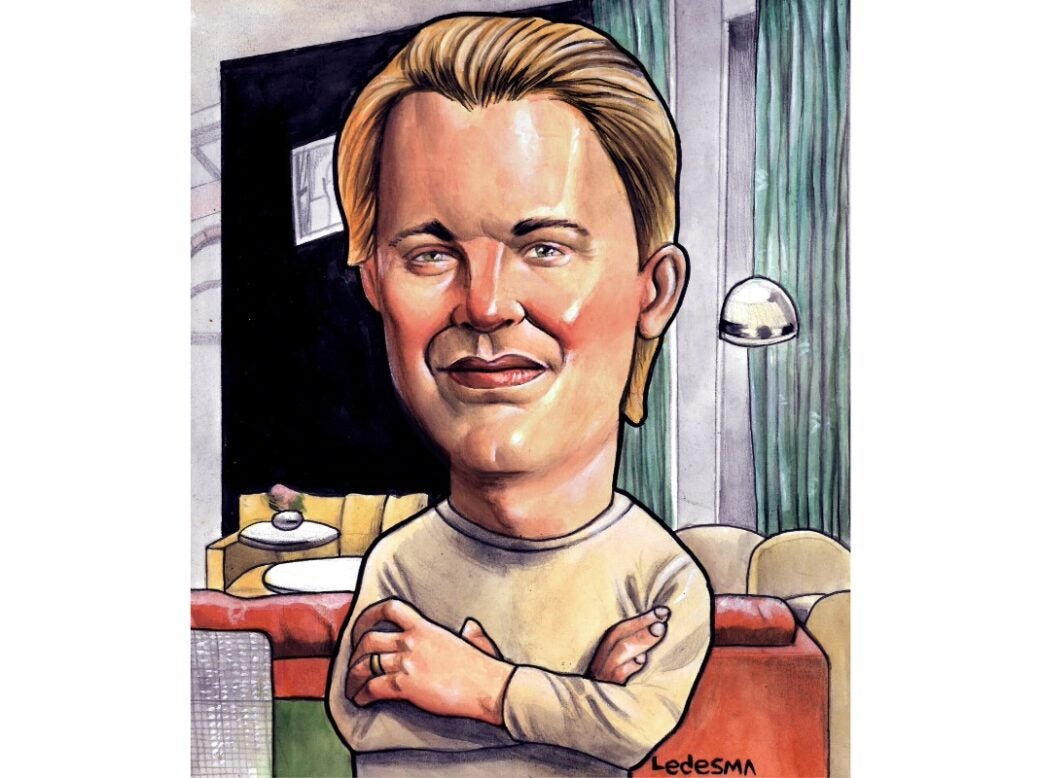
It’s almost a decade since Nico Rosberg triumphed in the Formula One World Championship, winning a season-long duel with his Mercedes teammate Lewis Hamilton. It went down to the wire: the last lap of the dramatic finale in Abu Dhabi. Then, five days later, at the age of 31, he announced his retirement from the sport.
Both Hamilton (41) and another man who was on the grid that day, Fernando Alonso (44), are older than him and going strong, still competing at the very highest level. So it was hardly inevitable that he would step away when he did.
Rosberg admitted as much in an interview at the F1 prize-giving ceremony in Vienna. Dressed in a tuxedo and cradling the trophy that also bore the name of his father, 1982 world champion Keke Rosberg, he was asked whether he’d have still called it quits if he’d lost out to Hamilton. ‘I never give up,’ he said. ‘So if I would’ve come second I would have gone for another year, for sure.’
Rosberg had achieved an ambition he’d been pursuing since he was six years old. ‘It’s mission accomplished for me, he said in the same interview. ‘It’s a dream come true. It’s family first now.’ But as well as focusing on family – namely his wife, Vivian Sibold, with whom he’s been since they were teenagers, and his daughters born in 2015 and 2017 – Rosberg has since put his energies into a new career: venture capital.
Related

[See also: Introducing Spear’s Magazine: Issue 99]
It is pouring with rain in London on the day of our meeting. I try to shield at least some of my body with an umbrella as I make my way along Knightsbridge, avoiding the deepest sections of what seems to be a new tributary to the Thames, which has formed on the pavement. Inside the lobby of the Bvlgari hotel, however, Rosberg is a picture of composure; dressed in shades of beige and cream, with his blond-ish hair artfully coiffed.
He’s in London, he explains, for one night only. Matt Miller, a former Sequoia partner who was instrumental in setting up the Silicon Valley firm’s London office five years ago, left the VC giant following a board dispute at Klarna, one of its portfolio companies. Now Miller has launched his own firm, Evantic Capital, and is hosting a dinner for investors and contacts.
When I heard Rosberg was going to be in town, naturally I was keen to meet. But the only chance was shortly before I had to catch a flight of my own. So I am breaking the cardinal rule of the Spear’s Liquid Lunch – by not having lunch. When the waitress approaches, I order a sparkling water, while Rosberg opts for a superfood salad as a pre-dinner pitstop.
Content from our partners


The draw for this evening’s gathering – ‘the secret sauce’, as Rosberg puts it – is that Miller ‘has just united the most insane community around this fund, and everybody’s meeting tonight. It’s very impressive’. Indeed, Rosberg’s own network and the access he enjoys to some of the most in-demand investment opportunities might be described as the ‘secret sauce’ of his firm, Rosberg Ventures. Having earned an estimated $80 million from his F1 career, the Monaco resident began his VC career by making a series of angel investments, with an average cheque size of around $50,000.
One of his early bets was on ChargePoint, an electric vehicle infrastructure start-up he was invited to back alongside Mercedes-Benz (whose engines had propelled him to F1 glory). In 2021 ChargePoint went public, netting Rosberg ‘many multiples of what I had invested’, he told Forbes. Other targets included a car-sharing business (Vay) and an AI company (Codeium).
[See also: American automotive icon Corvette beckons in the modern age]
The success and profile he enjoyed in his first career has opened a number of doors, but not everything has come easily – especially in the US. An investment in a digital payments start-up (Ivy) required several cold emails before a co-founder agreed to meet him. And Rosberg made at least five unsuccessful attempts to get into Andreessen Horowitz funds. Eventually the firm advised him to come back with a bigger cheque and some way of standing out. Which is what he did.
Rosberg began work on a fund of funds that would provide European investors with access to blue-chip Silicon Valley VC funds. The first fund, launched in 2024, has AuM of £75 million, and the recently closed Fund III is ‘$100 million in size’, says Rosberg, ‘and we do like $10 million in each of the best funds in the world’. The funds are still largely focused on the US, but there’s ‘some also in Europe’. Investors typically put in $3 million each.
‘You diversify by just covering the best funds in venture capital,’ he says as his salad arrives, before asking: ‘Do you mind if I eat this?’ Quite the opposite; one of us has to eat something or the whole premise of the interview is blown. He continues: ‘That’s how the university endowments do it. Harvard, Stanford, Yale – that’s how they invest in VC. They’ve shown it can be the best-performing asset class in the world, and we invest alongside them in these top-10 funds.’ He reckons the university endowments’ returns from the top VC funds average around 20 per cent, with private equity at 15 per cent and public equities at 10 per cent.
If his own angel investing was the first pillar of Rosberg Ventures and the fund of funds was the second, there is now a third – which also takes a leaf out of the university endowment playbook. Having secured access to the funds of the top VC firms, the universities look at the individual companies within those funds, ‘take a little bit of extra capital’ and then zero in on ‘the breakout companies’, making direct investments, says Rosberg. ‘And that’s what we’re doing as well now.’
His preferred model is to create a special purpose vehicle (SPV), which injects capital directly into a single privately held business. How does he select the companies? ‘It’s not too hard. You take the lead of the best investors out there. Each VC firm has, like, one main rainmaker, right? You can track [their investments]. Then, thanks to our fund, we can see which companies are breaking out. So it’s not too hard to identify your shortlist.’
[See also: ‘A big name with a big back story’: how Richard Mille built a €200,000 bike]
Rosberg reveals his firm is doing about one SPV a month, typically targeting a series B or C investment round and putting in a total of $2 million, made up of 10 tranches of around $200,000 from each investor or family office. The companies tend to already have ‘substantial revenues’ of $50–100 million, ‘so they’re well established, leading a new market segment’.
One example is a British business, Fuse, which Rosberg describes as ‘one of a kind’ and ‘the Tesla of energy’ because of its strategy of vertical integration. He backed the business, which was founded by former Revolut executives, as an angel during its seed round and used the SPV model to bring Rosberg Ventures LPs in for the Series B, which raised $70 million at a valuation of $5 billion – already ‘20x’ his own earlier investment. He’s also looking at AI voice generator ElevenLabs.
Rosberg skillfully swerves my schlocky question about the F1 personalities that would make the best or worst investors, but admits some of them have backed him. Who? ‘Some of the most senior people.’ I can’t help but wonder if he means Toto Wolff, the billionaire principal of Mercedes F1, whom Rosberg helped to win three constructors’ titles.
The total AuM of Rosberg Ventures is now a little north of $200 million, which still pales in significance when compared to Sequoia ($56 billion) and Andreessen Horowitz ($90 billion). But its founder sees it as an advantage in some respects. The larger funds are often looking to write $100 million cheques and are unlikely to invest in a company alongside one of their major competitors. ‘Even Sequoia, they cannot pick and choose.’
So how does he grow the firm from here? ‘I’m a race car driver; performance first. I want to win. And winning for us is getting the right kind of access, getting best-in-class performance. It’s not about the management fee or whatever else.’
[A voyage around the history of private equity: from profits and power to public scandals]
There are currently six members of the team, ‘but we’re too small’, even for the current workload and flow of direct deals. ‘We’re trying to do a full AI tech stack to try and see how much more we can get out of ourselves,’ he says. But the plan is to make some human hires as well, including for a chief of staff to support him in his role as CEO.
‘I’m not a perfectly complete CEO,’ he says. ‘I’ve done my world championship in my first life, where I was super hardcore all day long. Now I also love to enjoy family life. So there’s some shortcomings, especially around strategy, around planning, being organised.’
And it’s good to make time for some fun every now and then. He recently went ice driving with an investor and the CEO of their family office – both of them beat him. ‘So embarrassing!’ he says, with winning humility. ‘They had a lot more practice than me, and they do it every year. But it was so embarrassing. You know – these two office guys?!’
With that, I thank him and say I have to catch my flight. We’ve chatted in convivial, rapid-fire fashion for the past half an hour, but rather than simply bid me farewell, Rosberg shifts gear for a moment to sum up. ‘The universities have shown how [venture capital] can be the best-performing asset class in the world,’ he says. ‘The problem is: only if you get into the best opportunities. Everybody wants to get into those, but nobody can. So it’s not an asset class, it’s an access class. It’s a big challenge, but that’s what we’re trying to win.’
He always knew how to end on a high note.
This article first appeared in Spear’s Magazine Issue 99. Click here to subscribe