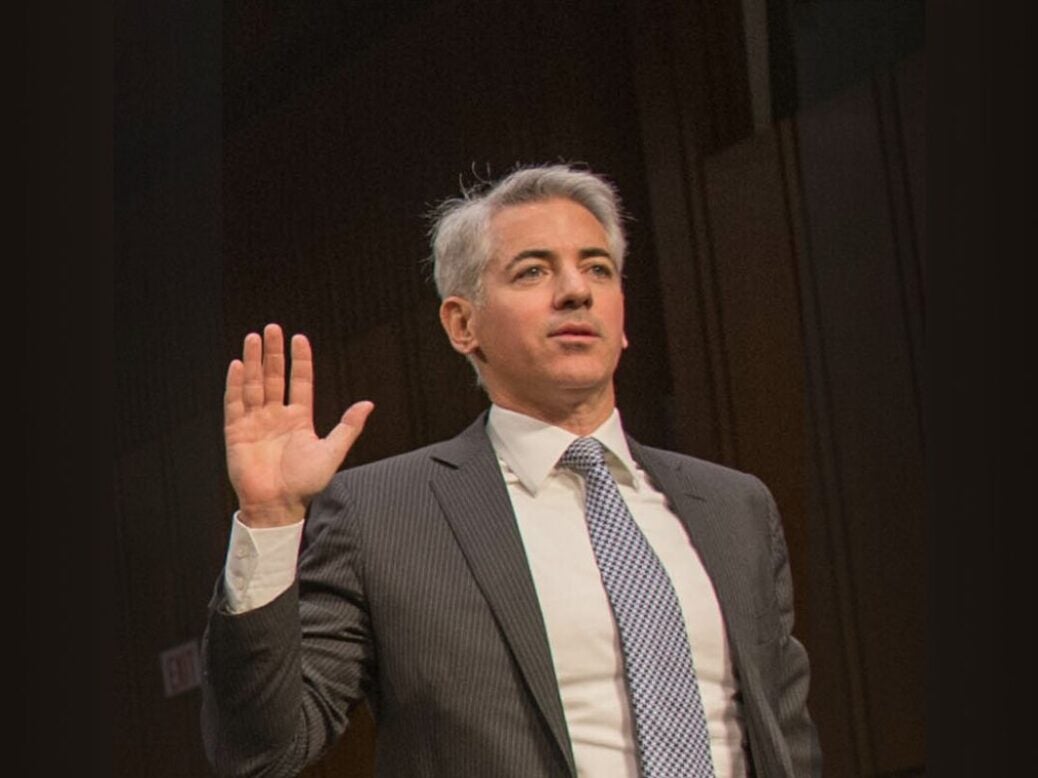
‘I have been sufficiently upset about the whole matter that I have lost sleep thinking about it and I am hoping that this post will enable me to get [it] off my chest.’ So began a recent – and instructive – tweet by Bill Ackman. The billionaire hedge fund manager and founder of Pershing Square is no stranger to stoking controversy on social media, but this post on X was unusual because it shed light on something which happens frequently, and yet is almost always hidden from view.
In around 2,500 words, Ackman detailed the problems he’d been having with his family office, Table Management, which had culminated in a potentially damaging dispute with one of its former employees. But that wasn’t how the issue started.
Ackman founded Table to administer a largely passive investment portfolio and manage the domestic mechanics of his life. It was a sensible mandate. The trouble was that over the years, headcount and costs expanded beyond what that mandate required. By his own admission, Ackman saw warning signs but looked away and chose not to get too involved. The investment portfolio was growing quietly and efficiently.

[See also: Why outsourcing has become the defining question for modern family offices]
Related



The costs associated with the office, meanwhile, were also growing quietly, but not so efficiently. Industry benchmarks suggest that single-family office running costs should broadly fall between 1.5 and 2 per cent of assets under management. But Table, by Ackman’s account, had started to drift. He felt it was no longer delivering value for money. The dynamic he described in that tweet is one I recognise.
I am reaching out to the @X community for advice with the likely risk of sharing TMI. I have been sufficiently upset about the whole matter that I have lost sleep thinking about it and I am hoping that this post will enable me to get this matter off my chest.
— Bill Ackman (@BillAckman) April 4, 2026
By way of…
There is a moment, usually shortly after a significant liquidity event, when a newly minted entrepreneur looks around at the sprawl of bankers, lawyers and fiduciaries orbiting their wealth and asks themselves a question: surely there’s a better way?
The answer they arrive at is often to establish a family office.
Content from our partners



[See also: German billionaire David von Rosen is taking risks with his family office]
These are bespoke, discreet and can be staffed by people you know and trust. What’s not to like? Well, sometimes, quite a lot.
The greatest strengths of family offices can also be weaknesses. For example, the ample resources and freedom they typically enjoy can prove to be a double-edged sword, particularly if the right checks and balances are not applied with an appropriate level of rigour.
Likewise, the principal’s ability to appoint a CEO who is trusted implicitly and has the power to make consequential decisions quickly might seem like a great boon. But this person carries a unique burden. Theirs is both a complex and generalist role.
[See also: The best family office banking & investment advisers in 2026]
Some people who have borne this responsibility for a principal and their family can feel as though asking for outside help would amount to defeat or even a betrayal of the very premise on which the office was built. ‘Initially there is pride; a sense of achievement,’ says my colleague Anna Chalov, a former family office CEO. ‘But over time, the position of “trusted person” becomes almost oppressive. You feel, at times, almost like a chosen one – I was selected, and it is my duty to carry this mantle alone.’
What looks like a privileged role from the outside can feel, from the inside, profoundly isolating. The CEO reports to the principal, but the principal is still more client than manager. They cannot truly understand the role. They don’t want to, either.
When Ackman grew concerned about expenses and staff turnover at Table, he sent his nephew to investigate. The subsequent inquisition triggered defensiveness and tension among employees and, later, a major restructuring within the office. Around 30 per cent of the staff were laid off, including a highly paid in-house lawyer who rejected a standard severance package and demanded a payment of $2 million instead. She also alleged gender discrimination and harassment during the review process.
[See also: Why more family offices are closing or downsizing despite rising wealth]
This was what prompted Ackman’s tweet.
His gambit seems to have been that getting these accusations out in the open would take the wind out of the former employees’ sails and allow him to get onto the front foot in the dispute. Time will tell if that pays off. As for Table, it will survive – but not in its current form. Rather than simply cutting costs, Ackman is moving toward what practitioners increasingly call a ‘hybrid’ model: a lean internal core for the functions that genuinely benefit from proximity to the family, with specialist external providers handling everything else.
The logic is sound enough. A single-family office – however well-resourced – cannot replicate the expertise of best-in-class external providers across every discipline. What it can do – and what only it can do – is hold the institutional memory of the family and provide the kind of unconflicted counsel that no third party can fully emulate. So this is a rational response. The lesson for family office principals may be to arrive at this conclusion before a crisis materialises, not when it’s already too late.
This article first appeared in Spear’s Magazine Issue 100. Click here to subscribe