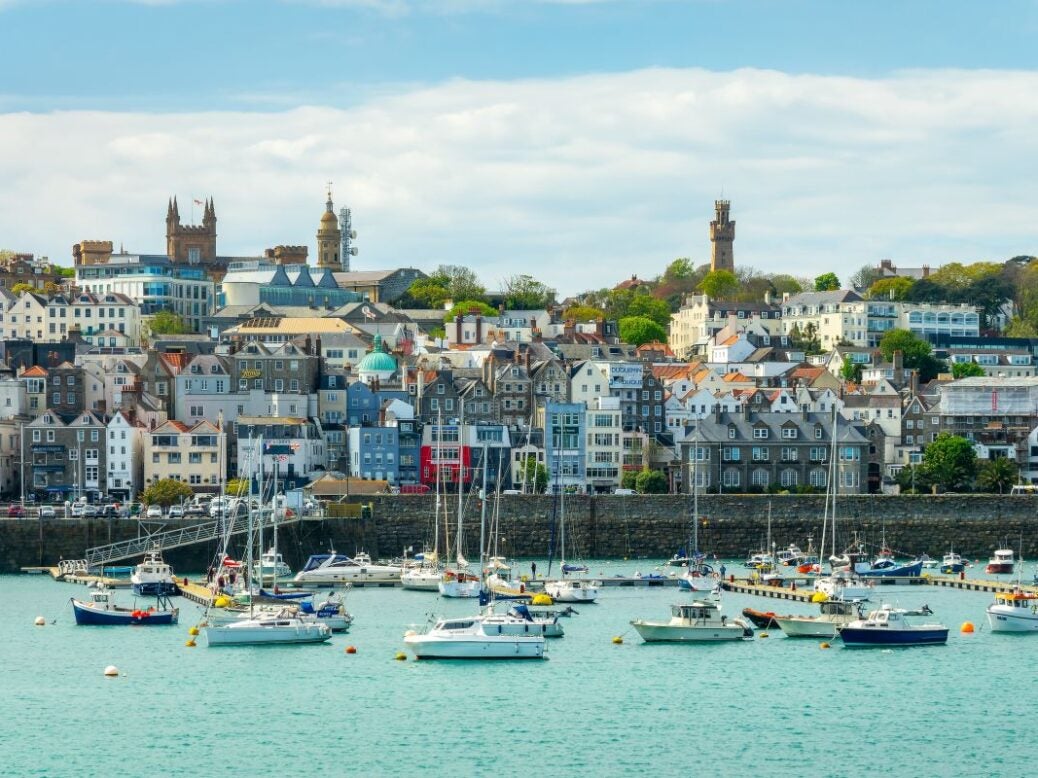
A British billionaire family has taken steps to move multiple trusts from the offshore jurisdiction of Guernsey to the UK for ‘ethical, social and moral reasons’, a judgment from Guernsey’s Royal Court has revealed.
The move could leave the family £82 billion worse off after 100 years, according to actuarial calculations referred to in the judgment. The trusts will become subject to UK tax, such as inheritance tax and income tax, which are not applied to trusts in Guernsey.
For decades, offshore trusts have been synonymous with tax efficiency. Wealthy families have used structures in jurisdictions within the Channel Islands, Caribbean and elsewhere to preserve assets, simplify succession planning and reduce tax liabilities.

[See also: The best wealth managers in Guernsey in 2026]
Related



In a decision handed down last month, the Guernsey court approved a proposal that will bring a trio of substantial family trusts into the UK tax system by replacing the Guernsey-resident trustee with a UK-resident trustee. The move was requested by the trusts’ beneficiaries, who are ‘strongly of the view that a fair amount of UK taxes should be paid on the trust assets from which they benefit,’ according to the court’s judgment.
The family is not referred to by name in the judgment and therefore remains anonymous, as does the protector company involved in the case. The judgment describes the settlor as a European businessman who spent much of his life in the UK before dying outside the country more than a decade ago. His four children are among the trusts’ beneficiaries.
‘It’s quite an amazing case really, and certainly it’s a new and novel one,’ said family office and succession strategist, Catherine Grum.
‘The practical effect would be to bring a family’s trusts into the UK tax net from where they were in Guernsey, [which is] outside the UK tax net,’ she added.
Content from our partners



[See also: BlackRock UK family office head quietly leaves role]
The three trusts are unlikely to be paying any local tax in Guernsey, noted accountant John Bull from the firm Blick Rothenberg. However, beneficiaries resident in the UK are likely to pay between 24 and 45 per cent in UK tax on their benefit from the trust. Bull added that for a Guernsey-resident trust, UK tax can be deferred if the income is retained within the trust structure. Onshoring the trust to the UK would remove the ability to defer such taxes.
The mechanism was relatively straightforward, said Grum, who added that under UK trust law, a trust’s tax residence is generally determined by the residence of its trustee.
‘By changing the trustee from a Guernsey-resident trust company to a UK-resident trust company, that would bring the trust into the UK tax net,’ she explained. ‘The residence of the trustee determines the residence of the trust.’
Although the trustee did not legally need court approval, they sought what lawyers refer to as a judicial ‘blessing’ because of the profound consequences of the decision, Grum noted.
[See also: ‘That feels like my parents’ idea of money’: Why nepo babies are fleeing Mayfair]
Collectively, the assets held within the three trusts could be worth £82 billion by 2134, if they were to remain in Guernsey, according to the court papers.
The judgment stated: ‘Actuarial calculations provided by the Applicant illustrate the potential effect of the Decision. In short, based on the current distribution policy and taxation rates in Guernsey and the UK, and if IHT and inflation is applied, the Trusts will be empty of assets by 2134 if onshored but have the potential to grow to £82 billion at that point if left offshore. These figures are illustrative only as they are based on a number of variables which could change but, in my judgment, they indicate that the Decision is patently momentous.’
Under the assumption that the trusts were to grow at the current CPI inflation rate of 2.8 per cent from 2026 until 2134, their present-day value would be around £4.15 billion.
The case arrives amid broader conversations about taxation, wealth and social responsibility. Groups such as Patriotic Millionaires have argued that the super-rich should contribute more to public finances.
[See also: Why British wealth management is taking on an American accent]
British musician Brian Eno is an active member of the group, and he previously told Spear’s that the level of giving from HNWs in the UK ‘simply does not match the scale of resources available’. Abigail Disney, heir to her family’s eponymous entertainment business, has also called for UHNWs to pay more tax in an interview with the Guardian.
Yet examples of wealthy families voluntarily increasing their tax exposure remain rare.
According to Clive Coleman, a senior partner at Maltin PR, the decision goes against many assumptions about how wealthy families behave.
‘There’s certainly reputational capital to be gained from an ultra-wealthy individual or family moving assets from a low-tax regime to a higher-tax regime because they feel it is morally the right thing to do,’ he said. ‘They want to play their full part in the social contract.’
[See also: The best wealth managers for high-net-worth clients in 2026]
Coleman believes the move stands out because it provides an alternative narrative to public expectations of how UHNWs behave.
‘It goes so against the public perception that the super-rich are experts at moving their assets to low-tax or even no-tax regimes,’ he said. ‘Bucking that trend comes with a lot of reputational capital, even if it means the tax take on those assets will be far higher.’
Whether families choose to publicise such decisions is another matter, he added, noting that some UHNW families are so discreet with their wealth that they would not want people to know they are ‘doing the right thing with their assets’.
‘They might just feel that it’s a matter of conscience,’ he said.
[See also: A voyage around the history of private equity: from profits and power to public scandals]
While court documents cited the family’s ethical and moral motivations, advisers say they are increasingly seeing trusts being brought onshore for practical reasons.
Robert Brodrick, a tax partner at the law firm Payne Hicks Beach, said years of government reform have meant offshore trusts are less attractive for many UK-based families than they once were.
‘I’m certainly seeing examples of families repatriating or onshoring trusts, but generally it’s done for practical reasons,’ he said. ‘This case was unusual because it was driven by personal ethical considerations.’
‘It was very popular in the 1980s and early 1990s for British families to set up offshore structures, and they did provide tax benefits,’ he said. ‘Those benefits have gradually been eroded by anti-avoidance legislation.’
At the same time, offshore structures increasingly attract scrutiny, he added: ‘You are very much treated as if you are avoiding tax if you are involved in an offshore structure, even though it may have been set up many years ago for perfectly good reasons.’
[See also: Goldman Sachs: Millennials are the ‘alts generation’]