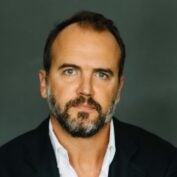
When François-Henry Bennahmias stepped away from Audemars Piguet in late 2023, he was exhausted. During his 11 years at the helm of the Swiss watchmaker, he had tripled the company’s revenues to more than 2 billion Swiss francs, rocking boats at every turn by aligning one of the most exclusive names in luxury with mainstream cultural superpowers such as Marvel, Travis Scott and LeBron James. In the process, the bomber-jacket-wearing Frenchman had also made himself one of the most talked-about people in luxury.
And then suddenly he disappeared. The disruptor, the maverick, the showman, a man loved and loathed in equal measure – gone from public view. In his exit interview, he’d told me he’d be back in six months, that he’d stick with what he knew: luxury, broadly. The promise? Watch this space. You won’t know what hit you.
In the autumn, he would tell me that after Audemars Piguet he’d realised he was cooked. He needed a break, to lose some weight. Six months? That had been crazy talk. He went camping, looked at the stars, slept on the floor, re-evaluated, and shifted 20 kilos. And into view came his second mountain.

His new group would work across seven verticals, with an incubator programme tacked on the side. At launch he announced the electric bike company Viiala. It would make space-age e-bikes from $15,000 upwards (he has a NASA scientist onboard). Then there was Avalon, a service company offering security for the watch and jewellery collections of high-net-worth clients. These would sit in the lifestyle and services verticals respectively, with watchmaking, fashion, art, talent management and jewellery making up the seven.
Related

To that point, he said, he’d only spent his money. At Dubai Watch Week in November, he would tell me he had backing ready to the tune of ‘close to $300 million’, without naming his investors. A good sum, but not the deepest of wells considering the scope.
Given his previous experience, the watch sector went into overdrive. Would Bennahmias be acquiring brands or launching new ones? Gossip was rife. Deals were on the table. Then one fell through. Then they all fell through. News was due in October. None came. The rumour mill threw up a few brand names, the recherché independent De Bethune in particular. Still nothing.
News, he says now, will come in early February. He will have four watch stories to tell. Yes, there’ll be an acquisition. No, he’s not saying who. Yes, there’ll be an all-new brand. No, it doesn’t have a name yet, but it will make watches that he says he wants ‘to be worth more almost instantly on the secondary market because of what it is.’ Another will be an investment. And a fourth he says he can’t be drawn on just yet. This is Bennahmias. He’s happy to keep people guessing, to play games, to whip up an audience, to do things the Bennahmias way.

But as of today, some of the guessing is over. In a live webinar, THMG announced the three winners of its first incubator programme. A project Bennahmias, speaking from his HQ in Nyon, not far from Geneva, tells me with his preacher’s zeal and unflinching stare he added to the group’s mix for one simple reason: ‘It’s the right thing to do.’
Content from our partners



When he launched the incubator programme at the end of September, uncommonly for Bennahmias, there was little fanfare. A note on LinkedIn. An Instagram post. A newsletter. But no one was shot out of a canon. Few promises were made, either, only that the prize would be mentorship, not financial investment. And the programme was looking for existing businesses, not start-ups.
Entries, says Bennahmias, came flooding in. By the time the deadline hit 13 days later, 151 companies had applied. Another 200 filed after the deadline had passed. None was considered, he notes, while not ruling out second chances another time. ‘Since I stopped at AP, a lot of people contacted me to help with ventures,’ he says. ‘But I never expected the level of applications. We should, being honourable, open the doors to people, but we’re not business angels.’
He and a panel of 11 of his colleagues whittled entries down to six finalists, each of whom would be invited to Nyon to present in early December. How were they chosen? ‘Instinct,’ says Bennahmias. ‘We looked at their potential, the quality of their deck, the overall vibe.’
There would be another open invitation, too. The jury the finalists would face would be made up of THMG’s dozen, plus three further jurors randomly selected from an online application. As it transpired, the trio were all Swiss – coincidentally, Bennahmias insists – one working in HR, another in law and a third in marketing.
Who are the winners? The first – and Bennahmias is keen to rank them based on the number of votes each received, even while he says there are no benefits to coming first, rather than third – is a Swiss eyewear company called Nardi, founded in 2016.
‘They are the haute couture of glasses,’ he says, noting that every pair is bespoke and handmade. ‘They have a clear understanding of what they have to do going forward but they need awareness and scaling, hiring more people and finding a better location.’ He says they’ve made around 500 pairs so far. ‘At the low end, they can grow to 3 million (Swiss francs),’ he says. ‘Five million at the high-end. That’s what they have as potential.’
In third – and we’ll come to the second – is the French sports talent management agency SportCTRL. Founded last year, it is in Bennahmias’s eyes a bit more of a punt, because, as he says, ‘we don’t know what we’re going to do with it.’ To date, the company has only worked with cyclists, and Bennahmias admits he and his associates don’t want to manage professional contracts, only the brand and assets associated to an individual sportsperson. The punt might not be so wild. As well as working with numerous athletes through AP, Bennahmias was once a semi-professional golfer himself.
Back to the second, which seems to get him particularly animated. Elvis & Kresse (the latter pronounced, as its eponymous founder will tell me, to rhyme with ‘messy’) is a Kent-based luggage and accessories company founded in 2005. Its products – around 10,000 units a year – are made using rescued and recycled fire hose and leather offcuts from companies like Burberry and Rolls Royce. Earlier this autumn, it won Walpole’s sustainable luxury brand of the year award.
Bennahmias is surprisingly cutting about the brand’s products. ‘In terms of design, it was average,’ he says of the bag he saw at the Nyon pitch. ‘And the price was too cheap.’ So why take it on? ‘It’s not our world, it’s not luxury,’ he says. ‘But we’re going to learn a lot because Kresse is very aware about the circular economy. And I love the humility she came with, and I love the fact they came saying “we suck at this”,’ he says, referring to their understanding of design, marketing and pricing. ‘I know how I’m going to make them work, already. It will never grow big, but because of what it is, I don’t care.’

Speaking from her base in Faversham, Kent, Kresse Wesling CBE of Elvis & Kresse (Elvis is her partner), says THMG’s incubator programme hit her square between the eyes. ‘We’ve spent 20 years building and being sustained by a very strong set of values,’ she says, pointing to their ‘better economy for everyone’ philosophy. Of Bennahmias, she adds: ‘I’d never heard anyone with his kind of luxury pedigree speak like that.’
Like Bennahmias, Wesling is an uncommon character. She’s Canadian but moved to the UK in 2004, and on her first day in London went to visit the city’s sewers. ‘I was impressed by the brickwork,’ she recalls, ‘but I was a little let down by the fact it was just a tunnel taking a problem from A to B.’
It’s a curious story, but as she goes on to explain, she learned quickly that the UK – and by extension Europe and the world – have a chronic waste problem. ‘We don’t know a lot about our waste here,’ she says. ‘We don’t have a national waste policy, it’s done council by council. Wandsworth and Lambeth do different things. That’s insanity.’ Given recent news reports of illegal landfill operations on private land involving organised crime gangs and huge fly-tipping sites, it’s hard to disagree with her.
She says around a third of our waste is industrial waste containing tonnes of materials that have never been used. ‘They’re just the byproduct of some other profitable process and I thought, “this has to end.”’ She met the London Fire Brigade and learned that after around 25 years, fire hose reaches the end of its useful life, sometimes quicker if it’s been a bad year for fires. She also went to Yorkshire to see where the hose is made.
Later she would establish partnerships with suppliers of 15 different waste materials that her company could work into products, including fire hose and leather. All her materials are free. ‘We save them quite a lot of money,’ she says of her suppliers. ‘The alternative is landfill or incineration, so when we take it, it saves them the waste cost. We don’t pay for the raw material, but there’s a lot of work that goes into the transformation.’
In 20 years, says Wesling, they’ve taken more than 315 tonnes of material out of the waste system and donated £449,000 to charity – half the company’s profits go to charitable causes. She won’t be drawn on revenues, for reasons that echo Bennahmias. ‘GDP is a terrible metric of anything,’ she says. ‘We should celebrate the impact companies have. I would like to stop talking about revenue because money is fundamentally less interesting than human goodness.’
She goes on. ‘We have a wider regenerative mission, which means an aim of being exponentially more good than we are bad,’ she says. ‘That’s what led me to THMG. We need this wider cultural shift and I’m not going to achieve that on my own. We need to do that collectively and boldly, and that’s what I was enchanted by.’
And as for her prices? ‘Over a 20-year period, we have not really inflated our prices,’ she admits. ‘There’s some room to adjust.’
As with everything THMG, the future of the incubator programme is far from cast in stone. The irony, after all, is that this is a start-up advising well-established companies on how to build better businesses. One applicant was fifth-generation, Bennahmias says, adding he’s sent decks by would-be mentees all the time. ‘I want to keep the door open,’ he says. How frequently will he run the incubator scheme? ‘It should be an annual thing,’ he says, as comfortable with the fogginess of the detail as he is with the clarity of the vision behind it.
He says the proximity of applicants to date – the finalists were all from Switzerland, France or the UK – is down to the newness of the scheme, rather than a bias on THMG’s part. ‘Down the road we’re going to get more from everywhere,’ he said, adding they’d already had applications from Australia, New Zealand, Canada and Singapore.
Longer term, he says the group might invest in these companies, but there are no guarantees. ‘We’ll help them develop for one to three years and improve their business,’ he says. ‘If after a certain amount of time, they check all the boxes of honourability, and they’ve delivered on their P&Ls, then we would enter into a negotiation to either buy shares or go into an acquisition. They would then go into our second league [of businesses], behind THMG’s premier league [businesses].’
Wesling isn’t shy about her ambitions. ‘We have never sought investment up until this time,’ she says. ‘But this is the time for investment and it’s actively what we are working on.’
With the first entrants into the incubator programme confirmed, attention turns to February and the much-anticipated launch of the company’s watch division. The art vertical is active, too, Bennahmias says, and news of the first Viiala bike is imminent as well, he adds, showing me an on-screen visual that looks like Iron Man’s weekend ride.
But Bennahmias gets most excited when back on the subject of his ambitions for the group and how his business philosophy might shape the sector – the world, if he has his way – again. ‘I’ve had over 250 resumés from young people who want to join the company,’ he says. ‘We are launching a movement that resonates in young people’s minds more than ever. This is what I want.’