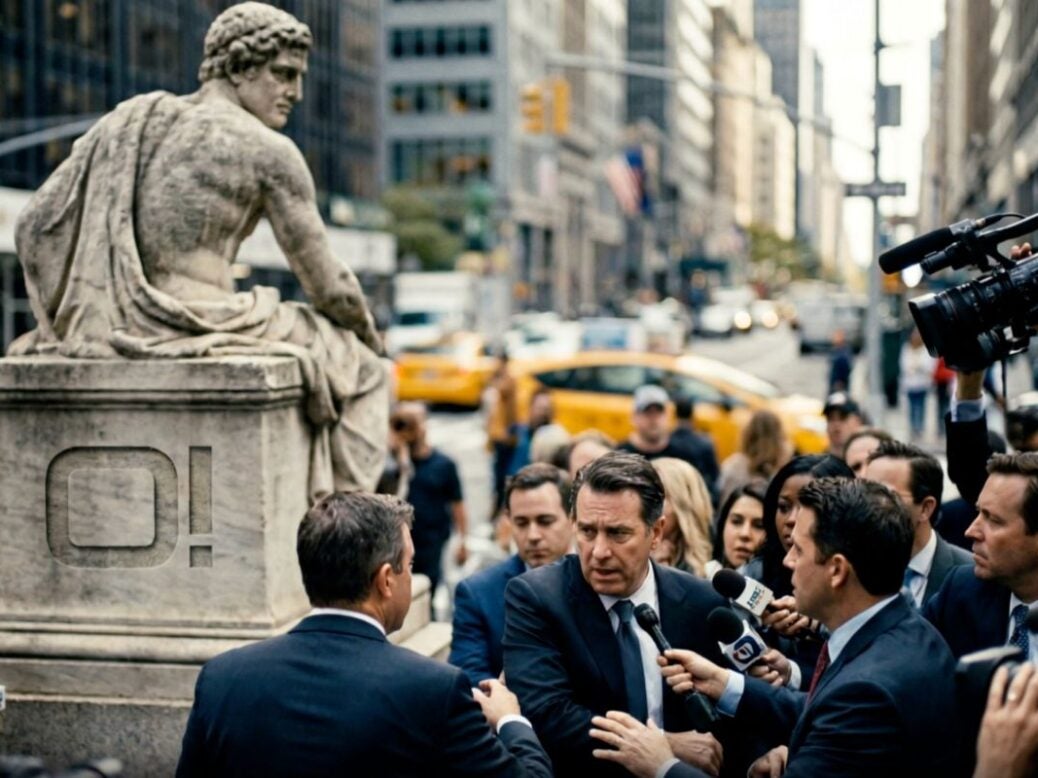
A new AI-powered platform backed by Peter Thiel and led by the entrepreneur who helped him bring down US gossip site Gawker promises to empower anyone to fight inaccurate claims in the press or on social media – without facing a vast legal bill.
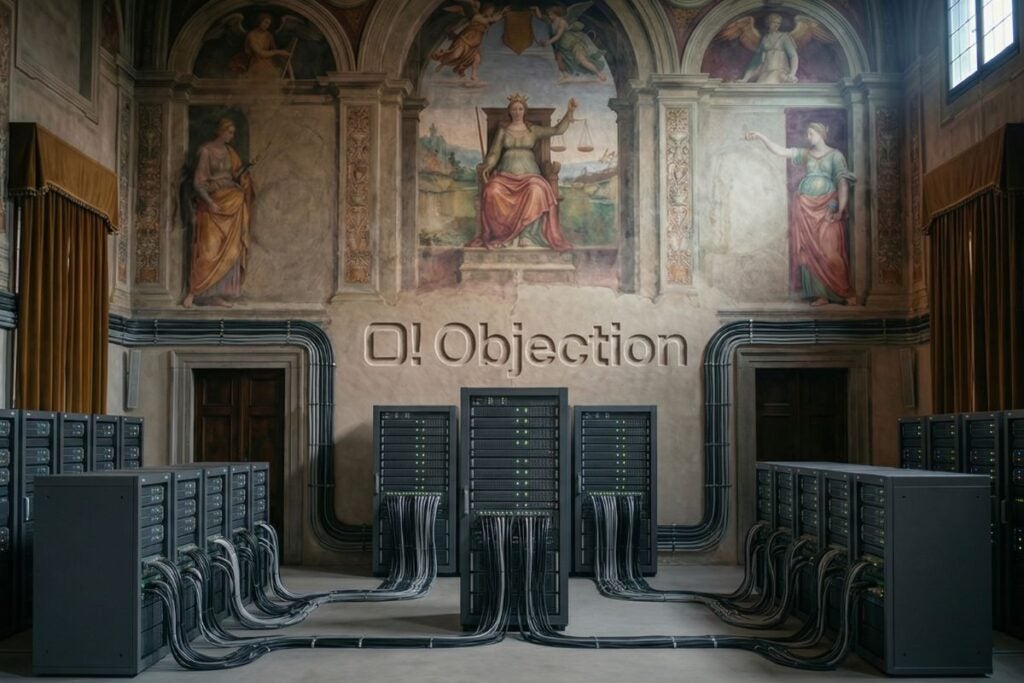
Objection.ai allows individuals or organisations who believe they have been subject to a false or misleading claim in a public forum to contest it by filing a complaint, which is then assessed by an ‘AI tribunal’. According to Objection’s website, its AI system ‘reviews all evidence and issues an impartial, evidence-based judgement’. Fees, which are paid by the complainant, range from $2,000 to $15,000.
Though judgements made by Objection’s AI have no legal force, the company’s CEO, Aron D’Souza, believes they will have ‘the same authority or force as a newspaper article’. He added that vindication or exoneration – rather than a payout – was the primary motivation of the claimant in most analogous cases brought before a traditional court.

[See also: From Gstaad Guy to Supersnake: how social media finally went ultra-high-net-worth]
Related



‘Most privacy-oriented, HNW individuals that I know actually don’t care about extracting a £100,000 settlement out of the Daily Mail,’ said D’Souza. ‘What they want is an independent report that says that they were not like, you know, on “Epstein Island” or whatever the facts may be.’
The newly launched platform, Objection.ai, is at least the third major collaboration between D’Souza and the multi-billionaire tech investor Peter Thiel.
D’Souza was instrumental in co-ordinating Thiel’s proxy battle against Gawker, which led to the gossip site’s demise in 2016.
Content from our partners



Having taken exception to Gawker’s reporting on his private life, Thiel provided funding that enabled the wrestler known as Hulk Hogan (Terry Gene Bollea) to pursue the media company for damages after it published a sex tape featuring Hogan and Heather Clem, the wife of his friend, a radio presenter known as Bubba the Love Sponge. Hogan was awarded $140 million in damages; three months later, Gawker filed for bankruptcy protection.
Thiel and D’Souza are also united by their involvement in the Enhanced Games – often referred to as the ‘doping olympics’ – which will take place for the first time later this year in Las Vegas. D’Souza is the president of the organisation, which is also backed by Donald Trump Jr.
Speaking exclusively to Spear’s, D’Souza noted that ‘it took 10 years and $10 million to get justice for Hulk Hogan’. In 2016, in the wake of that case, he started thinking about a business that would ‘industrialise the Gawker process and make media accountability available to everyone, even if you’re not a multi-billionaire’. The advent of a new wave of AI technology and the radical cost savings it enables have now put the prospect within reach.
[See also: Reputation-polishing-artwork: the rise of the vanity documentary]
Although Objection promises to democratise access to the kind of redress that is usually reserved for UHNWs or large corporates, D’Souza believes the platform will also be welcomed by wealthy people who could afford to take legal action, but whose desire for privacy would make them baulk at the publicity and complexity of fighting a false allegation in the courts.
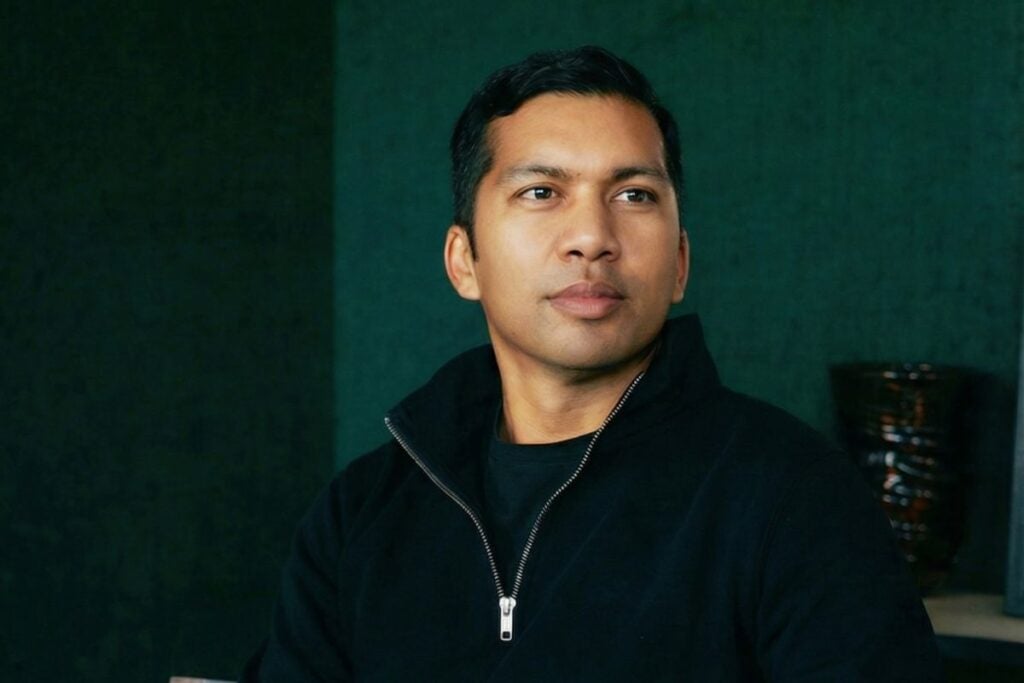
Michael Sackler, scion of the billionaire Sackler family implicated in the oxycontin scandal, is one of the first people to lodge a complaint on the new platform. ‘He learned about what we were doing through some kind of an angel investor forum, and he was like: I want to sign up for this. I want to use it,’ said D’Souza.
Sackler has lodged an ‘objection’ to a Hollywood Reporter article in which Chuck Collins, director of the Program on Inequality at the Washington, D.C.-based Institute for Policy Studies, is quoted as saying that Sackler is ‘seeking an identity makeover’ through the activities of his ethical investment firm.
[See also: The best reputation and privacy lawyers in 2026]
At the time of writing, the Sackler case remains under investigation, but Objection has already delivered verdicts on two others that were created by the company itself in order to illustrate how its platform will work.
A claim broadcast on CNN in 2021 that controversial podcast host Joe Rogan promoted the use of a ‘horse dewormer, Ivermectin’ as a way to treat the symptoms of Covid-19 was found to be false. (A summary on the Objection website notes that Rogan ‘discussed physician-prescribed human ivermectin, not the veterinary product’.) The allegation made by blogger Candace Owens that ‘Brigitte Macron is definitely a man’ was also found to be false.
Objection applies what it describes as ‘a structured, adversarial process to contested statements of fact’. The platform publishes details of the process in a white paper on its website.
[See also: The growing threat AI chatbots pose to your reputation]
Both the complainant and the author of the contested claim have the opportunity to provide evidence to support their position. This is supplemented by evidence gathered and tested by a human ‘investigator’. The experience level of the investigator assigned to each case varies according to the fee. At the top end of the scale ($15,000), complainants’ cases may be investigated by former CIA or FBI agents, D’Souza said.

All the evidence is submitted to the platform and then assessed by ‘a panel of independent AI models‘ (including versions of ChatGPT, Claude, Mistral and Grok) which are ‘supervised by a special purpose judicial AI’.
Five LLMs each deliver a verdict, choosing from one of three options based on the balance of probabilities: ‘true’, ‘false’, or ‘insufficient evidence’. The votes are tallied by Objection’s protocol, which delivers a consensus verdict that is made public along with all the documentation and an explanation of the decision.
[See also: AI fuels fortunes of world’s growing billionaire class]
‘The beauty [of] artificial intelligence is that […] AI can analyse data and show every step of its reasoning,’ said D’Souza. ‘Truth is not a vibe,’ he added. ‘Truth is a process.’
The entrepreneur pointed to falling public trust in mainstream journalism and in polarising attitudes to media outlets (‘the New York Times is trusted by 80 per cent of Democrats, but it’s only trusted by 20 per cent of Republicans’) as evidence of what he called ‘the fundamental problem with our society today’: a lack of a shared ‘sense of truth’.
‘Obviously we can’t trust Mark Zuckerberg, or Sam Altman, or Elon Musk, or the president of the United States to be the arbiter of truth. But in the same vein, can we trust, I don’t know… Viscount Rothermere? Can we trust Rupert Murdoch, or the private equity funds that own a lot of these newspapers?’
[See also: Who is Matt Mahan, the California governor hopeful backed by tech billionaires?]
Today there may be only a small number of cases on the Objection platform, but D’Souza suggested its launch may be part of a bigger journey to ‘create a system of truth’. The company also has plans for a so-called ‘Honour Index’ that will rank journalists according to Objection’s assessment of the claims in their work. D’Souza drew parallels with both the Michelin Guide and the introduction of university league tables several decades ago.
However, some experts who spoke to Spear’s raised questions about Objection’s platform and the thinking that underpins it.
‘Innovations that aim to improve transparency and accountability in media reporting should be taken seriously,’ said Gideon Benaim, chair of the Society of Media Lawyers and head of reputation protection at Simkins. ‘But they must be judged on how they operate in practice, rather than on their ambitions alone.’
[See also: What is Altruist? The AI start-up shaking up wealth management in Britain]
‘A central question will be the identity and independence of the investigators – who they are, how they are selected, and what standards govern their work.’

Benaim added: ‘Media litigation has traditionally relied on courts because of the need for procedural safeguards, judicial scrutiny and enforceable outcomes. The challenge for any new model is to demonstrate why parties would choose it over established mechanisms that already carry recognised legitimacy.’
Franz Wild, editor-in-chief of the Bureau of Investigative Journalism, warned that, in some cases, Objection’s process might not judge journalists’ claims accurately unless they shared confidential information that could ‘jeopardise the safety and security of our sources’. He added: ‘Even in a court of law, that is not something that, in general, is required of you. There’s quite a lot of protections for anonymous sources and whistleblowers.’
Wild also questioned AI’s ability to properly scrutinise nuanced evidence. ‘Ultimately that comes down to human judgement,’ he said. ‘So, I think [the platform] would probably lack credibility. I doubt journalists or media houses would engage with it and, as a result, I don’t think it would get much traction.’
D’Souza countered that the use of anonymous sources was ‘double-edged’: ‘On one hand, they sometimes speak truth to power. On the other, they are unverifiable and act as a pretext for journalists to make unsubstantiated allegations without challenge.’
Asked what would make Objection a success, D’Souza said: ‘I think we need the most significant people in the world to use the platform. If you have major political or economic figures say, “You know what, I was misrepresented by the New York Times this week, I’m filing an objection” – one case like that, and we’re set.’
Objection’s verdict on Michael Sackler’s claim is expected soon.