Think of The Odyssey, the Greek epic chronicling Odysseus’ perilous, adventure-filled journey home after the end of the Trojan War, and it’s likely the first thing that comes to mind is the Cyclops – that ‘formidable monster’, the one-eyed giant, Polyphemus – who herds sheep and goats, and feasts on human flesh.
In Book Nine of Homer’s poem, which was probably composed in the 8th or 7th century BC, the Cyclops traps Odysseus and his men in his cave, devouring several of them before wily Odysseus blinds him with a sharpened stake and tricks him so that he and his crew can escape.
It is one of the most famous stories from Greek mythology and yet, here I am – in real life – at Polyphemus’ lair, his ‘cave close to the sea’.

[See also: What ancient Greece can tell us about the world of taxation]
Related

Though empty of both livestock and ogres, the place is dark and eerily atmospheric: water drips from the vaulted ceiling and a swarm of bees has taken up residence somewhere in a limestone crevice. Outside the cave is a different story, however.
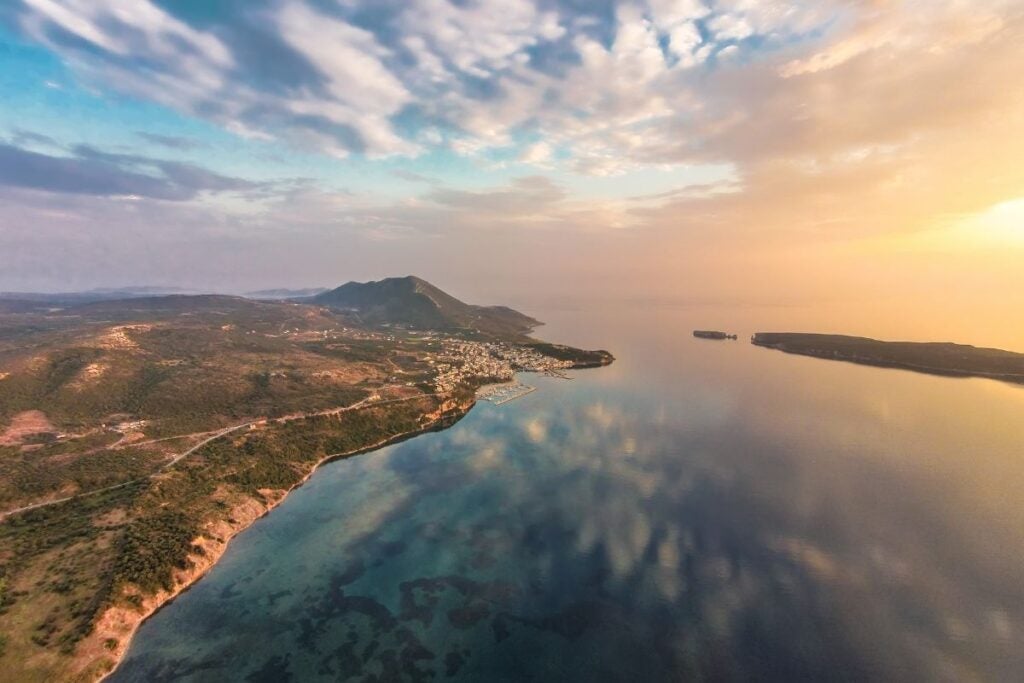
To get here I first scrambled up a cliff, which is covered in lush greenery and scattered with spring wildflowers in shades of yellow and purple; stretched out below are the white sands and turquoise waters of Voidokilia Beach, the semi-circular curve of which forms a remarkable omega shape. Beyond this is the vast blue expanse of the Ionian Sea.
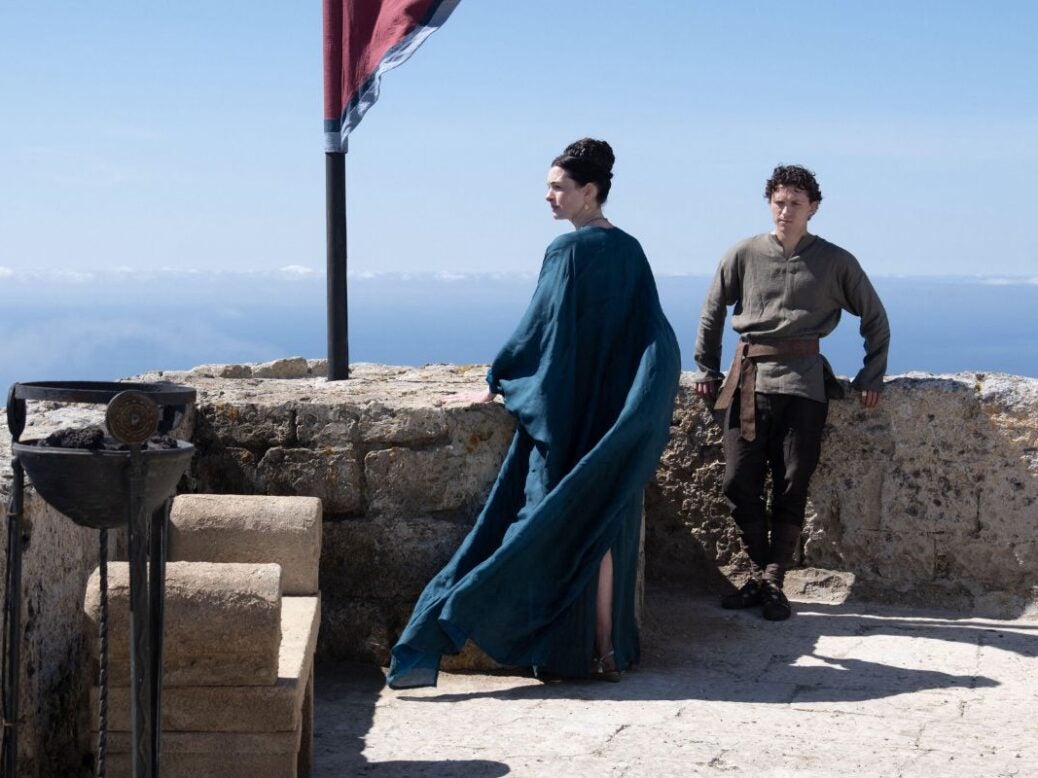
This is the exact spot used to film the iconic Cyclops scene for the latest adaptation of one of the earliest stories in human history, which follows Odysseus on a decade-long quest to return home to Ithaca and to his wife, Penelope. You can see the cave in the first few seconds of the trailer for Christopher Nolan’s The Odyssey, which must rank as this year’s most eagerly anticipated movie.
[See also: Echoes of Odysseus: why the spoken word still holds power]
Content from our partners


As well as starring a roll call of Hollywood’s biggest names – the cast includes Matt Damon as Odysseus, Anne Hathaway as Penelope and Tom Holland as their son, Telemachus – the $250 million film, which is released on 17 July, will shine a spotlight on its stunning shooting locations.
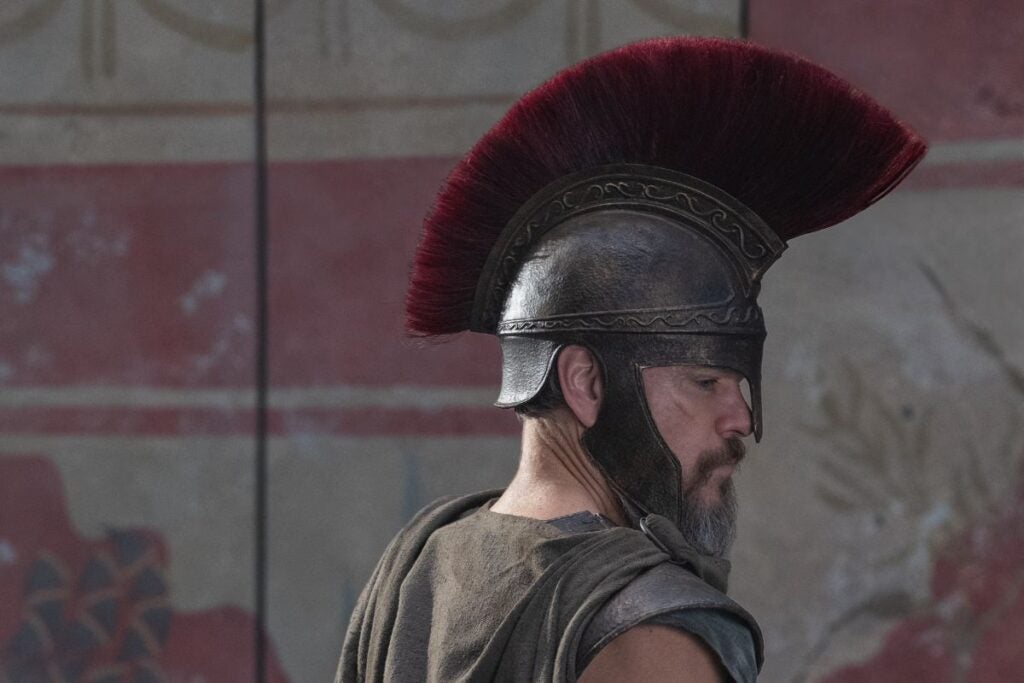
Rather than relying on special effects, Nolan was at pains to make the action feel as authentic as possible, setting it ‘on the real waves, in the real places’ and using over 2 million ft of Imax film in the process.
‘By embracing the physicality of the real world in the making of the film, you do inform the telling of the story in interesting ways,’ he has said.
[See also: The ancient art of seeing and being seen during the social season]
This meant that, over 91 days in early 2025, the director and his crew embarked on an odyssey of their own, shooting scenes in Sicily, Iceland, Malta, Morocco, Ireland, Scotland and, of course, Greece itself – in Corfu, Santorini and here in Messinia, in the south-western Peloponnese.
Away from the main tourist track, this part of the country is an epic, timeless landscape that feels properly Homeric. An unspoilt place of sweeping beaches and hidden caves, of fortified ports and archaeological ruins, of rugged mountains, fertile plains and olive groves stretching as far as the eye can see.
Messinia is heavily imbued with mythological and literary significance. Dinos, the guide who’s brought me to the cave, tells me the place is known as Nestor’s Cave and, according to Greek mythology, this is where Hermes hid the 50 oxen he stole from his fellow god, Apollo.
[See also: What would Roman emperors have made of Ozempic?]
And while many theories exist about the exact locations referred to by Homer – The Odyssey is likely to be a combination of myth, invention and sketchy history – the cave is also said to have been used as a stable for the cattle belonging to Nestor, the wise old king of Pylos and one of the heroes of Homer’s epics.
The ‘old charioteer’ fought with Odysseus in the Trojan War in The Iliad and, in The Odyssey, Telemachus goes to him seeking news of his father. Nestor’s Palace, a few minutes’ drive away, is the best-preserved Mycenaean palatial complex in mainland Greece. Set atop a hill, in a location so peaceful the birdsong is deafening, it still has the evocative traces of pillars, clay bathtubs and vast urns for storing olive oil.
During filming for The Odyssey in February and March 2025 there was great excitement in Messinia.
[See also: What watch thefts tell us about Roman history]
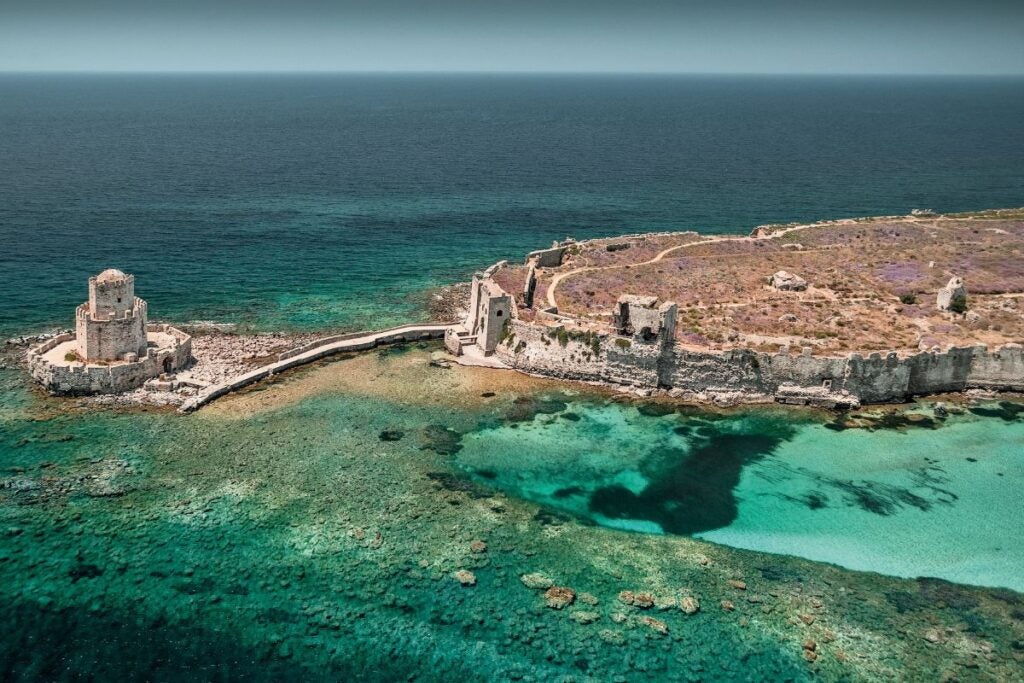
Locals turned out in their hundreds for a casting call for extras in the city of Kalamata, while boats used in the movie were docked at the port town of Pylos – a quaint spot of terracotta-roofed houses and traditional tavernas selling the catch of the day. Scenes were also shot at Methoni Castle, built by the Venetians in the early 13th century; here, extras were seen clad in ancient Greek armour or in cloaks and tunics, while bystanders eagerly snapped photos of Holland.
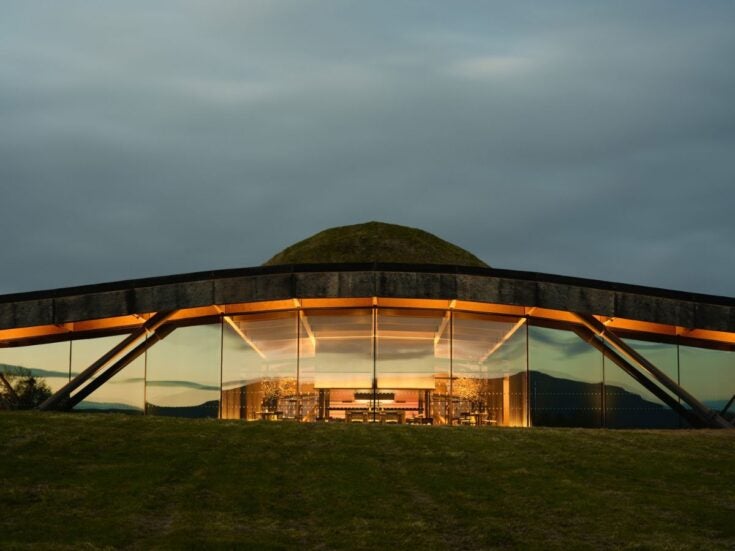
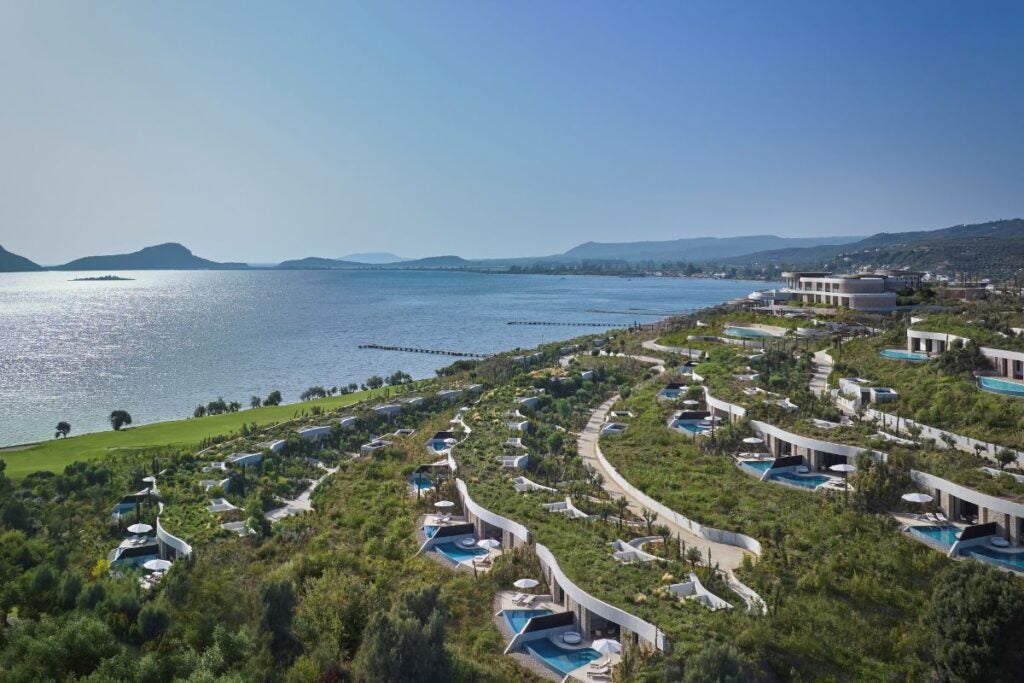
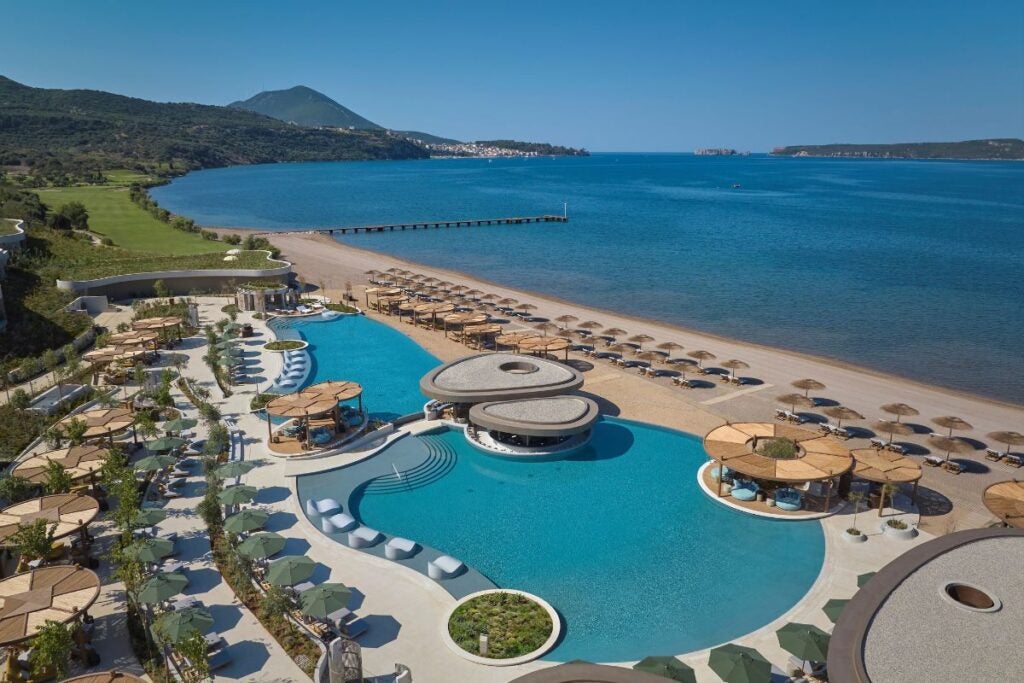
Nolan recently described The Odyssey as ‘an absolute nightmare to film – but in all the right ways’. And at least the A-list cast had somewhere luxurious to relax after a gruelling day of battling giant waves and mythical monsters. They stayed at Costa Navarino, a sprawling, sustainably driven destination spread over 1,000 hectares around Pylos and the surrounding area.
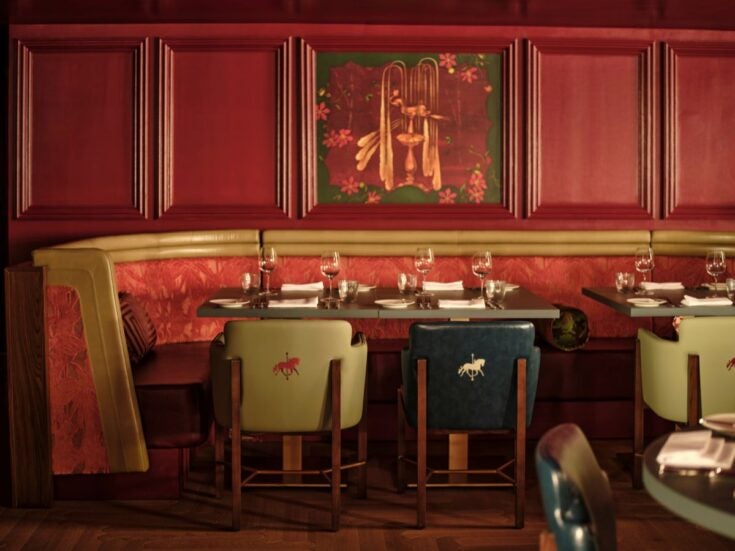
This stylish, beautifully landscaped resort has four signature 18-hole golf courses (great news for Holland, whose handicap is said to hover between 2.5 and three), dozens of outstanding dining venues, stylish boutiques, indulgent spas and world-class sporting facilities such as an NBA basketball school and a Mouratoglou tennis centre. There are four five-star hotels here, including Greece’s first Mandarin Oriental – word is, however, that the cast stayed at the hip W Costa Navarino, which often has visiting DJs and events featuring Michelin-star chefs.
The genesis of Costa Navarino is a story almost worthy of Greek myth itself. It’s the passion project of the late Captain Vassilis Constantakopoulos, who was born in Messinia and forced to move to Athens during the civil war. After making a fortune in shipping he was determined to put his beloved Messinia on the map and provide locals with a sustainable way to make a living.
First opened in May 2010 and now run by Constantakopoulos’ family, the resort is accustomed to hosting A-listers; Roger Federer has been spotted playing golf and tennis there, while the actor Bill Murray is a frequent visitor, competing in the Costa Navarino Legends Tour Trophy and describing it as ‘the nicest place I’ve ever stayed’.
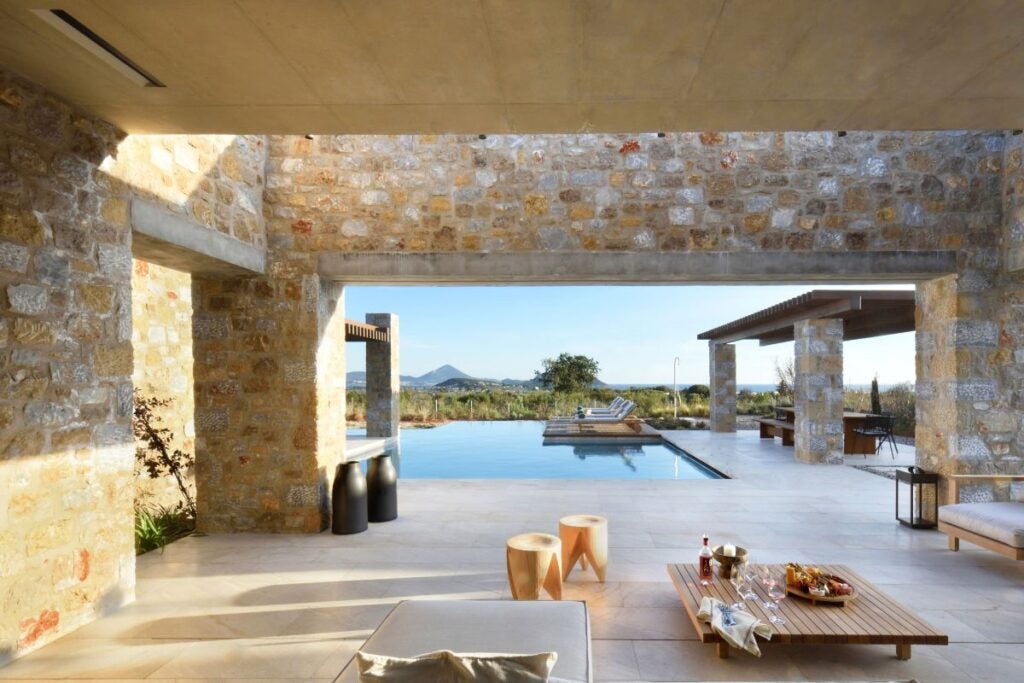
Guests famous or otherwise can enjoy the highest levels of privacy – plus access to the resort’s services, special Odyssey-themed experiences and additional exclusive benefits – in Costa Navarino Residences. This is a growing collection of sumptuous private villas, built to bioclimatic principles by renowned Greek architects in a sympathetic vernacular in a mellow palette of blond stone, gentle wood, cream and glass.
[See also: The best luxury holiday home & villa rentals in 2026]
Prices for three-bedroom villas, which have views of either the sea or the lush surrounding hills, start at €1,434 a night in low season. There’s also the opportunity to purchase one of the few remaining off-plan customisable villas in the Dunes neighbourhood – close to the Dunes beach and golf course – costing from €6.4 million.
Costa Navarino has done much to boost the profile of Messinia over recent years and investment is starting to pour into the region. Pylos Marina is being upgraded and there’s a €73.5 million plan to upgrade Kalamata airport. There’s a surge in the number of flights being put on this summer, with increased capacity to and from cities such as London, Vienna and Milan, as airlines bet on more bookings after cinema-goers witness the authentic natural beauty of this path of the south-west Peloponnese in immersive, high-resolution 70mm film.
Back on my hike, as we gaze out from Nestor’s Cave to the cerulean sea, Dinos muses on what it will be like to see his homeland on the big screen. ‘This place is known for its olive oil and its history,’ he says. ‘It’s a place of legends and of gods – everywhere you look, you’re surrounded by myths.’
This article first appeared in Spear’s Magazine Issue 100. Click here to subscribe