All that glitters is not gold – and, increasingly, it is not mined either.
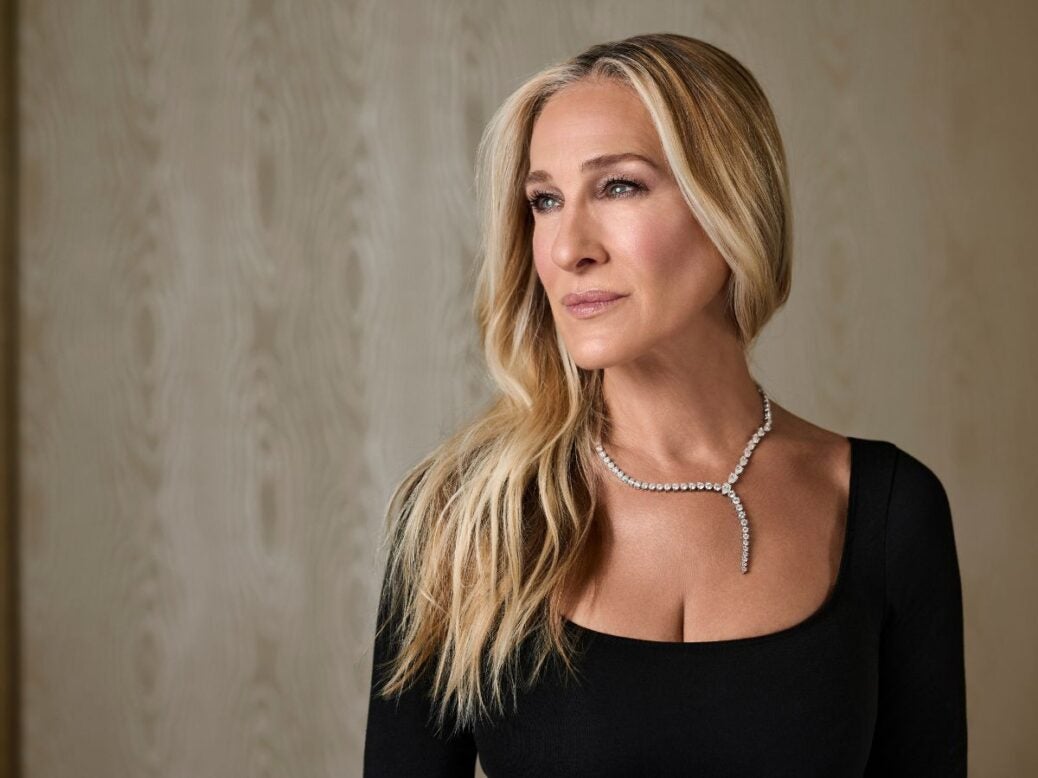
If Sarah Jessica Parker has her way – and, as she tells Spear’s, she fully intends to – the jewellery worn by the world’s most discerning buyers will be considerably more ethical, and arguably more fashionable.
In September 2025, Parker assumed the role of global creative director of Astrea London, a jewellery house working exclusively with lab-grown diamonds. She was, by her own admission, an unlikely evangelist. ‘I didn’t know a great deal about lab diamonds and what I did know was shortsighted,’ she says. Her first meeting with Astrea’s founder, Nathalie Morrison, was ‘basically a master class in lab-grown diamonds’.

Morrison explains this was partly why she chose Parker to represent the brand – there’s no one more persuasive to be an advocate than a convert. It was also personal: ‘I needed a voice behind this. Who do I respect and admire? Who do my 80-year-old mother-in-law and my 14-year-old daughter love? Sarah Jessica is one of the rare fashion icons, but she’s also a human being with the right values.’
Related

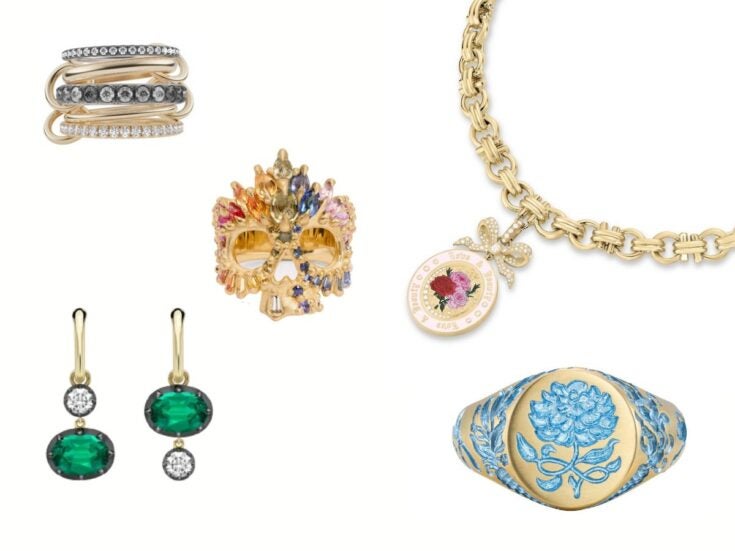

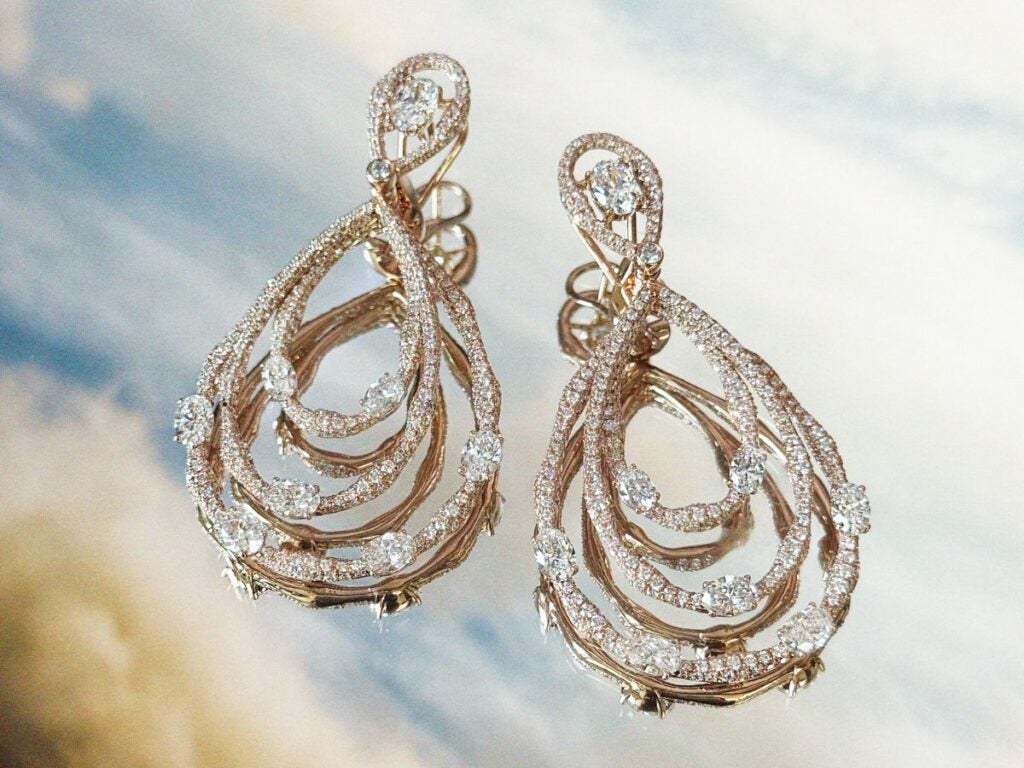
Far from being a distant figurehead, Parker says she has a working brief. Alongside Morrison, she creates collections twice a year that are ‘innovative, colourful and singular’. The work comes naturally, she explains, with the jewellery house’s established style marrying neatly with her personal aesthetic. ‘Astrea has this really beautiful feminine collection that existed before I got there, so what I wanted to do was maintain that and always nod to it, but also bring in a different kind of weight.’
Parker’s own taste is subtler than her reputation as a style icon might suggest. The piece she treasures most is a ring from her husband (actor Matthew Broderick) – not an engagement ring, but ‘a very, very simple ring: a one-carat diamond on a platinum band’. She had long admired ‘the kind of ring you used to get in a bubblegum machine’, she says. ‘I used to tell him: “That’s all I want. It shouldn’t cost anything – it should cost you $200.”’
Grandeur, however, is very much Astrea’s business, and it sees itself as filling a gap at the very top of the lab-grown market. ‘Lab-grown diamonds have been very good at serving a part of the market that really deserves to have beauty that is financially accessible,’ Parker says. ‘But what Nathalie really wanted to do was make that case for a [higher] quality of lab-grown diamond, which had until then been in many ways an untouched part of the industry.’
Convincing buyers at the top of the market, many raised to believe only a mined diamond is precious, is Astrea’s greatest challenge. Lab-grown diamonds now claim a substantial share of the mass market – jewellery insurer BriteCo found that 42 per cent of all diamond jewellery sold in 2025 contained lab-grown stones, including 48 per cent of engagement rings.
But that volume has not translated into value: De Beers launched its own lab-grown brand, Lightbox, in 2018; by 2025, wholesale prices had fallen 90 per cent, resulting in the closure of the business. ‘We have now gotten to the point where you can buy lab-grown in supermarkets for $200,’ its chief executive, Al Cook, said at the time.
Misconceptions about quality remain the industry’s biggest hurdle, Morrison acknowledges, and first-time buyers are the hardest to win over. She hopes to make that easier and reveals exclusively to Spear’s her plans for what would be the world’s first lab-grown diamond museum, created alongside Parker, housed in Dubai. ‘If you do a museum, everybody can understand and benefit from it – not just from a jewellery point of view, but from an industrial point of view.’
The education gap is one Parker knows well, having had to cross it herself when she joined the business. ‘I guess I didn’t realise this alternative was as meaningful as it was,’ she explains. ‘The way I dipped my toe in, specifically into luxury and sustainability, is coming to understand lab-grown diamonds and the significant difference it’s making.’ It is, in her eyes, a question of fairness – to the buyer and to the planet – and one written into the brand itself: Astrea, Parker explains, was the Greek goddess of justice.
Morrison’s own education came in Africa, through Sumbandila, a charity she built with friends that has taken around 300 children out of poverty and into school. ‘I realised the problem of the mining industry – what happens with children in mines in addition to the wider pollution and deforestation. So I spent quite a lot of my own money doing research to see if there was an alternative,’ she tells Spear’s. ‘Why not buy the same stone, with the same certificate, 80 per cent cheaper and it doesn’t hurt our planet?’
It was an unlikely turn for a career financier. Raised among the vineyards of Saint-Émilion, Morrison read at Cambridge and began in investment banking at Lazard, before becoming the youngest partner at Coutts, where she set up the private office. In 2012, she was recognised by Spear’s as one of the private client world’s rising stars.

Those roots have since found their way into the business. Astrea’s diamonds were originally grown only in Dubai; today the stones are produced in India and at a factory in Libourne, a few miles from Saint-Émilion, where, Morrison says, she learned ‘respect for the land, respect for the wine, respect for family’.
A firm believer in what she sells, Morrison prefers to champion her own industry rather than criticise its rival. ‘I’m never going to be someone who criticises the mining industry,’ she says, pointing to her mined diamond engagement ring.
[See also: Sky’s the limit for sustainable diamonds brand creating jewels out of thin air]
The natural and lab-grown trades have spent much of the past decade at war. Ahmed bin Sulayem, chief executive of Dubai Multi Commodities Centre, has argued that the mined industry hurt itself by publicly attacking lab-grown diamonds rather than telling its own story. Morrison seems determined not to make the same mistake in reverse. The aim, she says, is to ‘celebrate the past and welcome the future with technology’.
That same restraint applies to her own industry’s green credentials, which she believes are often oversold. ‘Are we fully sustainable? No. If people tell you [otherwise], I think it’s not true.’ Lab-grown diamonds avoid the water contamination, deforestation and human cost of mining, but the reactors still run on energy – by Morrison’s estimate, around a fifth of what mining requires for the same carats. It is not yet carbon neutral, though she reports confidence in the power of technology. ‘We’ll get there.’
‘We’ve only scratched the surface,’ Parker agrees. ‘We will grow in an elegant and hopefully very respectful way to the planet and the people around us.’
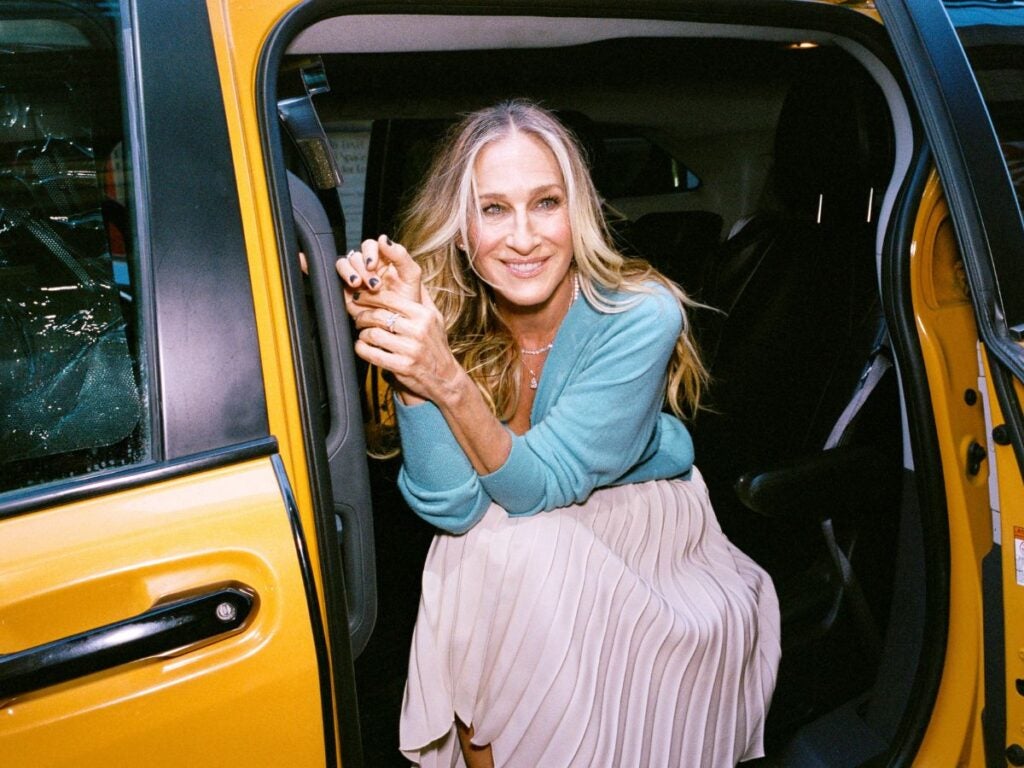
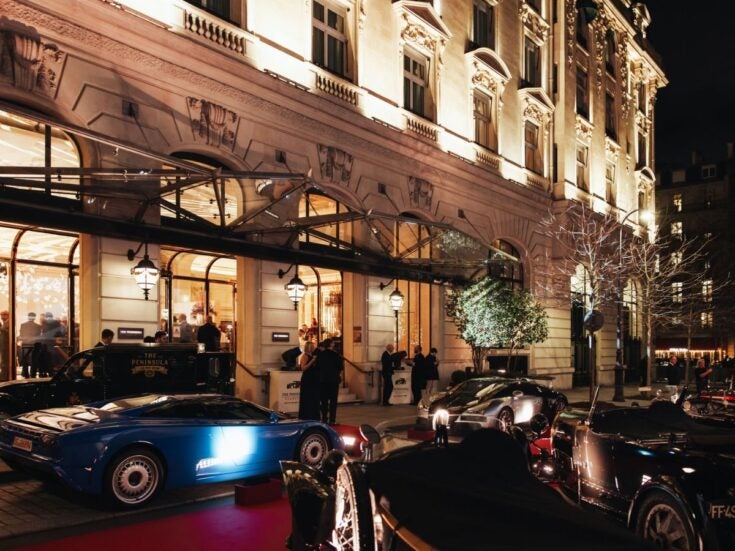
That measured approach extends to where Astrea chooses to sell, with most of its boutiques placed not on the high street but within five-star hotels, from the Fairmont Windsor Park, where the house first opened its doors, to the Mandarin Oriental Jumeirah in Dubai and the Mandarin Oriental Hôtel Lutetia in Paris.
Dubai has proven especially revealing: men account for around 20 per cent of sales there, compared with 10 to 15 per cent across the business. ‘In Dubai, men love wearing tennis bracelets,’ Morrison says. ‘My husband originally said he’d never wear jewellery and now he’s wearing a black bracelet. He loves it.’ It’s one reason Astrea has developed a men’s collection and enlisted England rugby captain Maro Itoje as its ambassador.
But Morrison’s ambitions stretch well beyond new boutiques and new markets. ‘I’d like to build the luxury house of this century – in a way where we also give back,’ she says.
Values are something Parker is equally driven by. ‘My fervent hope is that I’ll be thought of as a good, decent person who was interested in my small community and the larger world around me and that I took some steps to try to communicate that.’