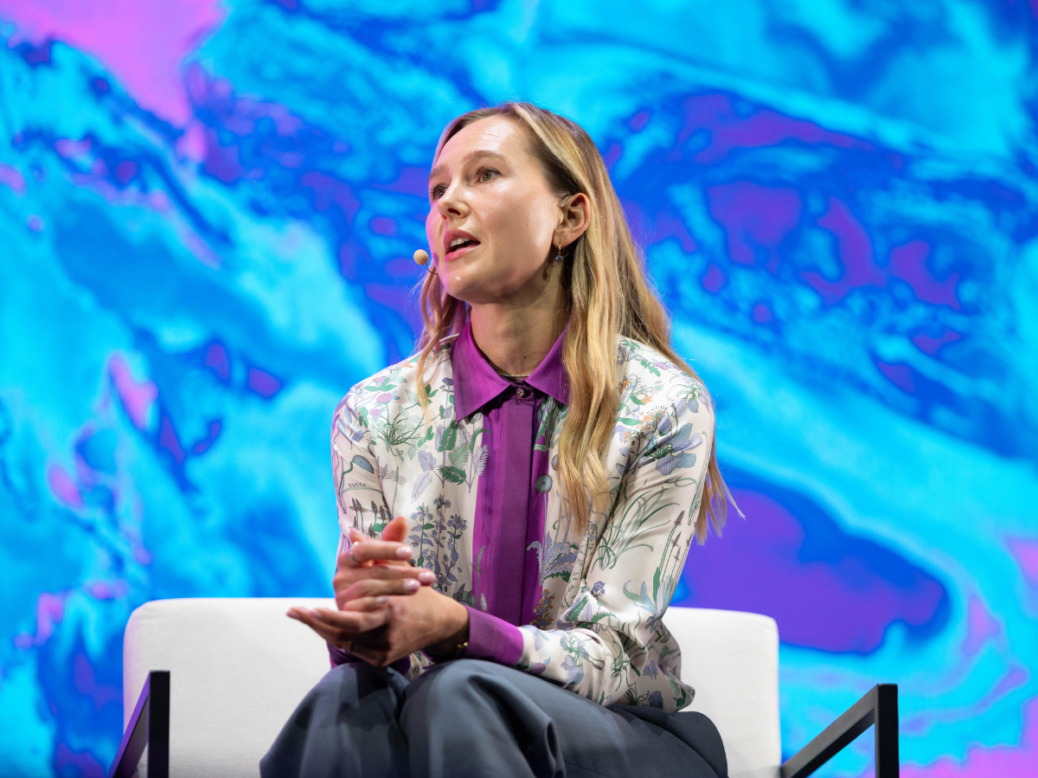
Daria Bukhman, co-founder of Bukhman Philanthropies, caught up with Spear’s to discuss why she has embraced the word ‘philanthropist’ and what she has learned from committing nearly $100 million in the foundation’s first 18 months.
‘I used to be opposed to the word ‘philanthropist’ because it felt so heavy and highbrow.
Then I read an essay by MacKenzie Scott and she wrote that originally the word philanthropy was much broader; it meant ‘love of humankind’. Now it’s undergone this semantic narrowing to mean something very specific, with a high budget attached. She said philanthropy can be as simple as kindness to your neighbour or being a mentor.

My family was lower-middle-class, and so was my husband Dmitry’s. [Dmitry co-founded the mobile gaming company Playrix with his brother Igor; the 2026 Sunday Times Rich List puts their combined fortune at £14.26 billion.] My mother was, and still is, a paediatrician, but we never had money to give away. What I saw instead was my mother caring for other people: she’d bring stray kittens home or we’d make hot meals for our neighbour struggling with alcohol addiction. Helping people became a part of how we grew up.
Related


[See also: Philanthropy’s most exclusive club looks to its heirs]
When Dmitry and I established Bukhman Philanthropies in 2025, our causes weren’t immediately obvious to us. I knew I wanted to work with children, but it took me time to work out how that aim would materialise. The first cause I identified was neonatal and maternal health. The birth of my first child was traumatic. It left me with enormous compassion for families going through something similar – instead of experiencing what should be one of the best days of their lives, they’re left worrying and potentially grieving in NICU.
Mental health and emotional wellbeing, my second cause, also comes from my own experience: I was an anxious child and I’m still quite an anxious person. The third cause is literature. I’ve always been an avid reader and I view literature as the ultimate school of empathy. This year, my husband and I have decided to fund the International Booker Prize for the next 10 years with a £1.4 million annual commitment.
Content from our partners



In practice, supporting these causes means working with Level 3 NICUs in London – the units caring for babies born from 22 weeks – funding equipment, training programmes and research into everything from brain injuries to gut health.
For mental health, the largest part of our budget, we take a three-pronged approach bridging academia, practice and policy by supporting research at six universities across the US and UK alongside charities across the sector.
With literature, we support the London Literature Festival and other organisations. This work has taught me that while giving is easier than earning, giving well is not easy at all. You make decisions, take risks and understand only two or three years later whether the investment made sense.
[See also: ‘Don’t be scared’: how younger UHNWs should go about giving their money away]
We’ve committed nearly $100 million in multi-year grants across our three focus areas in the first 18 months or so of the foundation’s life. Most grants run three to five years, so my strategy was deliberate: commit a lot early, learn the landscape, be bold, so that at the end of this funding cycle I can make informed decisions about how to continue.
I once read that giving well doesn’t centre around a budget. It’s about devoting a combination of your time, talent and treasure. That’s what makes good philanthropy.’