

London’s super-prime residential market underwent a marked transition in 2025, as an exodus of wealthy non-dom owners selling their principal UK residences was met by a new wave of younger international buyers.
According to the latest Billionaire Buyers in London survey by Beauchamp Estates, this reshaping of demand underpinned a year of resilient and selective activity at the very top end of London’s housing market.
Beauchamp Estates’ annual survey analyses London’s residential transactions above £15 million completed between January and December 2025, comparing them with 2024 and 2023 data, and offering a forward view for 2026.


The report concludes that the capital’s £15 million-plus market is no longer defined by tax-driven residency alone. Instead, it is increasingly shaped by lifestyle-led buyers from the Middle East, China and the United States, who view London as offering long-term value and a secure global base.
Related

[See also: The new property trend among London’s departing non-doms]
Alongside these established markets, a small but emerging group of buyers from Turkey has also invested in London super-prime homes, seeking to safeguard capital from domestic economic volatility.

Gary Hersham, Founder of Beauchamp Estates, explains: ‘London’s status as a truly international city, with an unrivalled cultural and educational offering, continues to underpin its attractiveness.’
[See also: Homes previously owned by celebrities sell faster]
Content from our partners



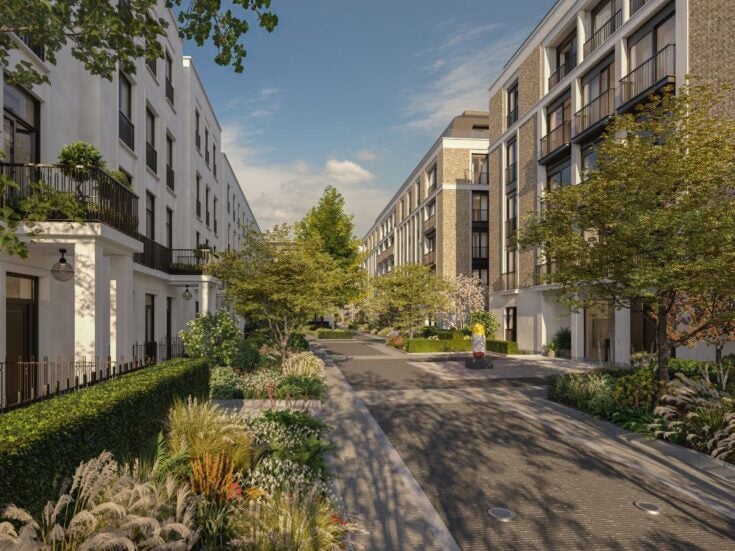
This is reflected in the type of super-prime residences sold. Demand in 2025 was firmly concentrated on fully renovated, furnished and move-in ready homes. Houses and apartments that offered privacy, generous proportions and high-quality finishes performed strongly.

Developments providing lifestyle services and amenities such as gyms, pools, fitness studios, 24-hour concierge and security commanded particular interest. Convenient but spacious single-floored apartments were especially sought after.
What UHNWs are buying
Shaping the outlook for 2026 is the volume of high-quality trophy homes released during the past year. Approximately 65 per cent of super-prime sellers were non-doms selling their primary London residences and relocating to lower-tax jurisdictions such as Dubai, Abu Dhabi, Milan, Tuscany, Monaco and Geneva.
This dynamic has meant that homes brought to market have been larger than in previous years, despite a modest decline in overall deal volumes. Sellers have also shown increasing willingness to adjust pricing expectations to meet the market.

Many departing non-doms retained a presence in London by acquiring smaller homes priced between £7 million and £10 million. Meanwhile, UK-based sellers also downsized, responding to higher taxes and running costs.
For 2026, Beauchamp Estates expects this elevated level of supply to persist, albeit at a more measured pace as the bulk of the non-dom exit has now been absorbed.
Where demand will concentrate
Forecast demand is expected to remain focused on core Prime Central London addresses where supply is tight.

Belgravia and Knightsbridge were notable winners in 2025 following vendor-led repricing and refurbishment, and this momentum is expected to continue. Mayfair is also well positioned for a rebound should the right properties come to market, as buyer appetite remains strong but constrained by limited availability.
Pricing in 2026
Beauchamp Estates forecasts that super-prime values may soften by a further two-to-three per cent during 2026, particularly in areas where supply remains elevated or where properties sit close to proposed mansion tax thresholds. However, pricing is expected to stabilise in the most competitive addresses and for best-in-class homes.

Crucially, London is now widely viewed by global wealth as offering compelling value compared with rival centres such as Dubai and Abu Dhabi, where prices have risen sharply in recent years. This relative value is expected to support transaction activity even in the absence of strong capital growth.
While transaction volumes are unlikely to return to historic peaks in the near term, the outlook for London’s super-prime market is one of recalibration rather than decline. The market has absorbed and priced in significant political, fiscal and regulatory challenges.

As Hersham concludes: ‘The super-prime sector has shown resilience through 2025. As we move into 2026, we expect a more stable environment, with demand focused on quality, convenience and long-term value. London remains a global safe haven, but it is now being bought for different reasons and by a new generation of owners.’
Viewed in that context, 2025 may ultimately be remembered as the year London’s super-prime residential market recalibrated for the years ahead.


