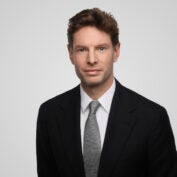
On a Friday afternoon in early autumn, the high street in the Cotswold town of Burford is bustling. I turn down a picturesque sidestreet to find a parking space, then walk back towards Bull, the 16th-century pub-cum-hotel that has been renovated by Matthew Freud.
Inside the honey-coloured limestone building, I’m greeted by the proprietor, who explains that the scene in town today could easily be quite different. During Covid, when he decided to take on the project, there were ‘17 empty shops on the high street,’ which is just a stone’s throw from his home here: a Jacobean former priory purchased in 2008 for around £6.5 million with his then-wife Elisabeth Murdoch.
Though he’d never run a hotel before, Freud had been involved in restaurants Pharmacy and Quo Vadis, and briefly co-owned the Groucho Club with Joel Cadbury. He has seen how one successful hotspot can create a localised vibeshift.
[See also: Heirs apparent: When legacy becomes reputational capital]
Related


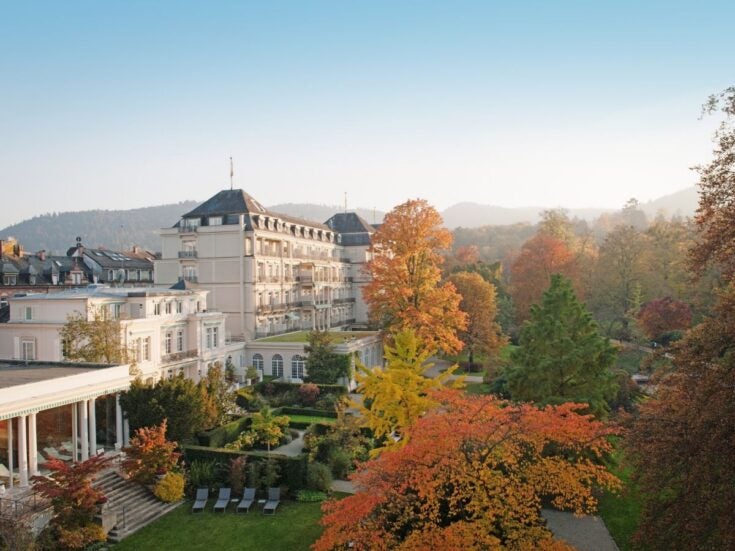
‘Shoreditch wasn’t really Shoreditch until Shoreditch House opened; what Soho Farmhouse did to the Cotswolds is remarkable; what Chiltern Firehouse did to Marylebone…’ Such places can ‘make somewhere pop’, he says.
The walls at Bull are hung with pieces from Freud’s eclectic art collection, including a ‘melting’ clock with a holographic dial designed by Salvador Dalí. The rooms combine original features, Cotswold stone and wood without looking like Soho House, as Freud intended. He deliberately installed ‘shit WiFi… so you can just “Ahhhhh.”’
There are several distinct restaurants, including one that uses a tented outdoor cooking system developed by film director Guy Ritchie’s company. We have a table booked for lunch in the main restaurant, but Freud suggests we head to his house instead. The short walk takes us past other parts of his burgeoning Burford empire, including another pub with rooms, the nearby Highway Inn, and a parade of shops that includes everything from a sweetshop to a gallery.
[See also: Shepherd Mayfair unveils interiors of new restaurant Fayre]
Content from our partners


Behind a wooden door stands his Grade I listed Jacobean mansion, its facade decorated with grotesques.
‘This is a “Liquid Lunch”,’ Freud observes, as we step inside. So we visit his glass-walled wine cellar where he selects a 1996 Pichon Baron, then leads the way upstairs to a vast reception room.
‘So what do you want to know?’ he asks as we sit down and he pours a couple of glasses of the Bordeaux.
[See also: What is a reputation manager?]
Freud is best known as a PR guru and possibly the best-connected man in Britain, a friend and confidant to prime ministers (Tony Blair, David Cameron), Olympic gold medal winners (Mo Farah) and leading figures from practically every sector. In 2023 he won an Oscar for producing the animated short The Boy, the Mole, the Fox and the Horse. But when he set up his eponymous company 41 years ago, aged just 21, did he have anything resembling a plan?
The evolution of the business, which took his net worth to an estimated £170 million in the 2020 Sunday Times Rich List, has been ‘entirely organic,’ he says. ‘The only thing we’ve been good at is choosing who we work with […] and multi-stakeholder architecture.’
But it didn’t always work. He points to the successful launch and subsequent decline of the Planet Hollywood restaurant chain as an example of a failure. More successful examples include Comic Relief, an ‘almost perfect construct’ that he worked on with his brother-in-law, Richard Curtis.
[See also: UHNW entrepreneurs lag behind in building personal wealth, UBS finds]
Another is RED, the initiative whereby brands including Apple, Starbucks and American Express signed up to donate a share of proceeds of certain (often red-coloured) products to the Global Fund to Fight AIDS, Tuberculosis and Malaria. The technology giant’s partnership with RED has raised more than $250 million.
After a brief discussion about Davos (still the most important big-tent conference in the world, in his view) Freud suggests we go downstairs to the kitchen. He will do the cooking himself: burgers. As he forms some Welsh beef mince into patties, he explains that ‘cooking is mostly what I do’. He recently spent two months in Italy, when most of his kids and their friends dropped in and he found himself making breakfast, lunch and dinner pretty much every day.
Conversation turns to the topics on Spear’s editorial agenda and I say the biggest challenge wealthy, successful people face may be to give their offspring the chance to be their own person. ‘It’s a terrible thing to do to a child,’ Freud says, referring to families who burden their kids with expectation. ‘It’s sort of identity abuse. What most people get as an almost divine human right is the freedom to be who you want to be.’
[See also: Peers rival wealth managers as succession advisers to the next generation]
He grew up with ‘the sort of stupid surname’, but without the weight of a massive fortune bearing down on him. ‘Whereas two of my kids have got a dynastic dump from two sides.’
Freud credits his former colleague, the late New Labour strategist Philip Gould, with the observation that successful family businesses are often started by a ‘gunslinger’ who determines what the company does, but is ‘too busy throwing punches’ to be very reflective. ‘The lucky ones get a second generation who work out how to do it at scale, and so by the time you get to G3 “what” and “how” is mostly established. What’s left is “why?”’
‘The odd thing for the scions of these big dynasties is that a lot of them are desperate to make money. You kind of go: Literally, that’s the most pointless thing you could do!’ Much better, he says, to try to establish an ‘ownable relationship with the family wealth – or an ability to walk away. Otherwise it’s almost invariably infantilising.’
[See also: What the Murdoch succession saga teaches elite families about wealth and power]
‘It’s all “Rosebud”,’ Freud says, referring to the plot device from Citizen Kane. ‘It comes down to a very simple human need to be loved or seen or acknowledged, or admired by a parent who, in many cases, is not capable of seeing his descendants as anything other than a reflection.’
We have been riffing on the same topic for a while when Freud adds, somewhat mischievously: ‘There are very good television series that have been extremely well observed about some of these issues.’ We laugh because it’s clear he is referring to Succession, the HBO drama based on the travails of the Murdoch family. When he was interviewed by Emily Maitlis and Jon Sopel earlier this year, the pair asked if he knew how the show could have been so ‘well informed’. Freud replied that he has ‘demonstrably never met’ showrunner Jesse Armstrong.
By now, Freud has served the burgers, which have a pleasing umami flavour I suspect may be a result of dry ageing. There’s also a potato salad made with shallots, garlic and jalapeño – all from his garden. It is an excellent plate of food.
[See also: The human angle of succession]
‘The tradition in my family has been to find your own thing, the ownable bit of your identity,’ he says, returning to the theme. His father, Liberal politician Sir Clement Freud, and his siblings ‘hated’ the pressure of being the grandchildren of the hugely famous psychoanalyst Sigmund Freud, ‘but came to the conclusion that the best way to counter it was to become recognised in their own right as something else. It was an antidote to a congenital condition.’
So far each of his five children seems to have found their own area to focus on, which is impressive considering there are ‘fewer and fewer corners that someone hasn’t pissed in’.
But there are ways to harness the heft of a famous family name for good. Freud tried to get a panel of ‘neco babies’ – members of wealthy families who are environmental campaigners – together at the COP conference in Dubai in 2023. It’s a cause he has backed passionately for some time. ‘Sustainability is hard at the moment.’ It’s not fashionable, I say. ‘And it’s too late,’ he adds.
[See also: The best generational wealth and family business advisers in 2026]
There is frustration in his voice as he reels off a list of problems – from fires to flash floods, desertification, mass migration, polarising right-wing politics, sea level rises – the world faces. ‘Weirdly, all related to oil.’
People with ‘hundreds of billions’ are taking out ‘insurance policies’, he says, noting that Mark Zuckerberg ‘just bought an enormous castle’ in County Waterford, ‘which is a shithole, but if you get anything major happening in the atmosphere, there’s nothing between the west of Ireland and 3,000 miles away.’
We have been talking for almost two hours, the burgers have been dispatched and Freud has to head off – to the harvest festival at Jeremy Clarkson’s farm, which is nearby.
[See also: Lessons for UHNWs from the Brooklyn Beckham family dispute]
But I don’t want to let him go without asking about the future of the main PR business. Last year his old friend George Osborne reportedly led a sale process through investment bank Robey Warshaw, but it didn’t come to anything. Some months later, Freud was quoted by PR Week saying he’d considered a model for the future of the marketing group that resembled the Guardian’s Scott Trust.
In fact, it was the process of thinking about passing the business on to a new owner that made him re-evaluate where its true value lay. ‘The gold actually was in the connecting tissue with all of the other bits,’ he says now. And there is a suggestion that a landmark birthday may have weighed on his mind in a way it no longer does.
‘I sort of went into turning 60, thinking, “God, that’s really old.” Now I’m 62, and sort of thinking it’s not [that old] anymore. I’m not in terrible shape and…’ he adds, breaking into a wry laugh: ‘I might last longer than the world.’