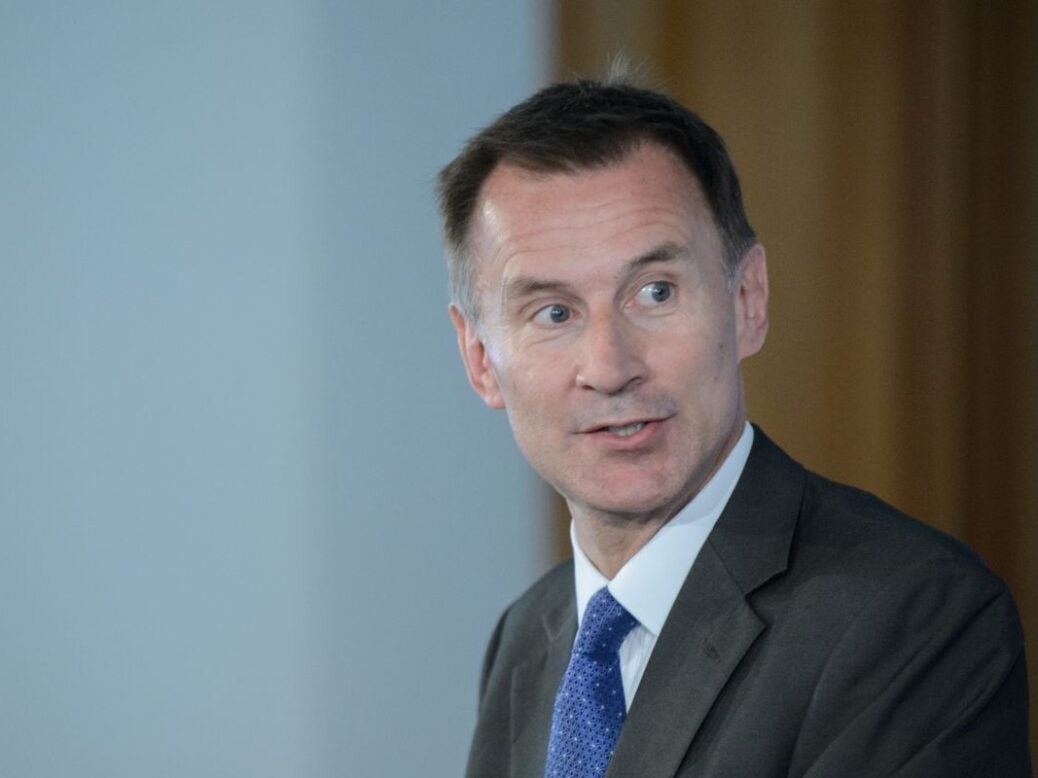
The Conservative politician Jeremy Hunt was health secretary for a record six years, foreign secretary for a shorter stint and finally, from 2022 to 2024, chancellor of the Exchequer. In those and earlier government roles he displayed competence, stamina and abundant ambition, but never charisma. That absence of stardust probably explains why he lost Tory leadership contests to Boris Johnson in 2019 and Rishi Sunak in 2022; and why, as a knighted backbencher not yet 60, he’s largely invisible today.
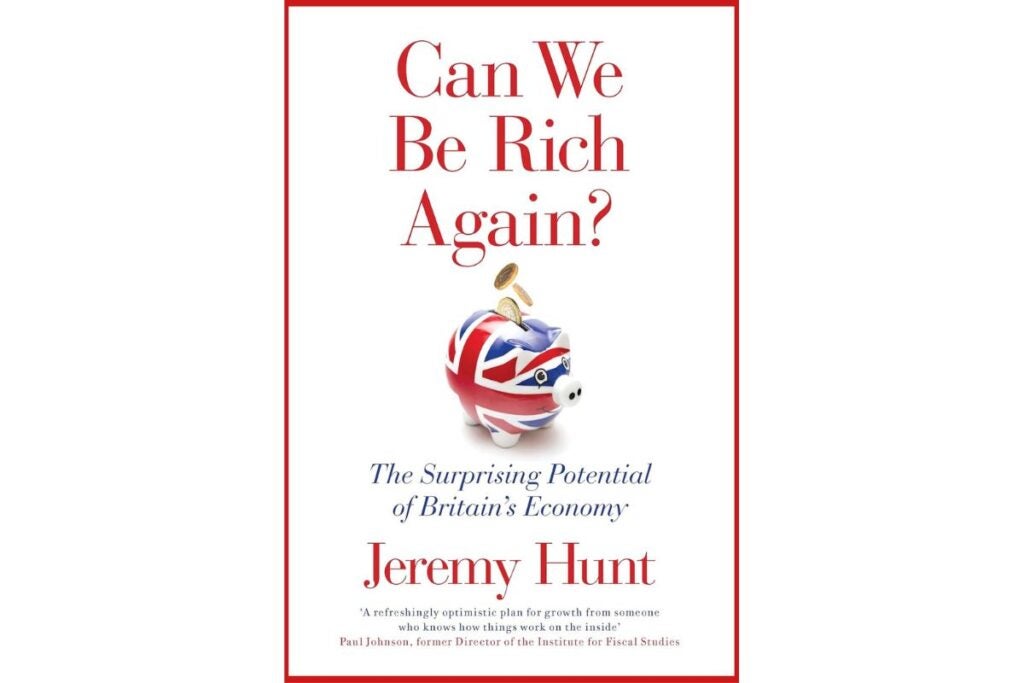
But this book – which is a sequel to Can We Be Great Again? (2025) about Britain’s place in the world and a prequel to a promised third volume on ‘reforms necessary to improve the functioning of our democracy’ – reads very much as work in progress towards a comeback manifesto. And that raises two questions. Would it work as a blueprint for government? And does it project its author as more relatable or inspirational than his ministerial image?
He’s honest enough to describe Can We Be Rich Again? as ‘a team effort’, thanking a galaxy of economic thinkers and former colleagues, but its rather stiff didactic structure certainly reflects the Hunt we think we know. He tells us what he’s going to say, says it in crisp chapters with graphs and bullet points, then summarises it all again at the end – the literary equivalent of an extended PowerPoint presentation at a Treasury away day.

But it’s also fair to acknowledge that his substance is more engaging than his style. His core argument is that ‘countries with lower overall levels of tax grow faster’ but that the UK needs to grow a lot faster before taxes can be seriously cut, lest our ratio of public debt to GDP spins further out of control.
Related

The routes to his higher-growth, lower-tax utopia are multifarious: they include planning reforms to accelerate housebuilding, welfare reforms to keep more people working, improved public sector efficiency, lower energy bills combined with more oil and gas extraction from the North Sea, more power for elected mayors, more pension fund money directed to UK ventures and infrastructure, more fertile conditions for entrepreneurs and higher educational standards.
If there’s nothing startlingly new in any of that, Hunt ties his strands tidily together to suggest that a government determined to tackle all these policy areas, even if some initiatives fail, might achieve a 10 per cent growth boost over a decade, equivalent to a £4,000 uplift in living standards for the average family and a £120 billion bonus for whoever is then chancellor to spend on reducing debt, reducing tax or investing in better public services.
Those numbers may be no more than a suggestion as to what ‘bolder arguments for radical change’ might achieve. But Hunt’s persuasive narrative is enlivened by unexpected parallels. For example, between Labour chancellor Rachel Reeves and her near namesake Tate Reeves, governor of Mississippi, who has slashed personal taxes to the state’s lowest level ever, generating growth averaging 3 per cent per year since the pandemic compared to 1 per cent in the UK.
Likewise, Hunt sets the powers conferred on Andy Street as elected mayor of the West Midlands from 2017 to 2024 alongside those of Steve Adler as mayor of the comparable population area of Austin, Texas. Street was able to direct public spending on transport and other projects of just £800 per household, the vast bulk of UK tax revenue being channelled to central rather than local government.
Content from our partners



But Adler, who has control over ‘many local taxes’, could spend £8,000 per household – and somehow (surely not all thanks to the mayor) Austin’s economy grew by 53 per cent during the seven years in which Street’s West Midlands grew by just 3 per cent.
Not all Hunt’s comparisons are so vivid – Ben the British builder versus his French counterpart Claude le Constructeur is one to skip – but another worth noting is in the area of investment, in which Hunt made an impact as chancellor with his ‘Mansion House Compact’ designed to push UK pension funds to invest more at home.
He points out that Australia has a simplified system of personal pension pots, which not only encourage more saving but also generate returns capable of doubling the pot, compared to British equivalents, over a 40-year working life.
So there are policy plums and points of light throughout Hunt’s would-be manifesto, despite its dry format. But what of the author’s personality?
In places, he makes himself sound not unlike Charles Pooter, the clerk in George and Weedon Grossmith’s 1892 comic classic The Diary of a Nobody. There’s a quiet evening when Hunt, his wife Lucia and their Labrador Poppy take a stroll down the famous Downing Street staircase lined with prime ministerial portraits that ‘always made my heart miss a beat’.
Sitting (as culture secretary) between David Beckham and Prince William in David Cameron’s Geneva hotel suite discussing tactics for England’s 2018 World Cup bid, he says: ‘I was just petrified my lack of knowledge would be exposed.’ And there’s a painful moment as health secretary when Hunt is told that support for a doctors’ strike was holding solid: ‘I couldn’t hide the tears in my eyes [but] one of the junior ministers… brought in a pot plant later to cheer me up.’
Much more entertaining is Hunt’s account of his pre-political life as a young entrepreneur. His first shot, with a university friend, was to try selling Frank Cooper’s Oxford Marmalade to Japan: ‘The Japanese, it turned out, loved English preserves but not for breakfast.’ Next came college guides for foreign students in London and finally Hotcourses, ‘the world’s largest database of school and college courses’, which made him the richest member of the Cabinet when the company was sold in 2017.
If Hunt’s policy trilogy is really a preparation for another run at the Tory leadership – whenever there’s a contest – he’d be well advised to offer more of that entrepreneur backstory and less of the bullet points. Either way, Can We Be Rich Again? suggests he still sees himself as a contender.
Can We Be Rich Again? The Surprising Potential of Britain’s Economy, Jeremy Hunt (Swift Press, £25).
This article first appeared in Spear’s Magazine Issue 100. Click here to subscribe