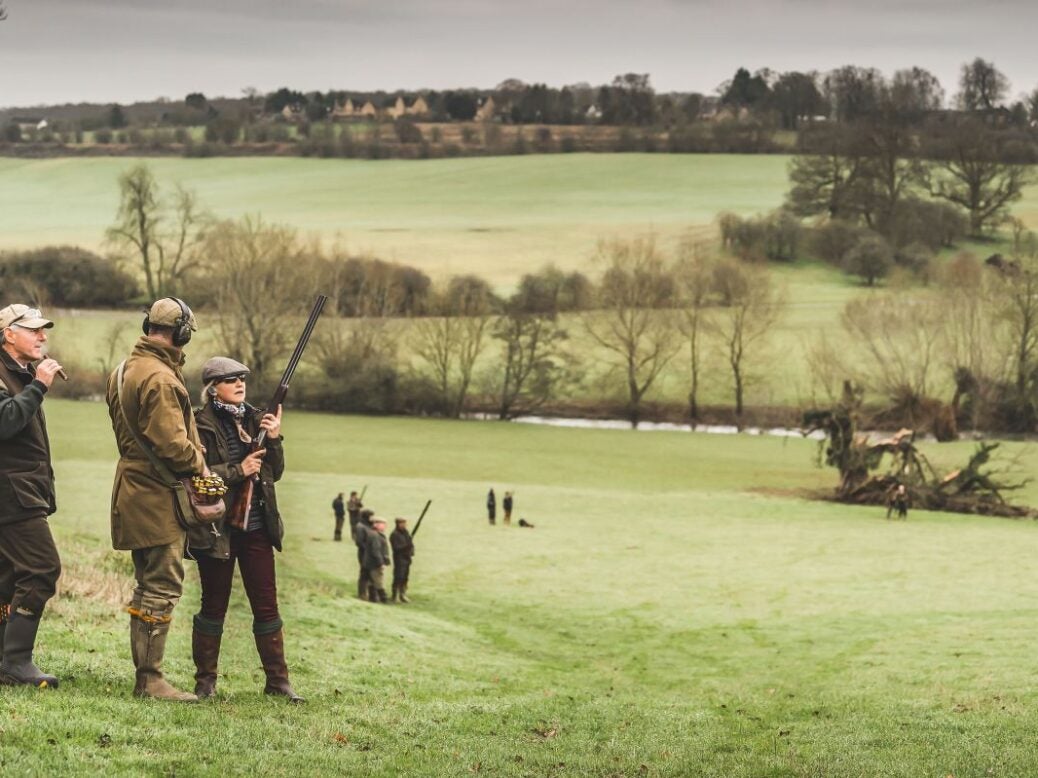
Shooting driven pheasants – that most British and aristocratic of pursuits – is, in fact, Austrian. It arrived here in 1799, during the reign of George III, when the 2nd Earl of Malmesbury encountered beaters pushing birds toward a line of guns on a trip to Mittel Europe and decided it was worth importing.
His peers recognised a good spectacle when they saw one, and by the 1820s driven shooting had been taken up at several landed estates, including Knowsley in Lancashire, where, under the 12th Earl of Derby, annual tallies of birds ran into the tens of thousands. At Ashridge Park in Hertfordshire, the 7th Earl of Bridgewater hosted regular meets attended by the Duke of York, the Duke of Wellington (the one that won the Battle of Waterloo) and the Marquess of Salisbury. Bridgewater eventually paid for his enthusiasm, developing frostbite during a bitter January shoot that later turned to gangrene.
After Queen Victoria married Prince Albert – already accustomed to shooting in his homeland – he reshaped Windsor into a game preserve for entertaining visiting dignitaries. The pursuit had become more than a sport; it was a rite of passage for the elite.

[See also: Introducing Spear’s Magazine: Issue 99]
Related


The world has changed, however. In 2026, shooting faces scrutiny and concerns related to animal welfare, the use of lead ammunition and the release of non-native gamebirds. Certain people, companies and even news media brands have a policy of avoiding association with it altogether. In the age of social media, optics matter.
In the UK, the number of active shotgun certificates has fallen by 16 per cent in six years. However, there is a significant constituency that remains enthusiastic about the pursuit: there are 482,612 active shotgun licences in Britain, and the British Association for Shooting and Conservation (BASC) estimates more than half of licence holders shoot driven game. Women now account for 6.4 per cent (astonishingly, this is a record high) and the organisation ‘engaged’ with more than 34,000 young people last year. What’s more, since gun hire is widely available, ownership is not a prerequisite. Total participation numbers are thought to be around 620,000 people per year, contributing £3.3 billion to the UK economy.
Clearly there is a slice of the population among whom shooting still carries a certain historic cachet – which has perhaps even been enhanced by its increasing esotericism. And though there is a relatively high financial barrier to entry (more on which later), the backgrounds of adherents are far more mixed than in the past.
‘It was the preserve of the landed gentry, but that’s far from the case now,’ says Matt Smith of the Purdey Sporting Agency, who organises estate shoots across the UK and internationally. ‘The growth of commercial shooting over the last couple of years has seen a much wider range of people become involved, because if they’ve got the means to do it, then that’s really the only barrier.’
Content from our partners


Taj Phull, managing director of Savile Row tailor Huntsman – long associated with British field sports – agrees. ‘More and more of our clients who shoot now might be a lawyer from Saudi Arabia or in finance in Abu Dhabi,’ he says, adding that in many circumstances such people have been drawn into the sport for a ‘mix of business and pleasure’, given the ample networking opportunities it provides.
[See also: The best country specialists in 2026]
These days, says Smith, ‘people have different routes into game shooting. Some are fortunate enough to grow up around it. For a lot of people, it’s an alien world.’
If I’m honest, that was the case for me. I found my way to shooting recently, almost by accident, after a move to the country left me craving a sense of rural competence. My new home in Oxfordshire was just ten minutes away from a clay ground and, like a moth to a flame, I was attracted to the noise, ritual and faintly theatrical business of donning tweed. What I was not entirely sure I wanted to do was kill something.
Purdey’s Royal Berkshire Shooting School – where I became a member – is unapologetically geared toward game, but you can hit a thousand simulated targets without considering the act of killing. After several seasons of calling ‘pull’, correcting misses, and telling friends I only shot clays, not ‘fluffy animals’, I began to feel I wasn’t really getting the full experience. The King’s own gunmaker then offered a path across the divide: a clays-to-game programme combining lessons with a briefing on etiquette and safety, culminating in a proper shoot at a proper estate, paired with your own loader (think golf caddie without the clubs). I did a bit of soul-searching and decided to take the plunge.
‘A driven shoot is an attack on the senses from the minute you arrive,’ says Smith, who runs the programme as part of his brief at Purdey. ‘If you just turn up for the first time, you can be completely bewildered.’ The course, he says, was designed to avoid that and to offer ‘enough success to get people’s spirits up’, adding it’s for those who haven’t grown up around the sport but want to enter it properly without risking embarrassment. ‘We’d rather bring in fewer people who are better prepared than waves and waves of people with no clue.’
Standing in a line, everyone is assigned a position known as a ‘peg’ and expected to remain within it. Pegs are set far enough apart that each gun has a defined slice of sky. Swing too far and you risk firing towards another person. Elevenses – including sloe gin – are served between drives. ‘When we bring our American guests over here, they are absolutely amazed we serve alcohol on shoot days because out there it’s strictly forbidden,’ says Smith. ‘But here it’s part of the tradition, and if you’d like to partake, you’re welcome. If you’d rather not because it might impair your judgement, no pressure.’
In the woodland, beaters push pheasants forward, and when a bird rises, it can cross between pegs. Some are yours, others are not, but the decision to go for it or leave it must be instant. Often, discretion is the better part. When a pheasant drops to the ground a few yards away, I’m encouraged to pick it up, mindful of the spurs on a cock’s legs sharp enough to cut skin.
‘We wanted everyone to handle some dead game,’ says Smith. ‘Not from a morbid point of view, but because if you’re prepared to shoot it, you’ve got to be prepared to pick it up and put it on the game cart.’ Another comes down fast, striking a fence post before it dies. This is not a sanitised business.
[See also: American automotive icon Corvette beckons in the modern age]
The parameters are practical. After a kill, a dog is sent at once; I watch a dutiful spaniel disappear and return moments later, the bird held gently in its mouth. When one lands near me wounded, it is dispatched quickly with a second shot. Nothing is left behind. ‘When we leave a drive, if someone walks in there an hour later, they shouldn’t know we’ve been there,’ says Smith, adding that estates are managed year-round for habitat and conservation.
Commercial days are priced by the bird, often from £50-£60 each, so even a modest shoot is likely to run to four figures per gun. My programme costs £1,600, plus £200 for tips and charity forfeits should I hit something not mine. An entry-level over-and-under might cost £1,500; fitted guns run into five or six figures, while my jacket, breeks and boots alone creep into the thousands. At the top end sits a £400,000 Holland & Holland Range Rover, complete with gun and drinks cabinet. I must have misplaced my keys.
After a few drives, the scale of the estate registers. Privately owned by businessman Hugh Osmond, Well Barn stretches across 1,600 acres of the Chilterns. Its lodge feels like a country house, built for long lunches as much as high birds. ‘It’s reasonably difficult to access without knowing the right people, which increases the appeal,’ says Smith. ‘If you’re deemed a good sort and a safe, sporting sort of gun, the invites start to fall in a bit more regularly. There genuinely still are days when, unless you’re invited, there’s not a chance you’re going.
‘At somewhere like Sandringham, there’s prestige. Alnwick Castle offers history, but you’re a small cog in a huge wheel. If you’re being invited to shoot at the homes of dukes, lords and landowning aristocracy, you’ve probably done something right. It’s a world built on reputation, but a good sporting agent has relationships with the people who runs these properties, and can sometimes access that for you.’
Lunch marks the end of the shoot as birds are retrieved, cleaned, and divided. ‘People think we’re a bunch of murderous toffs getting our jollies off shooting everything in sight,’ says Smith. ‘There’s a massive degree of care that probably isn’t understood. We understand we’re taking lives. We understand there’s an element of wounding.’
By season’s end, the birds are stronger fliers and far less obliging. Game shooting is the opposite of clays in that respect: it begins slowly and accelerates. You don’t call for a bird, you don’t know where it’s coming from, and you can’t correct yourself. The distinction sharpens judgement and, in a society increasingly at odds with hierarchy, restraint, and irreversible outcomes, it’s striking that this tradition-bound pursuit still relies on all three, without apology.
This article first appeared in Spear’s Magazine Issue 99. Click here to subscribe