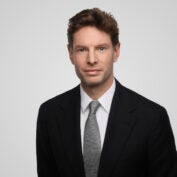
The wealth management firm that bears Mike Tiedemann’s name is unapologetic: it serves the super-rich and is ambitious about growth, but always with a long-term vision.
‘The origin of the business 25 years ago,’ Tiedemann tells Spear’s, ‘was to create an institution that we felt could retain the positive elements of the word “institution” and remove the negative ones.’
The strengths of institutions, Tiedemann reckoned, lay in ‘resources, compliance, governance and, importantly, permanence’ – the last of which he says is ‘a word I’ll come back to a few times.’

The negative connotations that he and his father, Carl, sought to avoid included ‘conflicts of interest, internal products, hidden layers of fees, inflexibility and poor reporting’ – issues they felt strongly needed addressing at the time.
Related



‘For the first 15 or 16 years, as we began to build the business, everything was done organically,’ Tiedemann explains. ‘In recent history,’ he adds, ‘there has been more expansion.’
That is something of an understatement.
In 2019, Alti Tiedemann entered a joint venture with a Swiss company. In 2021, it acquired London multi-family office (MFO) Holbein Partners. Two years later, a SPAC-powered merger with British business Alvarium – backed by Qatar’s ruling Al-Thani family – created a public company with $60 billion in assets under advice. And still there was more to come.
Read more: Why private capital can help solve ‘world’s most pressing problems’
Content from our partners



In 2024, the company acquired US-based MFO Envoi, adding $3 billion in assets. Earlier this year, it added another $15 billion through its acquisition of German MFO Kontora. The firm’s assets under management or advice now stand at roughly $88 billion, according to the latest quarterly report.
It was reported in August 2025 that the firm was considering a deal to take it private. For now, however, it remains publicly listed – a structure that has allowed many employees to receive equity.
The company has been ‘very intentional’ about using its scale ‘to lower the cost of delivery of investments and services to our clients,’ Tiedemann says. He is also keen to embrace gains from the next generation of AI tools, though he does not see them as a panacea.
In a multi-family office serving UHNW clients, human interaction is ‘already very important,’ Tiedemann notes. ‘But it might actually gain even more importance.’
‘In the end, this business is built entirely on trust. In our view, relationships either get better, or they get worse; they never stay the same. So you have to continue to invest in them.’