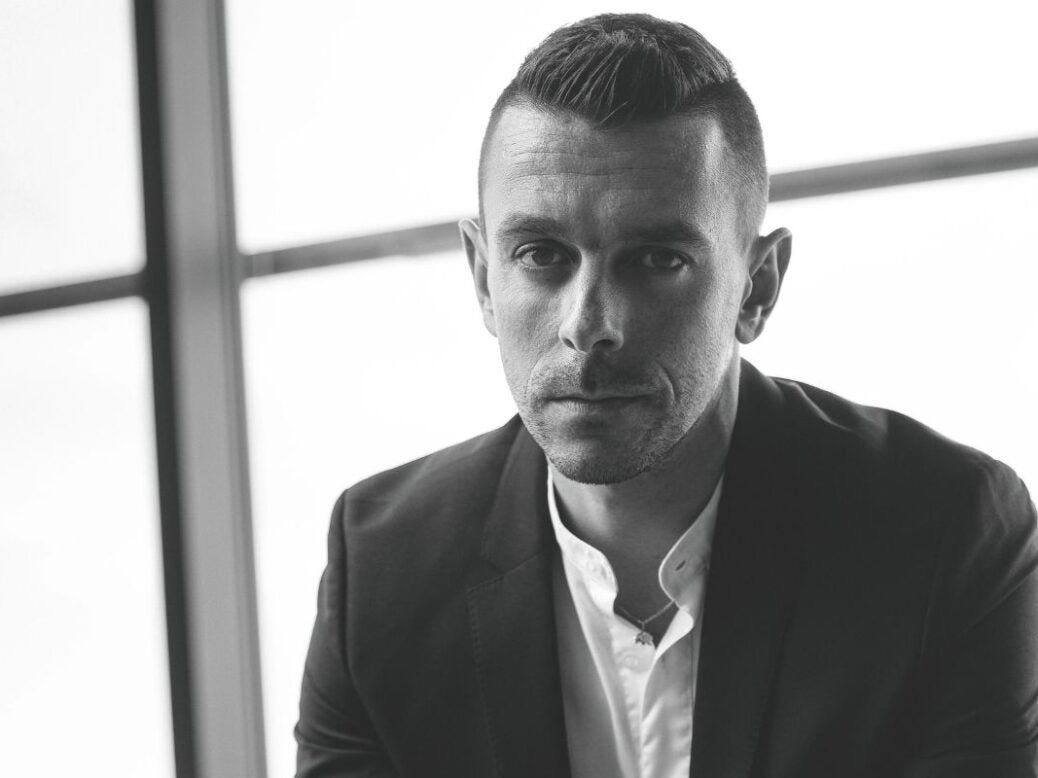
For a young man steering one of Switzerland’s pinnacle watchmakers through the choppiest of waters, Michel Nydegger’s gentle self-assurance is rather striking. A wiry 36-year-old sporting a bequiffed buzzcut and a floppy, deep-V t-shirt, he could hardly be less typical of the slick breed of MBA-schooled operators who normally stalk the boardrooms of high-end watch brands.
But then Greubel Forsey, the company he helms, is a very atypical high-end watch brand. Still privately owned by its founders, its creations are more complicated, more finely made, more intellectually replete and vastly more expensive than those of almost any other maker. As I was once told by Marcus Margulies, the former Bond Street retailer and influential champion of innovative brands including Greubel Forsey, even within the upper echelons of haute horlogerie its watches are a class apart.
‘A Greubel Forsey is an act of love. You can feel it by touch, you can look at it under a microscope, you can examine how it’s been thought through and worked upon, and it’s just different. They make the best watches in the world, there’s no question about it.’

[See also: Turning the dial: How Piaget is reviving its famed past]
Related


If that’s a weighty status to carry, then Nydegger, who stepped into the CEO chair almost two years ago after several years heading up its marketing, doesn’t show it. The fact that he’s the stepson of Robert Greubel, one of the company’s two founders (the other is the Englishman, Stephen Forsey) perhaps explains the modesty of his approach, not that it’s unusual. In the world of modern independent horology, where the original wave of brands emerged in the late 1990s and early 2000s, family succession is becoming a feature of the landscape.
Nydegger is nevertheless deeply aware that he has much to prove, even after a decade immersed in the business.
‘There are watchmakers here who started 20 years ago. They were crazy enough to follow Robert and Stephen back then, and I think they’re the ones who are really carrying this thing forwards,’ he says quietly. ‘For myself, if I can make my job as insignificant as possible, I think that’s generally a good thing.’
[See also: What you can learn from Wei Koh, the ‘Anthony Bourdain’ of watches]
Content from our partners


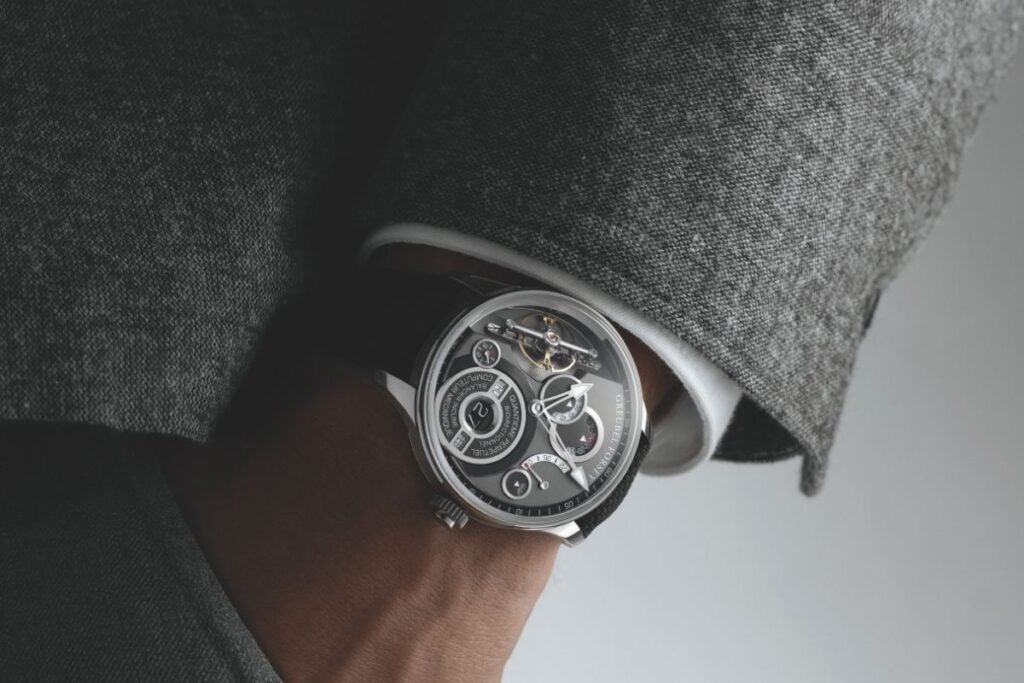
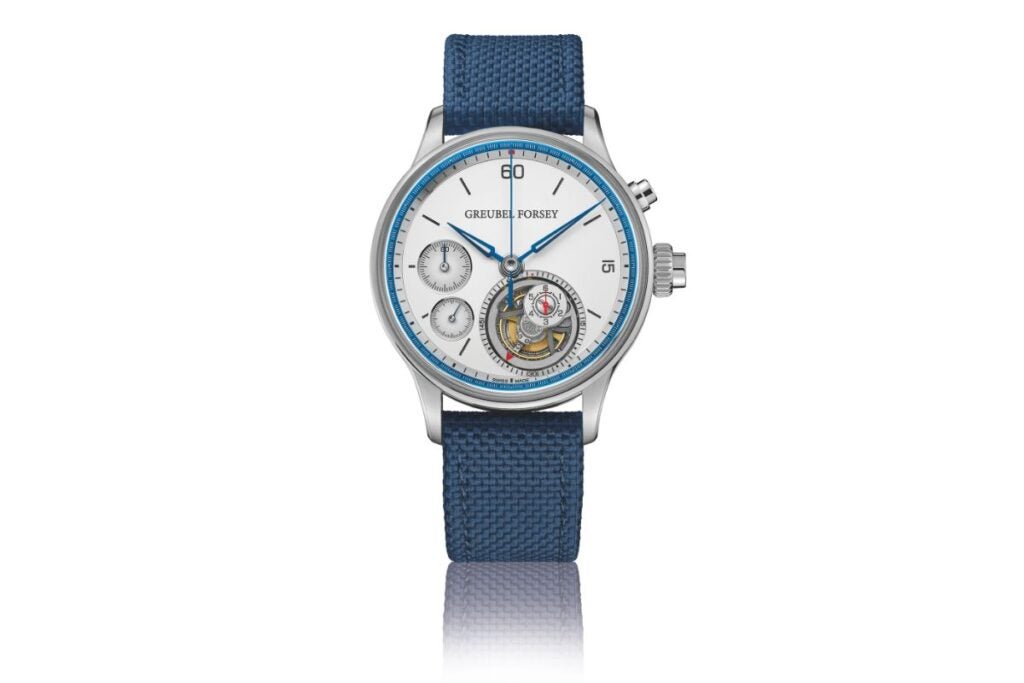
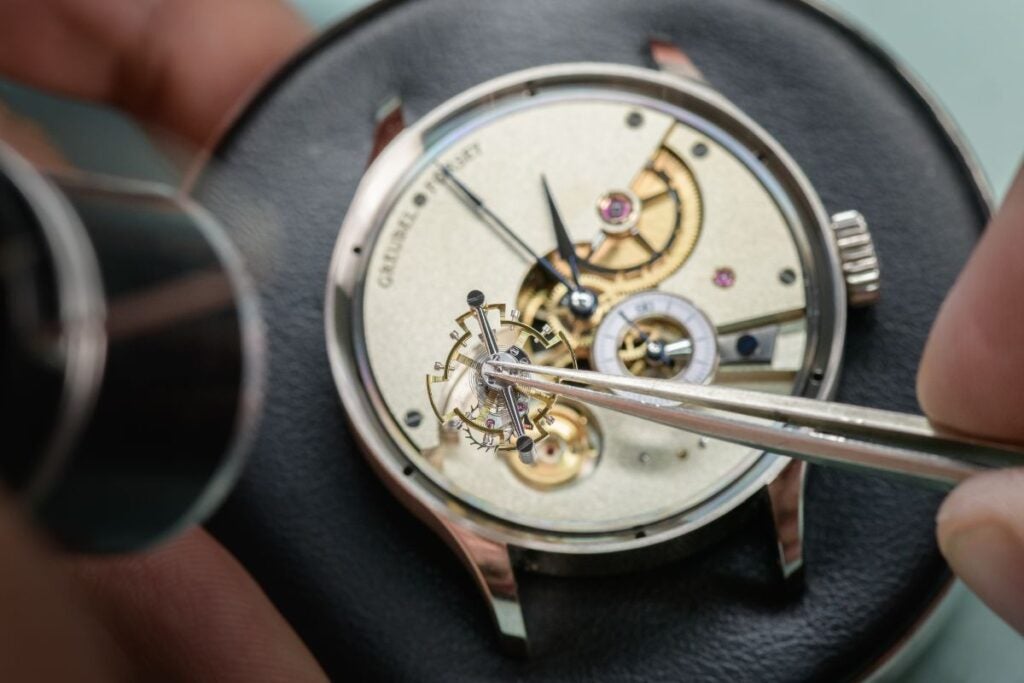
It’s not easy to miss a Greubel Forsey watch. Their operatic complexity – multi-layered, open-worked, festooned in tourbillons and arcane functionalities – is matched by an almost sensual approach to surface polish and texture, the result of a near-fanatical dedication to the artisanal crafts of hand finishing. It’s the ultimate slow watchmaking: with a headcount of 130, it makes just shy of 200 watches a year, averaging around £400,000.
Remarkably, of that 130, only seven are not involved in watchmaking, including Nydegger. He still writes the press releases and looks after the brand’s Instagram account, he says, simply because there’s no one else to do it. All available resources are instead funnelled directly into the workshop.
‘That’s where the fun is for us, it’s who we are. The idea is to add, with every project, something significant to the history of watchmaking.’
[See also: Worldtimers: the world around your wrist]
To that end, Nydegger’s been busy setting up new R&D workshops by converting a subterranean parking garage. One is purely for the development of new hand-finishing techniques, ‘something that nobody has ever done’. The other is effectively R without the D: a lab for long-term, open-ended experimentation. It includes the company’s far-reaching nano-research project, exploring whether mechanical watch movements can be built in radically different, miniaturised ways.
The first fruit of this project, the Nano Foudroyante, appeared to massive acclaim last year. It’s this kind of work, says Nydegger, that will define the company’s next decades.
‘The idea is to have Greubel Forsey’s identity held not by one person – me or anyone else. Instead, it’s personified in the people who make our watches.’
[See also: Vacheron Constantin makes it complicated again with its newest megawatch]
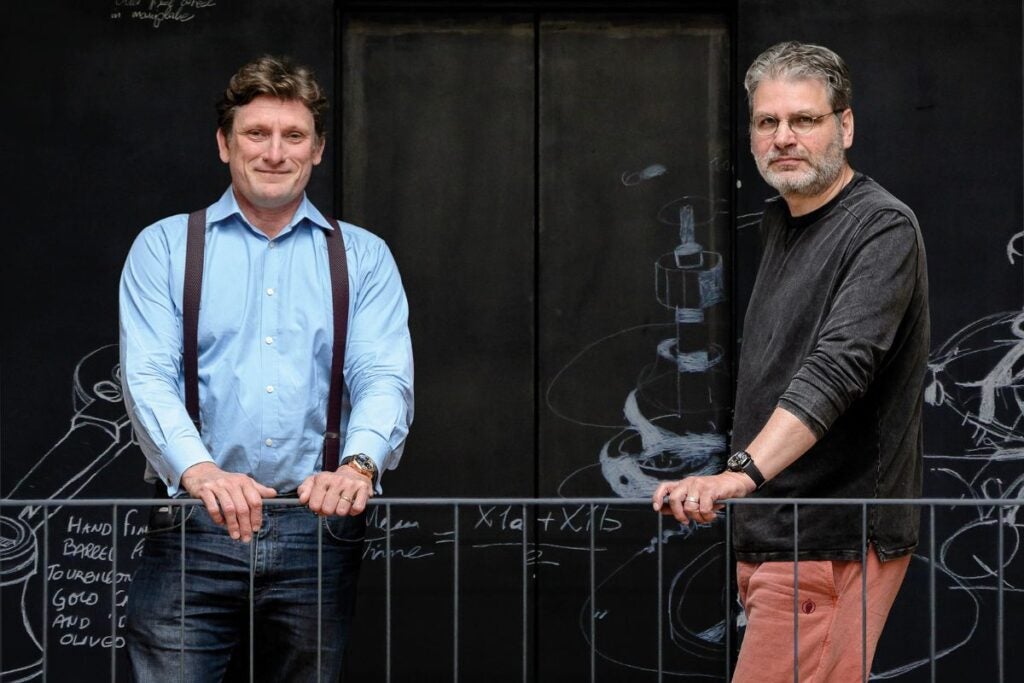
Which is all very well, but identity has been a fraught subject at Greubel Forsey lately – as has the overall future of a company whose rare mystique has always been inseparable from the creative partnership of its founders. Greubel, the conceptual mastermind, enigmatically and determinedly out of sight, guiding decisions from his farmhouse retreat in the Jura Mountains; and Forsey, the hands-on technical genius of the brand, and its avuncular, professorial public face.
The pair met in the 1990s at Renaud & Papi, a hothouse for advanced horology that’s now part of Audemars Piguet. When they struck out on their own, it was to take the very notion of what a complicated watch could be (and what it could cost) into unexplored realms of refinement and invention.
They racked up plaudits and awards, pocketed a 20 per cent investment from Richemont Group and built a magnificent headquarters outside the watchmaking town of La Chaux-de-Fonds. A startling, glass-walled extension to an ancient farmhouse, it pushes up from the alpine hillside like a lopsided pyramid: an architectural metaphor for the brand’s old-meets-the-future approach, with cows wandering merrily up and down its sloping, grass-covered roof.
The strategy, such as there ever was one, seemed simply to be the pursuit of whichever grand question of horological enquiry was occupying the pair’s interest.
There have been multiple ‘inventions’ involving tourbillons, new interpretations of major complications, and great wads of patent filings. Equally, there’s been the elevation of old, artisanal techniques to a level almost of fetishism, whose culmination is the Hand Made project, in which watches are made using only analogue, hand-operated tools, to Greubel Forsey’s unique exactitude. Three are made a year, requiring 6,000 hours of work each.
‘No other brand in their right mind would do something like that, because nothing about it is scalable, the effort is colossal and it doesn’t really make sense,’ admits Nydegger. But Greubel Forsey, he says, has never quite emerged from the ‘garage startup mentality’ of its founding, where sense and ambition don’t always align, but great things eventually happen regardless of the cost.
[See also: Square watches are cornering the market]
This, he says, makes it a very difficult company to pin a business plan onto. But by 2019, Forsey was desperate to step back from the figurehead role (and the endless travel and PR duties that came with it), while both men were thinking more about the brand’s long-term future – so the moment had come to try. In 2020, the industry veteran Antonio Calce was made CEO.
And as it happened, this coincided with indie watchmaking’s unexpected, Covid-driven boomtime, when a new cohort of tech bros and UHNW ballers suddenly piled into what, until then, had been a connoisseur-driven market.

Soon enough, Calce was targeting a fivefold increase in production and a major expansion of Greubel Forsey’s premises. Richemont Group’s 20 per cent shareholding was also bought back and the entry price for a watch brought down by £100,000. For what had once seemed the world’s least sports-oriented watchmaker, new, curvaceously ergonomic designs appeared in lightweight, distinctly non-precious materials like titanium or carbon fibre, with zingy rubber straps and bracelets.
[See also: Patek Philippe squares up to younger buyers with new Cubitus collection]
Greubel Forsey, a brand whose horological extremism had seemed often to be matched by an abstruseness that could make it seem almost wilfully uncommercial, seemed suddenly to be gunning for the same territory as Richard Mille – the one other brand that commands such supercar-sized price points.
And then it didn’t. The hype cooled as quickly as it had arrived, and that extraordinary pricing power, lacking the marketing magic dust of a brand like Richard Mille, began to look less like an asset than a vulnerability. By August 2024, when Calce departed, reports of heavy discounting at retail and sliding after market values were growingever louder. Nydegger confirms this: he says he splurged CHF 8 million last year to buy unsold stock back from retailers, rather than see it discounted. ‘We lost money on it, but we see it as an investment,’ he says.
He’s measured in his assessment of his predecessor, whom he credits with bringing in professionalised structures and practices. ‘Our watchmaking is artisanal, but our finances and operations don’t have to be,’ he says. ‘A lot of things were done right, were necessary and actually did help quite a bit.’ Nevertheless, Calce’s expansionist plans have been largely canned, as Nydegger spent 18 months studiously avoiding interviews while he got to grips with resetting the business.
And then, in January this year, a bomb went off inside the boardroom itself. Stephen Forsey, who with Calce’s appointment had retreated from view, but remained the technical director, announced via a LinkedIn post that he had been fired following management disagreements, and was resigning immediately from the board. One of the most admired and liked figures in watchmaking, Forsey’s message set alarm bells – about Nydegger’s leadership, about the company’s ownership and about its very viability – ringing widely.
According to Nydegger though, Forsey’s eventual departure from day-to-day involvement had in fact been long agreed, though he was to remain board member and the sole shareholder besides Greubel (who holds the majority). He’s careful to avoid being drawn on the details of how a planned transition descended into a dispute and apparent termination, not to mention a very public shambles; but concedes that its messy handling has been a painful lesson.
‘The idea was for Stephen to step back completely, and we weren’t going to send a press release or anything because it was a non-issue in a way. But then it got caught up with rumours that we were trying to sell, or that we were doing terribly badly, and it became a storm.’
[See also: The best reputation managers in 2026]
Of the ‘for sale’ rumours, Nydegger bats things firmly away. ‘I do understand, especially because it’s quite rare to have a brand that is fully independent, without any outside investment whatsoever. But the answer is no, we’re not in that process.’
Forsey has retained his shareholding, Nydegger says, adding that things will ultimately have to be sorted out between the two founders. ‘I personally learned a huge amount from Stephen. I’ve told Robert, they can talk this out among themselves, and I’m sure they’re going to find a solution that is best for everyone. The identity of the brand is so closely linked to the personal identities of Robert and Stephen. But the project now is to have a large enough team to incarnate those values into the future.’
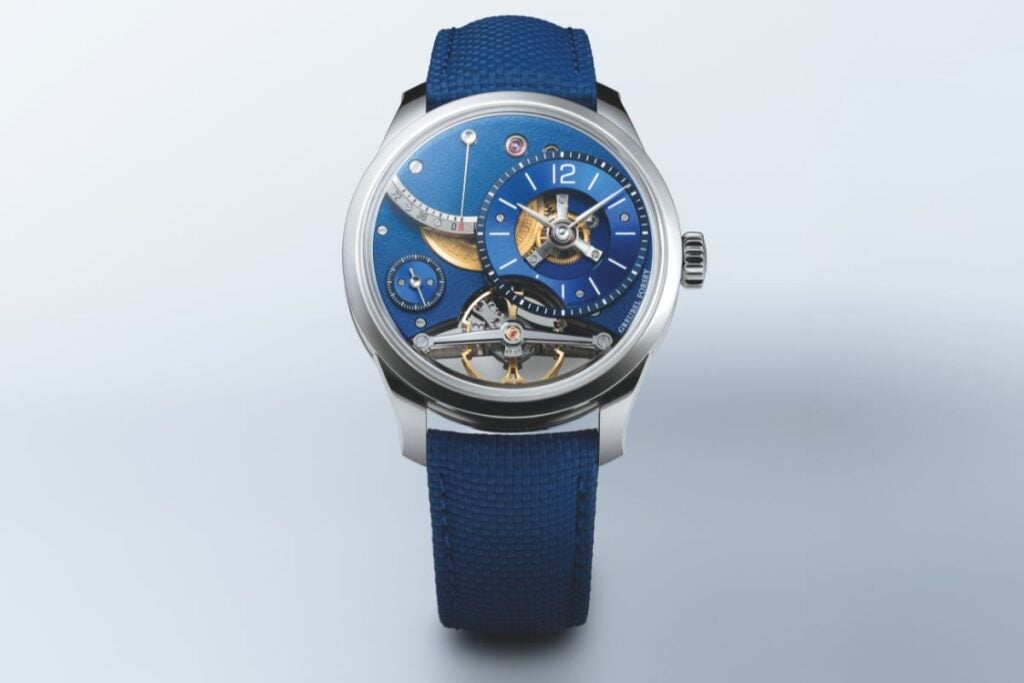
That’s particularly the case for the design and development of new products, which is the firm responsibility of the team rather than the visionary chairman/founder, his stepson says. And if Nydegger has spent his first 18 months putting out fires, the picture he paints of what comes next is quietly promising. The current collection is reaching the end of a five-year production cycle, and a new generation of watches and movements will begin appearing.
[See also: Why is the first electric Ferrari dividing the brand’s clientele?]
Among these, he reveals Greubel Forsey is tackling the one canonical complication it has never fully explored: the chronograph, due next year. Additionally, the enticing prospect of a Hand Made chronograph is set for the end of the decade. There’ll be more to come in the world of Nano too; it sounds as though the staff down in those underground R&D units will be working round the clock.
‘We know what we’re doing this year, next year, and exactly what we’re doing the year after,’ Nydegger says. ‘Financially, I’m a lot more comfortable now than I was at the end of 2024. We know that we can afford to deliver on all of our ambitions.’
Whether the outside world shares that confidence remains to be seen. But inside the glass-walled farmhouse in the Jura, they’re getting on with it.
This article first appeared in Spear’s Magazine Issue 100. Click here to subscribe