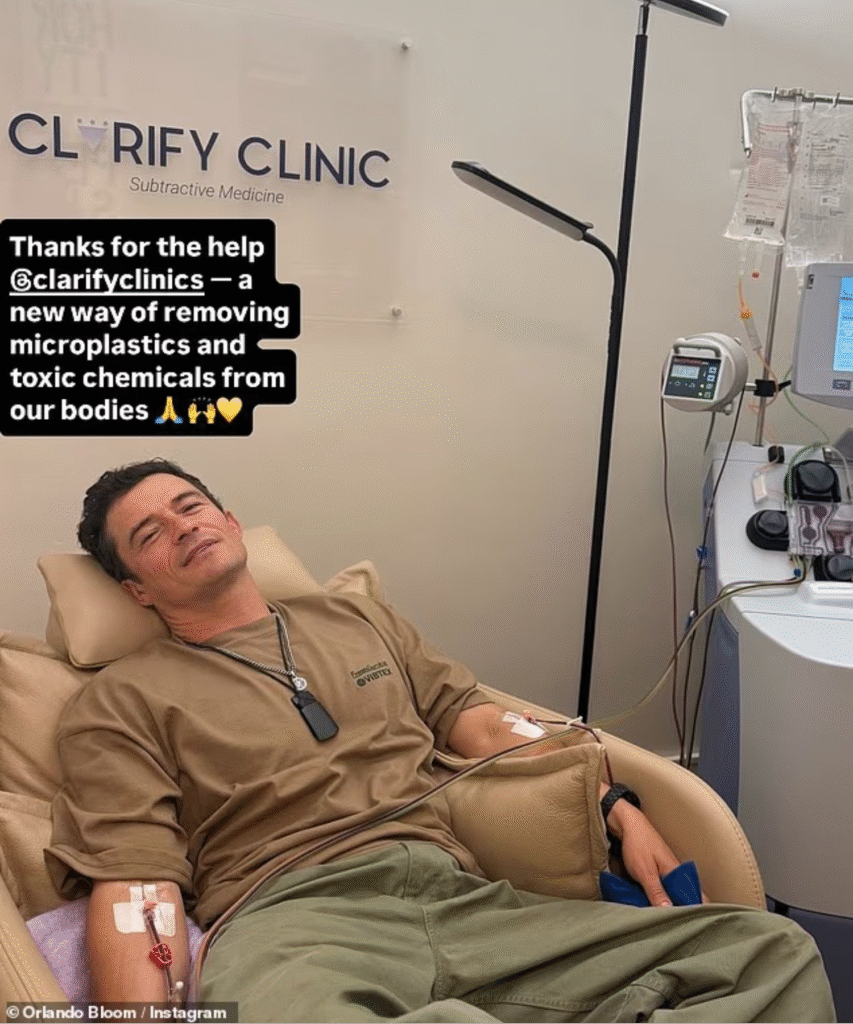
A Hollywood actor pinned down by large-gauge needles in both arms is not the image you’d usually associate with a serious advance in medicine. But when it comes to longevity, the normal rules do not apply. Such is the vogue for (supposedly) life-extending therapeutics that, for many, Orlando Bloom’s July 2024 Instagram post of his treatment at a Harley Street apheresis clinic called Clarify needed no further explanation.
A few months later, I found myself in a similar chair at another Harley Street preventative and longevity clinic, Viavi. I watched as my own blood was removed from one arm and split into its constituent parts (blood cells and plasma), before the plasma was then filtered and finally the blood was returned to my body, rewarmed, via my other arm.
[See also: The best preventative medicine, health screening and anti-ageing clinics]

On social media, Bloom described the process as ‘a new way of removing microplastics and toxic chemicals from our bodies’. But there is nothing new about apheresis itself. The first documented procedure, in animals, took place in Germany in 1902, and the technique has been used to treat serious diseases in humans for 70 or more years. What is new, however, is that the process of plasma exchange and plasma filtering has been simplified and packaged as the latest intervention for those with the resources to buy more time in good health, and, perhaps, a few more years too.
Related



At Viavi, apheresis patients undergo a version of the process called ‘Inuspheresis’, which has been developed by the Swiss private equity-backed firm Ayus purely for use in preventative medicine. Viavi’s founder and CEO Dr Sabine Donnai, a Belgian-born medical and functional doctor, has been quietly practising what is now called longevity medicine for 17 years. In all that time, the only other detoxification method she has recommended is medically supervised detox programmes that require several days or even weeks. By contrast, apheresis takes a few hours. For her, it’s a crucial addition to a repertoire of techniques used to protect and prolong the performance of her client base of high-powered executives and entrepreneurs.
On Harley Street, the Reborne Longevity clinic is about to start offering Bloom’s Total Plasma Exchange (TPE) ‘for on label use’. ‘If this treatment is provided off label – ie not within regulatory guidelines to treat a specific illness – it must be on the basis of solid clinical evidence, of which there is none we are aware of for wellness or longevity,’ says Faye Mythen, Reborne’s consulting CEO. Its prices start at £5,800 for TPE, including before-and-after blood tests, ‘It is a big area of interest for us. We will be offering this for chronic illness, as therapy for LP(a) management, Alzheimer’s and autoimmune diseases, and also therapeutic purposes.’
Mythen purchased an Spectra Opstia machine – a medical device she describes as the Rolls-Royce of apheresis. There are 300 in the UK, 298 of which are owned by the NHS and BUPA hospitals. The other two belong to her and Clarify. These medical devices being wheeled round NHS wards for sick kids with myeloma are now the last word in optimal health seeking. The market is projected to more than double in the next few years.
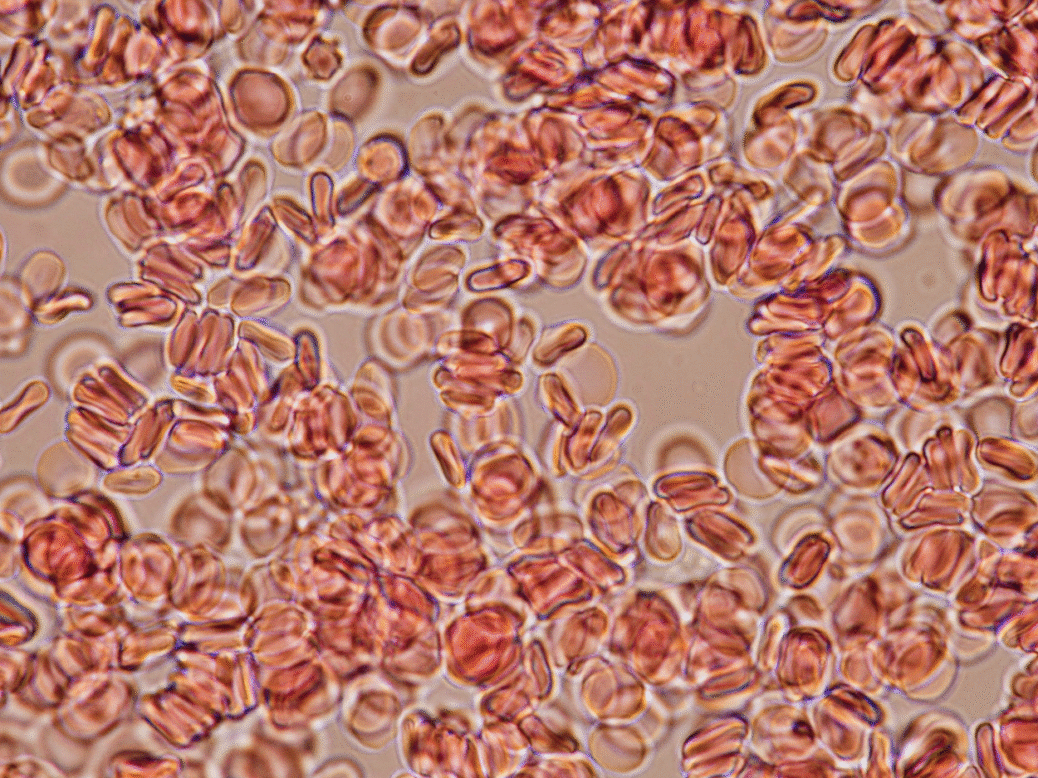
The origin story of apheresis for longevity is stranger than science fiction. In 2005 a study by Conboy et al described ‘heterochronic parabiosis’: stitching a young mouse and an older one together so that they share blood, with the older animal regenerating and the younger one ageing faster. The image helped fuel rumours about tech billionaires with ‘blood boys’.
Content from our partners


[See also: The best private doctors and surgeons in London]
One of the biggest drivers of the plasma rush is Dr Eric Verdin, CEO of the Buck Institute for Research on Aging and an influential longevity figure. His company, Circulate Health, has conducted multiple TPE studies, including investigating the removal of micro and nanoplastic burden in humans. Verdin and his co-founder at Circulate Health, Dr Brad Younggren, wanted to capture the benefits of ‘young blood’ without the vampiric implications. ‘Given safety and regulatory concerns,’ says Younggren, ‘Circulate Health cut young donors from the picture. Instead we tested therapeutic plasma exchange, removing almost all of a patient’s own plasma, the liquid that carries blood cells, and replacing it with albumin.’
Their study, published in May 2025’s Aging Cell journal, was, says Younggren, ‘promising [with] shifts consistent with improved healthspan, gains in grip strength and balance and favourable biological age changes’. By replacing a human’s plasma, with all its deleterious biomarkers, with a bag of artificial solution plus immunoglobulin, the team reported a reduction in biological age in their sample group of a little less than three years. It is just a single study – and not an impartial one – but, as marketing, it captured the attention on the longevity scene.
The logic is easy enough to grasp. By dumping your plasma, with its microplastics and other inflammatory garbage, you reduce the risk of disease linked to chronic inflammation. A recent study found microplastics everywhere from Everest to human breast tissue. Inflammation generally is so closely tied to the diseases of ageing that the term “inflammaging” had to be coined. Our circulatory system gets polluted over time, just like rivers.
Investors like the story. Not long after its recent study came out, Circulate Health raised $12 million in seed funding from three venture capital firms. It provides TPE services to more than 20 clinics, mostly in the US but some overseas. A spokeswoman tells Spear’s there are no clinics in the UK ‘for the time being’.
Circulate has pinned its colours to the TPE mast, while Viavi’s Donnai says that, after serious and informed consideration, she chose a different form of apheresis, using the products of Ayus Inuspheresis. Viavi, with its predominantly City-based patient list, is built on her specialisation of protecting ‘the CEO-type brain’. She says she has done more than 50 apheresis procedures since she launched it last spring.
Plasma filtering still removes environmental toxins, pathogens and inflammatory markers, but, having split the blood from the plasma, it does not just dump the latter. Instead it filters the plasma and returns it.
For me, apheresis felt worth the risk. I had recently noticed my rings were tighter on my fingers. After a horrible break-up, I had lost weight. So the added weight on my fingers was not fat; it was inflammation. One finger was not just bigger but now deformed by arthritis. Here was evidence of chronic inflammation, a key factor behind the four diseases of ageing that will kill 80 per cent of us: neurodegeneration, cancer, type 2 diabetes and cardiovascular issues.
Donnai is less circumspect than Reborne when it comes to the applications for blood cleansing. Once electroencephalograms and bloods have been done to assess whether the patient is suitable, she thinks a great majority of her patients would benefit from the treatment due to ‘overload caused by a polluted world’. Citing multiple studies on the toxicology of modern life, if not apheresis for longevity, she comes across as someone who is fully convinced.
Research by the University of New Mexico found the microplastic load increased by 50 per cent in human organs between 2016 and 2024. The threat to human health posed by microplastics has not been determined yet, but Donnai refers to evidence suggesting those who die of dementia have more microplastics in their brain. Parkinson’s, the fastest-growing neurological disorder, is far more common in farmers who worked with certain pesticides and in firefighters exposed to PFAS, the so-called ‘forever chemicals’.
Not every doctor in the longevity space is so bullish, however. Dr Tamsin Lewis runs a medical practice dedicated to preventive medical care. ‘I’ve been a practising medical doctor for 21 years. My role is to keep people anchored in what the data currently supports,’ she says. The ‘logic’ is there, she says, but the enthusiasm for therapeutic apheresis is not yet supported by evidence.
Lewis thinks it will not be long before apheresis procedures come with combinations like plasma dilution, exosomes and stem cell therapies. Donnai, while a fan, is also somewhat wary. When researching which system to use for her Apherix offering, she saw apheresis clinics that were like ‘the nail bar on the corner’ in both the US and Dubai: ‘American doctors will do the plasma exchange, ozone treatment and something else all at once on someone. That’s too much. And I believe it’s extreme to throw out the good factors in our plasma as well as the bad, as happens with TPE.
‘TPE has several contra-indications. People can become mentally or immunocompromised. Clinically, TPE frightens me.’
Apheresis is safe; it has been performed for generations on the sick. What has shifted is our idea of which conditions deserve medical attention. Whether that buys extra healthy years or simply a few hours with a phlebotomist and an apheresis machine is as yet unclear.
Jan Gerber, whose family was behind the legendary Kusnacht Practice on the shores of Lake Zurich, now runs another private rehab centre, Paracelsus, where mental and physical health is addressed. He is even more cautious, saying his patients know about apheresis and ask for the treatment but he has to advise them that ‘there is no broadly established clinical evidence’.
‘You could say the same of a meditation technique,’ he adds. ‘But blood cleansing is not the same. Even if everything is done safely, still, there remains a risk of complications. I know the evidence is building, but for now, it is speculative.’