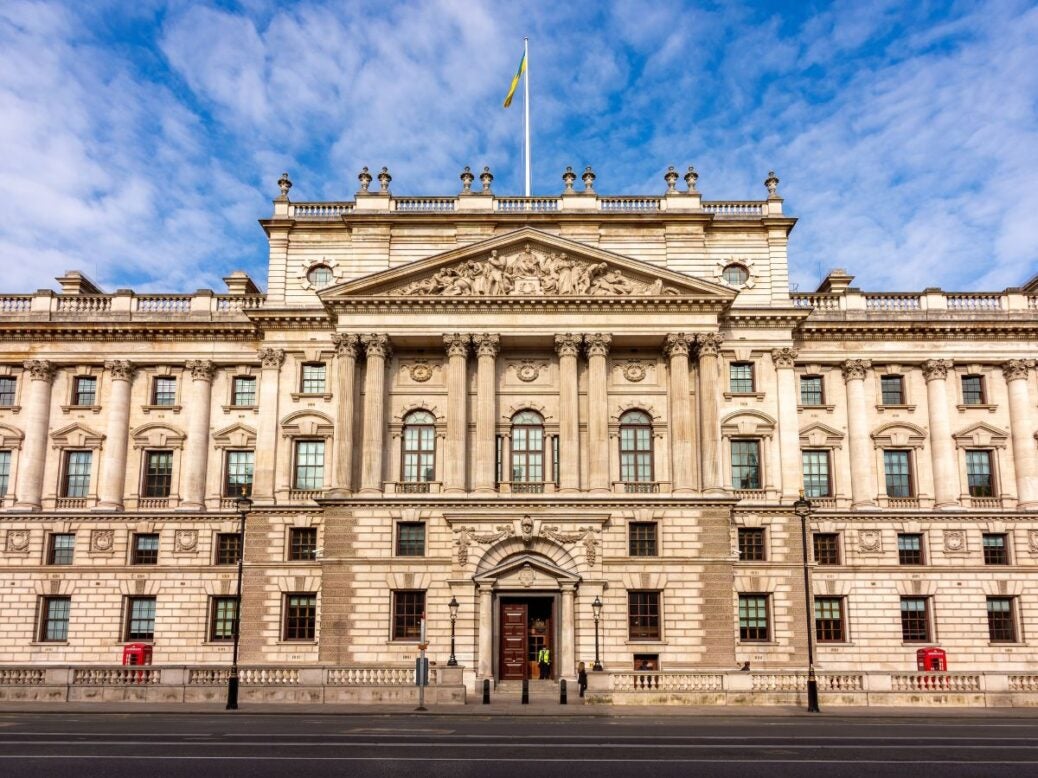
To respond or not to respond? Billionaires who received letters from HMRC this month asking for details of their financial arrangements may well have been asking their professional advisers this question – perhaps a little anxiously.
The letters, first reported on by Bloomberg last week, were sent to HMRC-identified billionaires with a UK tax footprint, and invited recipients to (voluntarily) provide details of their trusts, assets and property. Some recipients, though not all, were also invited for meetings with HMRC, one adviser told Spear’s.
Kelly Greig, a partner in Kingsley Napley’s international private client practice, says she and her team are advising their clients to ‘take it seriously’, and think carefully about finding the right balance between engaging and oversharing.

‘If you show them everything, it could lead to disclosures you weren’t intending, and prompt them to make further enquiries which could lead to penalties,’ she says. However, ignoring a letter altogether, she adds, could lead HMRC to think ‘what have you got to hide’.
Related


[See also: HMRC nets £1.5 billion from wealthy in bumper year]
For UHNWs that agree to a meeting, Greig says it’s crucial to set a narrow scope and establish a written agenda. Also: ‘Make sure you get to take your adviser in the room.’
Charlie Sosna, head of Mishcon de Reya’s private wealth and tax group, says clients should also think about what HMRC will already know, regardless of what information they provide in response to the letters.
‘HMRC will likely have a significant amount of information from the Common Reporting Standard, so it would be naive to think: “I’m not going to provide any of this information. HMRC don’t know it.”’
Content from our partners



He adds: ‘I don’t think there’s any point in being unnecessarily difficult with HMRC, but neither do we think you should automatically provide them with everything.’
[See also: Windfall tax: Is the UK about to tax bankers more?]
Phineas Hirsch, a partner in the international tax practice at Payne Hicks Beach, concurs, and says he regularly tells clients that HMRC is a more equipped organisation than it was a decade ago.
‘They have invested in their systems, and with artificial intelligence, they are able to process vast amounts of information very quickly and connect the dots,’ he says. ‘It is harder for clients to retain complete privacy, which is something we have been telling them for some time.’
In April this year, HMRC appointed its first ‘chief AI officer’, and announced a £175 million, decade-long partnership with tech firm Quantexa to give ‘a clearer, connected view of its data’ through the use of AI.
Given the powers already at HMRC’s disposal, ‘individuals may feel this request to be invasive’, says Rakesh Dabasia, a private client partner at accountancy firm Buzzacott.
‘Some may also question whether responding to these letters could lead to requests for even more information, resulting in considerable advisory fees if required,’ he says, adding that the consensus expectation among advisers is that ‘take-up may be limited’ to HMRC’s letters.
[See also: HMRC ramps up campaign to clamp down on offshore tax evasion]
An HMRC spokesperson said: ‘We want to help all customers get their tax right, including the UK’s wealthiest people. We’ve had dedicated customer compliance managers for wealthy individuals for several years, allowing us to identify and address tax risks effectively.’
There are a few different views from those in the UHNW space as to why HMRC has chosen this moment to send out letters.
A report from the Public Account Committee (PAC) in July last year bluntly noted: ‘HMRC cannot identify how much tax is paid by UK billionaires, despite the relatively small number of individuals and significant sums of money involved.’
The committee invited HMRC to consider ‘segmenting its wealthy customer group according to different levels of wealth’ – essentially looking at the ultra-ultra-wealthy as a separate cohort.
The letters could indicate HMRC is starting to act on PAC’s recommendations.
[See also: As HMRC cracks down on inheritance tax investigations, HNWs should be prepared]
Another reason, Greig says, could be that HMRC is concerned about the number of high-profile wealthy departures from the UK – and wants to be better informed.
‘By gathering data on people who are hugely globally mobile, HMRC are getting a picture of how they might be able to leave the country quickly, and looking at where their ties are.’
The PAC report was published just three months after the end of the UK’s non-dom regime in April 2025, an event that reportedly prompted many UHNWs in London to accelerate plans to rethink their residencies.
[See also: “Buy-to-leave”: The new trend among London’s leaving non-doms]
James Quarmby, head of the private wealth team at Stephenson Harwood, says: ‘I think for those wealthy people who presently feel under attack by both the government and public opinion, this will be seen as another unwelcome burden. These types of things matter to clients, who can’t help getting stressed by HMRC enquiries, no matter how wealthy they are.’
Quarmby says he also questions whether the letters may be ‘self-defeating for UK plc’ given the number of high-profile billionaire exits in the last year.
Should HMRC decide to send out further letters to billionaires, the tax authority will be hoping it still has a healthy number of UK addresses to work through.