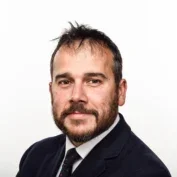
‘I won’t use your words, but yes, we are cheaper,’ says David Bailin, founder of the newly launched wealth advisory firm CIO Group. I had just asked the former chief investment officer at Citigroup’s global wealth division whether the creation of his low-cost investment firm served as proof that private banks have been ripping off their wealthy clients.
‘I don’t like saying that, but yes, Wall Street [is guilty of] trying to sell products, whereas we just want to sell advice. We are product agnostic,’ he says.
According to Bailin, who spent 15 years at Citi as CIO, this focus on lower fees has seen his firm pick up more than a dozen family office clients since its launch last October. He suggests investors have grown extremely weary of overpaying.


Indeed, just last summer Deutsche Bank, for example, was fined $3 million by Hong Kong’s securities regulator for overcharging clients and failing to apply discounted management fees in discretionary mandate accounts, as well as incorrectly valuing floating rate debt instruments by applying fixed interest rates. In total, the German bank overcharged clients by $39 million between November 2015 and November 2023, according to the regulator.
Related



[See also: Introducing Spear’s Magazine: Issue 99]
‘I won’t say the amount of assets we have won so far but, you know, you can imagine it’s more than a quarter of a billion dollars,’ Bailin says. ‘And we have a lovely pipeline of clients, which is many multiples [of the number to have already joined].’
Key to CIO Group’s early success has been its use of artificial intelligence data tools that, according to the founder, allow the firm to evaluate every moving part of a client’s holdings. He likens it to being able to perform an MRI of an investor’s portfolio, which he says culminates in lower fees, better cash returns, the elimination of redundant market exposures and increased diversification.
‘We have built a software system that has the ability to ingest 100 per cent of a client’s data, meaning we can give them a picture of their portfolio they’ve never seen before and highlight to them all of the money they’re spending or wasting. For example, we can show them what fees they are actually paying for advice and for the funds they own; what interest they are earning on their cash, if any, and how much they could be making. And perhaps most interestingly, especially with all the stuff that’s been written about private equity recently, we can show them to what degree their private and public investments overlap.’
Content from our partners



He describes it as a ‘head-blowing moment’ for potential clients when he sits down with them to present the results. ‘We believe we can identify hundreds of basis points in incremental return opportunities across every dimension of a client’s wealth.’
So just how much cheaper are his fees? ‘Much,’ he says, outlining that the costs for advice range from 45 to 65 basis points, depending on the client. The charge for the ETF portfolios, meanwhile – what Bailin calls the actual fund management fees – are 18 basis points for equities and 18 basis points for bonds.
‘Our total cost to a client is roughly 60 per cent of what they’re paying today,’ he says.
Bailin, who left Citi in May last year as part of a round of executive shake-ups at the bank, has also brought in Steven Wieting, with whom he worked for more than a decade at the US lender. Wieting is co-founder and co-CIO of the fledgling wealth manager. Two of the other four co-founders – Adam Paris and Abraham Ouano – also hail from Citi, while Sean McDermott is a former JP Morgan executive and Mary Nosa was previously an investor at RedBird Capital and investment banker at Goldman Sachs.
‘All of the people I founded the company with are partners, they’re not employees. In other words, they owned equity from day one. We all own the business and, yes, we’re trying to make profit.’
So, will Bailin miss working for a huge operation like Citi Private Bank, with its $190 billion investment platform? After a long pause (his first during our 30-minute interview), he says: ‘I’ll say this, I think that because Citi was a global bank I gained a perspective on the world that is extremely valuable, in that you don’t think of the world as just the United States. I didn’t realise how much of a benefit that was to me until I left. And then, of course, I miss some colleagues.
‘Our approach to wealth management, however, is radically different.’
This article first appeared in Spear’s Magazine Issue 99. Click here to subscribe