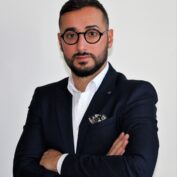
Andrea Calabrò is a professor at the Bocconi School of Management in Milan, where he focuses on family offices and family businesses. He is also CEO of the STEP Project Global Consortium, a network of universities researching family enterprise; he leads the Family Legacy Monitor, a research initiative run in partnership with JTC Private Office.
In the course of his work, Professor Calabrò has spoken to hundreds of family businesses across the world about succession and legacy. Spear’s caught up with him to discuss the lessons he’s drawn from that research.
Families that build lasting legacies do three things
I think that especially for wealthy business families, the main issue I see is that they ask themselves the wrong question.

[See also: The best generational wealth and family business advisers in 2026]
Related



The question many families ask is: how do we transfer wealth? But they should ask a different one: how do we transfer entrepreneurial capacity? How do we empower the next generation to be able to use the money that has been generated? This is really about transgenerational entrepreneurship.
What I’ve found in my research is that the families around the world that have built a lasting legacy are the ones that have been able to nurture three things.
The first is preserving deep, healthy family relationships.
[See also: Peers rival wealth managers as succession advisers to the next generation]
Content from our partners



The second is promoting family entrepreneurship – empowering the next generation to be entrepreneurial. If you are in a business, even if you are a millionaire, it should not be taken for granted. If you want to take it over, you need to build the next chapter.
The third thing is focusing on future generations. This means asking what their needs are but also what their wishes are.
The true meaning of ‘legacy’
If you ask me for a definition of ‘legacy’, I can say that it is not inheritance. It’s not reputation, it’s not tradition, it’s not obedience and it’s not nostalgia either. If businesses identify legacy with any of those things, that’s the wrong way to think about it – and it’s going to become a trap.
Legacy has to be treated as an intentional process. It’s not just something you take from someone else and then have to keep and pass on to the next generation.
[See also: Women lead the way as family businesses set for record growth worldwide]
What matters is the importance of transferring values, purpose and a sense of responsibility. This idea of intentional legacy is that it’s a process which is deliberate: wealthy families have to invest energy in trying to design the future before it arrives to them.
When legacy becomes a trap
The more families I spoke with, the more I came to realise that legacy is not always a positive thing. Sometimes it can be a trap for a family business. For example, sentiments like ‘we have always done this like this,’ or ‘this has been done in this way for 100 years,’ can become an entrepreneurial trap for the next generation.
[See also: Heirs apparent: When legacy becomes reputational capital]
It is important not to be in a form of legacy which is preservative, but to move towards a legacy which is more dynamic and evolving.
What the most successful families have in common
The main finding from the research activities my group has run over the last two or three years is that the family businesses which are most successful (including in terms of performance and return on investment on their portfolio) are the ones that are able to combine a legacy orientation (which means thinking about legacy and trying to design a legacy structure) with the ability to promote entrepreneurship within the business and across generations.
One example is ERG, an Italian family firm [the biggest energy provider in Italy], historically built on oil. In the second generation, there was a big shift: many years before renewable energy became mainstream, the family decided to completely abandon oil and shift to renewables. It was a very difficult decision for a family business built on oil, but it did turn out to be the right investment – especially as ERG is now a European leader in renewable energy.
When families should let go of the core business
Another lesson from [my research] comes from De Agostini, one of the most prominent family businesses in Italy [built on a namesake publishing house famed for its atlases and encyclopaedias]. The traditional publishing industry was failing because it was changing rapidly and the family was not able to meet that change.
So they decided to completely quit the core business and, in the last 15 years, have invested in insurance, online gaming, entertainment and many other things. De Agostini has evolved into a holding company with stakes spanning Italy’s national lottery, gaming giant IGT and production company Banijay, the firm behind hit shows like Peaky Blinders and MasterChef.
The ability of that family has really been to reinvent themselves and to let the core business go.
While you’re in your core business, you have to be able to implement a portfolio of unrelated business activities, for two reasons.
First, especially in today’s environment, it allows you to mitigate and manage risk as a corporate strategy.
Second, it offers the next generation the chance to see different things and to prove whether they’re good at doing business. Not every next-generation member is a businessman or a businesswoman – but perhaps they’ll still be working in the investment company, making sure the values and the purpose of the organisation and the family are met.
Can your family become a dynasty?
Many family businesses ask how, as a wealthy family that has built something good, you can move beyond legacy (which we covered earlier) and become something extremely rare: an entrepreneurial dynasty.
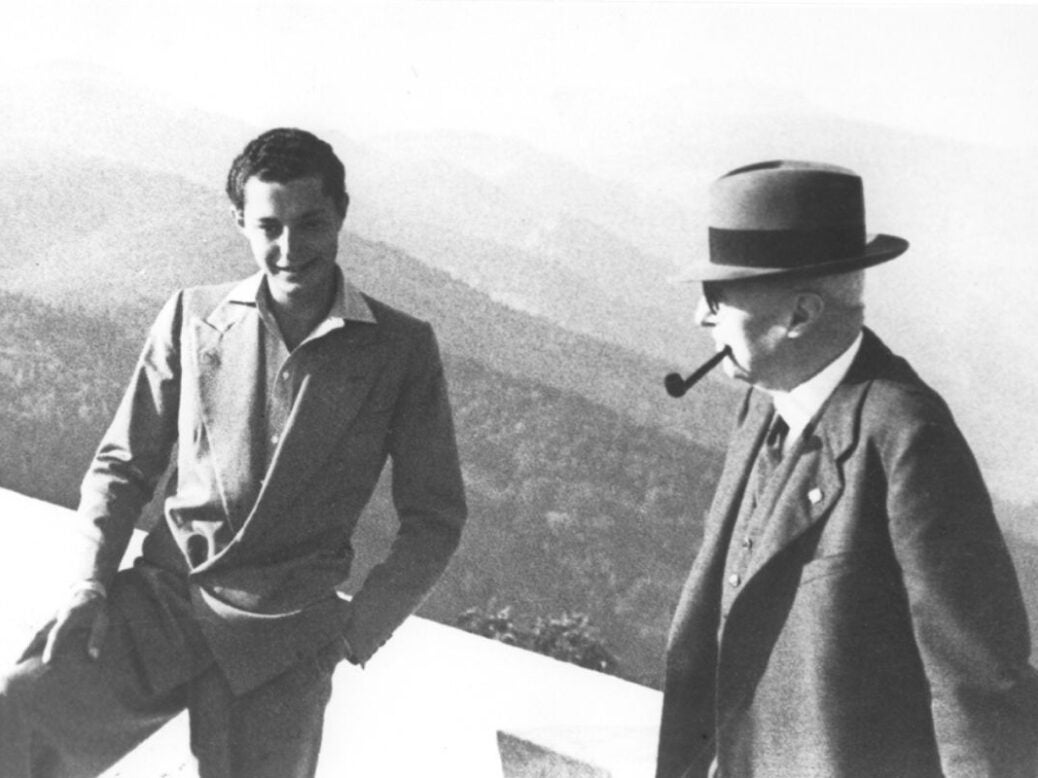
People ask me: ‘Please tell us the secret— how can I become a dynasty like the Agnelli family, like Freudenberg in Germany, like Merck?’
[See also: What does Bernard Arnault’s tweet tell us about LVMH?]
What I’ve observed is that there is no formula, but there are three things which are important.
The first is the willingness to reinvent yourself as a business, to accept that there will come a time when your business model might be obsolete – and to deal with that reinvention.
The second is nurturing transgenerational entrepreneurship over time: making sure the young people within your business and your family have the opportunity to become entrepreneurs. They need to be exposed from childhood: there are theories around this, how they can develop taste, knowledge and entrepreneurial imprinting.
The third is legacy, of course, but a dynamic legacy, one that looks at the past without treating it as a trap. The past has to be an inspiration, but then you need to give the next generation the freedom to build a new chapter of the story.
If everything is locked into strict governance, it becomes unattractive. If someone inherits a business but everything is already settled – thousands of rules, mechanisms, and governance – it makes being an entrepreneur very difficult. There’s a disconnect between who you want to be and what you want to make; there’s no freedom to bring the next chapter to life. Reinvention, transgenerational entrepreneurship and dynamic legacy — these are the three ingredients that can help families shift from mere inheritance towards building an entrepreneurial dynasty.