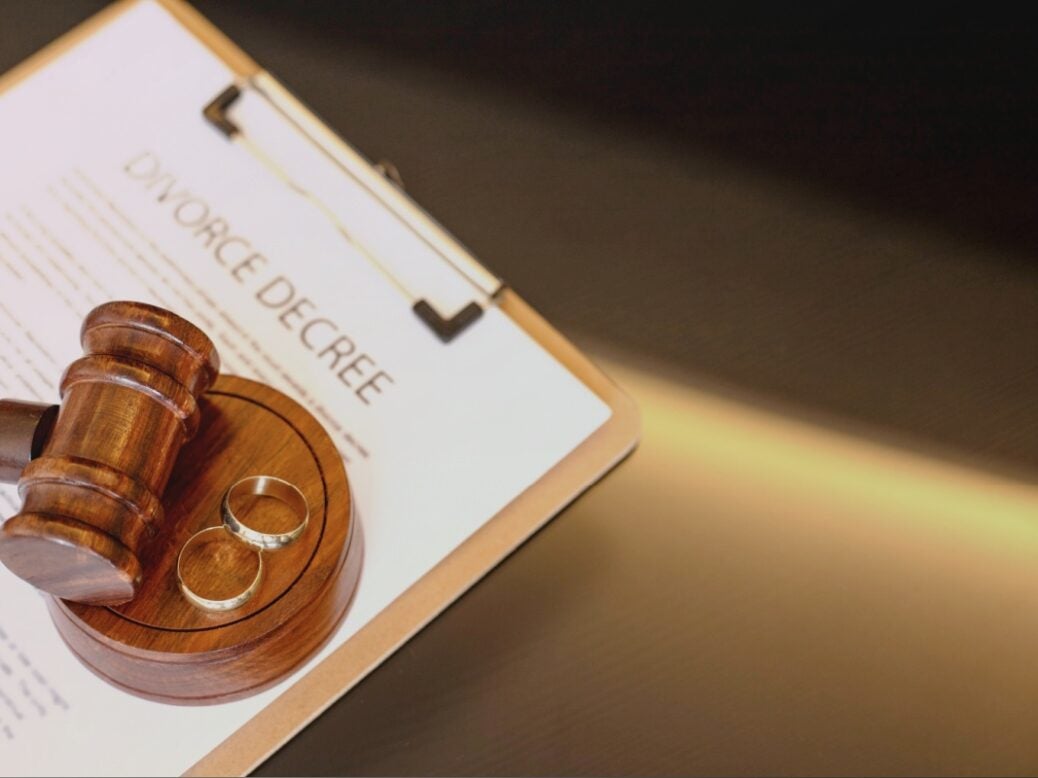
While the festive period is synonymous with joy, merriment and celebration, for many it can represent the climax of marital struggles. Dubbed ‘Divorce Day’, the first working Monday in January is seen by some as one of the busiest days for divorce and separation enquiries in the UK.
‘Divorce Day’ is supposedly driven by tension over the festive period and, perhaps more practically, by an inability to file divorce papers during the Christmas break. However, some leading voices in family law have disputed this day, claiming it is an exaggeration of reality conjured up by the media.
Families who seek well-planned legal help at the beginning of a separation, and consider non-adversarial methods, may have a better chance of navigating the often-fricative path of divorce relatively unscathed, according to some experts. As UHNW divorces are becoming increasingly international affairs, owing to wealthy individuals leading international lifestyles and holding multiple assets across different countries, the traditional calendar for splits may also be changing.

A number of leading family lawyers spoke to Spear’s about the relevance of ‘Divorce Day’ and how best to navigate the legal processes that come with a split.
Related



There are cases where people choose to wait until after Christmas to file for divorce, argues Adele Pledger, a partner in Withers’ family law department. However, suggesting that a significant number of divorces are filed on a specific day risks trivialising a serious legal procedure.
‘In my view, “Divorce Day” is a load of nonsense and sensationalises divorce, which isn’t particularly attractive or helpful,’ Pledger says.
‘Yes, if someone has decided in the autumn they want to separate and divorce they may choose to hold out till after the Christmas holidays before filing the application, so as to not upset the apple cart for the children,’ she says. ‘But many people can’t think of anything worse than spending Christmas together when they’ve already decided they want to divorce – it’s a case of horses for courses.’
Content from our partners



Pledger emphasises that there is a steady stream of divorce applications throughout the year, and that people should carefully consider how best for them and their family to proceed with such a separation.
In 2025, there was a marginally higher number of divorce applications submitted at the beginning of the year. There were 28,890 divorce applications submitted in the first quarter of 2025, with 26,412 and 26,153 filed in the second and third quarters respectively, according to data from the Ministry of Justice. Figures for the final quarter of 2025 are not yet available.
[See also: The best family law barristers]
‘Think carefully about who you want to work with – take your time choosing the right lawyer, it is an important relationship and should be with someone you trust and whose approach aligns with yours,’ she says. ‘Make sure you tell your lawyer what you are hoping to achieve and what matters most to you.’
As well as seeking out a suitable family lawyer, Pledger advises prioritising mental health during the end of a marriage: ‘Get the support you need emotionally and mentally – family and friends can be invaluable, but there are also massive advantages to having the support of an impartial therapist, coach or counsellor.’
Pledger suggests sending short and civil responses when communicating with an ex, especially as they could be brought up in court, further reinforcing her point about taking a considered approach to divorce.
Agreeing with Pledger’s doubt over the reality of ‘Divorce Day’ is partner at Keystone Law’s family practice, Roopa Ahluwalia.
‘“Divorce Day” is a family law myth,’ Ahluwalia says. ‘Most clients will have been aware of their desire to exit a marriage for some time, and most probably have already sought out legal advice on their options.’
While she recognises that the festive period can act as a catalyst for deciding to leave a marriage due to the pressure of shared time, Ahluwalia notes that there is often little benefit to rushing divorce proceedings.
‘A good separation is one where there is a planned and open discussion with a spouse, who may need to play emotional catch up,’ Ahluwalia argues. ‘Taking time to manage expectations and plan how to communicate a wish to divorce is key to separating well.’
[See also: Spear’s Family Law Survey 2025: Experts identify core trends]
‘Divorce Day’ may have been a thing in the past, but has lost its validity today, argues co-founder of boutique family law practice G&G Law, Neil Graham.
‘When I first started practising as a family lawyer nearly thirty years ago there was a small increase in enquiries after Christmas or the summer holidays when some couples were reminded of why they preferred to avoid spending time together if at all possible,’ he tells Spear’s. ‘Since then, however, the statistics suggest that this is now more of a media myth and that the rate of applications for divorce, or for dissolution of civil partnerships, is steady throughout the year.’
Graham emphasises the need for caution and careful consideration during the divorce process, adding that rushing into proceedings might not work for everyone.
‘When to commence proceedings is usually now part of a considered approach taking into account the possibility of couple therapy, the impact of the timing of proceedings upon any children as well as any perceived strategic advantage in filing an application first in time,’ he says.
Entering a marriage with a well-planned prenuptial agreement and seeking couples therapy amid times of marital strife are two ways of preventing divorce, or making the process smoother, adds Graham: ‘The earlier advice is taken in advance of the marriage ceremony the better, especially where the parties have an international lifestyle and will spend time in more than one country.’
While questioning the existence of a single ‘Divorce Day’, there are some reasons for a rise in divorce applications in January, argues Payne Hicks Beach family lawyer Luke Scarratt.
‘Spending extended time together (and with in-laws) over Christmas and New Year can crystallise existing doubts in a marriage,’ Scarratt says. ‘Likewise, some potential clients delay initiating a divorce in December, not wanting to spoil Christmas for the family.’
‘It is also a very human response to give a marriage in trouble a deadline – “let’s work on it until the end of 2025” – and a percentage of those marriages will not work, adding to the January spike,’ he adds.
However, Scarratt notes there is a positive element to counteract the influx in divorce paperwork.
‘Finally, on the other (happier) side of the balance sheet, couples with a marriage planned this summer will be getting round to dealing with their prenup,’ he says. ‘We draft a lot of prenups in January.’
[See also: How non-court dispute resolution is changing family law]