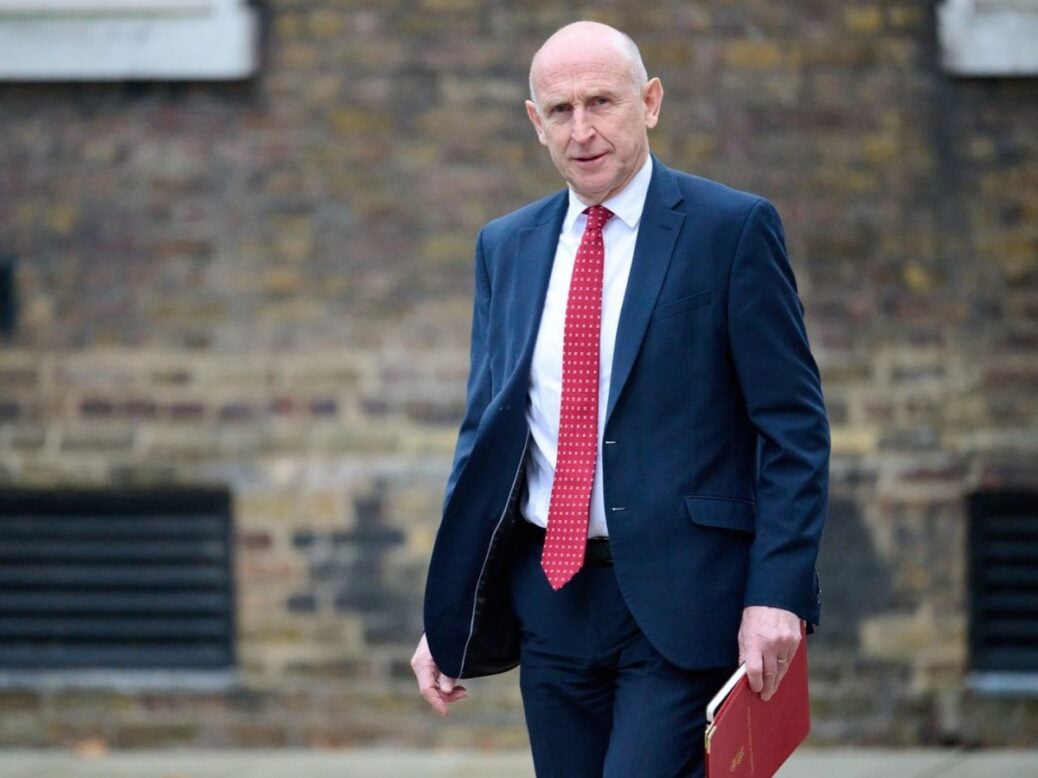
With a little over two weeks to go until his first Budget on 28 October, Chancellor John Healey is under pressure to cut spending or raise taxes to tackle the ballooning cost of government borrowing.
And with the Labour manifesto pledging not to increase the main rates of income tax, employee National Insurance or VAT, the focus now seems to be falling on UK taxpayers’ capital, property and savings.
From the perspective of Kelly Greig, a private client partner at Kingsley Napley, the chancellor wants to create a ‘buffer against uncertainty’, while her clients ‘want a pause, and I wouldn’t count on one’.

[See also: Do HMRC’s letters to billionaires spell the end of ‘complete privacy’?]
Related



Alex Simpson, who leads the private client team at Ostberg Sinclair & Co, tells Spear’s that, ‘in contrast to the past few years’ Budgets, there has been a relative lack of press briefings, leaving taxpayers with little certainty’ – and it is that uncertainty, he says, that has fuelled many of his client conversations.
The earlier-than-usual date adds to the sense that this could be one of the least predictable Budgets in years.
Wealthy families are still absorbing a number of recent tax changes, which include the abolition of non-dom status, effective from April 2025; curbs on agricultural and business property relief from April 2026; pensions falling into inheritance tax (IHT) from April 2027; and the so-called mansion tax – a high-value council tax surcharge of £2,500 to £7,500 a year on homes in England worth more than £2 million – from April 2028.
And not only that, but as found in Spear’s tax survey 2026, regulatory fatigue is reflected in a widespread lack of confidence regarding the UK’s economic trajectory, with nearly half of respondents expressing a lack of confidence that Burnham and Healey will be able to improve the UK economy overall during the remainder of the current Parliament (cf chart below).
Content from our partners



[See also: Is the UK about to tax bankers more?]
Britons are already responding: in a survey of 46 millionaires and ultra-millionaires by La Vida, which advises on residency and citizenship by investment, 82.6 per cent named taxation as their top concern.
According to the report, 26 per cent said a wealth tax (which does not yet exist in the UK) would make them consider leaving the UK, ahead of increases in income tax (22 per cent), inheritance tax (20 per cent), and capital gains tax (CGT) and property tax (15 per cent each).
[See also: The best global mobility, residence and citizenship by investment advisers in 2026]
Paul Williams, CEO of La Vida, tells Spear’s that respondents’ average wealth is ‘more than 20 times the national average’, making each departure ‘a significant tax loss for HMRC’.
For Mitch Young, co-founder of consultancy Fusion, the message to clients ahead of the Budget is simple: ‘Prepare, but don’t panic.’
What should HNWs expect from the Autumn Budget 2026?
Capital gains tax
CGT bands have already been raised – from 10 per cent to 18 per cent for basic-rate taxpayers and from 20 per cent to 24 per cent for higher-rate taxpayers – in October 2024, but Prime Minister Andy Burnham’s long-standing argument that work is taxed more heavily than wealth has fuelled talk that Labour might align CGT with income tax rates. Greig calls that ‘the obvious move, and the one that clients seem to be the most nervous about’.
However, some advisers remain sceptical. Simpson says modelling often shows such increases to be self-defeating, while Andrea Jones, Irwin Mitchell’s national head of private client advisory, believes targeted changes to rates or reliefs are more plausible than wholesale alignment. Adam Craggs, head of tax, investigations and financial crime at RPC, who puts the odds of an increase in the main rates at 7/10, says it ‘falls outside Labour’s principal tax pledges and offers an obvious route to bring in additional revenue’.
[See also: Wealthy investors drive record £24.2bn Capital Gains Tax bill]
Past speculation has already had its own effect. Rakesh Dabasia, private client partner at Buzzacott, says earlier talk of a CGT rise did not translate into a rate change but prompted many taxpayers to accelerate transactions, ‘leading to increased CGT revenue for HMRC regardless of the actual change’. He and Xavier Nicholas, head of private clients at Forsters, also flag the CGT uplift on death, the removal of which would reshape succession planning.
For those with a disposal in the pipeline, Young says it makes sense to understand what a higher rate would mean, but ‘I certainly wouldn’t recommend creating a disposal purely to try and beat a tax rise that may not happen.’
Property
The mansion tax is not yet in force, but attention has turned to whether its net will widen.
Reports over the summer suggested the Treasury was weighing a lower threshold of £1.5 million. Damian Bloom, head of private clients at Winston Taylor, tells Spear’s he doubts the prime minister would ‘risk ripping up a newly introduced policy in favour of a national property tax’.
[See also: Will I have to pay mansion tax?]
That said, property remains an obvious target, Jones notes, because it is ‘visible and cannot be moved overseas’ – a point Young echoes, adding that wealthy families already face a significant tax burden around acquiring, holding and passing on property.
Bigger overhauls look unlikely, as Nicholas says abolishing stamp duty land tax or council tax have been explicitly ruled out for this Budget.
Inheritance tax
Families are still digesting the reforms to agricultural and business property relief, and unused pension funds are due to fall into the IHT net from April 2027.
Jones doesn’t expect a complete overhaul to IHT; changes to particular reliefs, exemptions or planning opportunities are more likely. She warns that ‘even narrow changes could have a significant effect on families whose wealth is spread across businesses, property, pensions and different generations’.
Simpson points to possible adjustments to reliefs or limits on lifetime gifting, and Nicholas suggests the seven-year rule for lifetime gifts could be extended to 10 years.
[See also: The tax trap waiting for rich expats leaving Dubai]
Dabasia says the exemption for gifts out of excess income, a key route for passing on wealth, could be tightened. Other advisers such as Craggs, by contrast, expect no major reform, with the backlash over the earlier relief changes still politically significant.
Whatever happens, Young says, ‘good estate planning shouldn’t really be driven by one Budget’.
Wealth and exit taxes
Though a wealth tax tops the list of fears in La Vida’s survey’s, advisers see an annual levy as a distant prospect. Greig puts it at a 2/10 likelihood: ‘Valuing illiquid assets is the problem, and the likelier route is a collection of narrower measures on capital, property and savings.’ Bloom, however, sees the mansion tax as a possible first step towards a broader wealth tax.
Views on an exit tax are more divided. Greig calls it the most underrated option: Canada, Australia, Germany and the US all have versions, which ‘raise modest sums, but they price departure and stop it being free’. Dabasia thinks any move on wealth or exit taxes would more likely begin with a consultation.
[See also: Who’s on the move? David Reuben joins UK billionaire exodus list]
Nicholas says some clients are seeking to minimise the risk by triggering non-UK residence before the Budget through the split-year rules, but most advisers urge caution. Anyone considering leaving must look at ‘the whole picture’, Young says, because ‘moving country purely to save tax is a pretty major life decision and is rarely as simple as some of the headlines make it sound’.
Income tax
Income tax rates are protected by Labour’s manifesto, but thresholds are not, and they are already frozen until April 2031.
Greig and Bloom both put the likelihood of a further extension at 6/10, with Bloom suggesting that freezing only the higher thresholds would be the more electorally palatable option for the chancellor.
Dabasia also notes that fiscal drag, which pulls more taxpayers into higher bands without a headline rate rise, remains ‘a stable and reliable source of tax revenues’.
How should HNWs prepare ahead of Budget 2026?
The consensus is to plan, not pounce. Dabasia advises against knee-jerk reactions, but says that where transactions or planning were already under consideration, there may be merit in accelerating them. For Greig, ‘pre-Budget leaks are often kites flown to test reaction, and irreversible decisions made on them are usually regretted’.
[See also: Interest in ‘golden visas’ up sevenfold in a decade: where are UHNWs moving next?]
Jones suggests reviewing wills, trusts, pension nominations, ownership structures, powers of attorney and succession plans, and making sure asset records and valuations are up to date.
As for tax cuts, Dabasia says, there will be no scope for them.
‘You don’t necessarily need to do something before the Budget, but you should know what you would do if the rules change,’ says Young. Bloom agrees: ‘Knowledge gives you options.’